Welcome aboard to the our video site for sailors. We are being constantly blasted by scammers and pirates, so registration is invite only
contact@sailorsahoy.com with "Invite". No spam, no newsletters. Just a free account





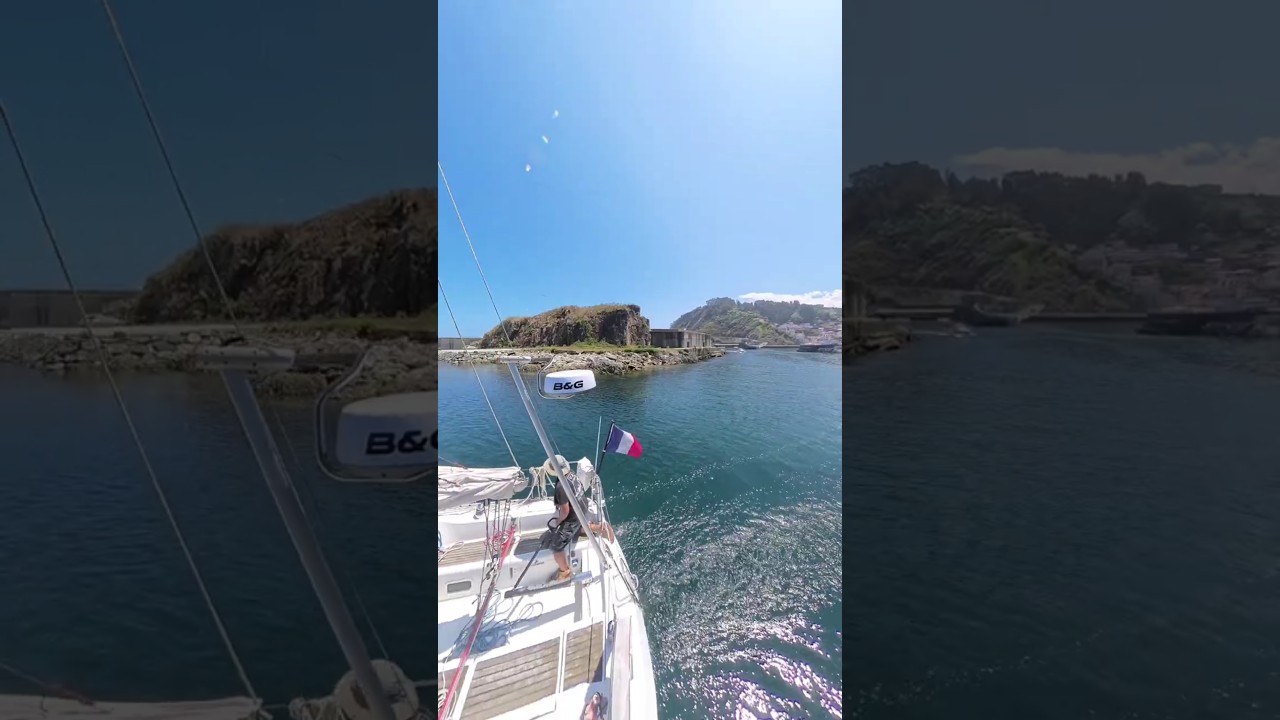





We get Hit by Lightning while Sailing at Sea -Sailboat Gets Hit by Lightning - Storms at Sea WINDY

We accidentally sail into a thunderstorm leaving Split Croatia on our way to Zadar. As the storm gets worse we decide to go off course and head for the nearest anchorage, on our way there we lightning strikes the mast of our boat frying our wind instrument. We assess the boat the next day and decide we need to order in a new wind instrument. Thankfully everything else was working fine. Some information about sailing electronics and lightening: An anemometer is an instrument that measures wind speed and wind pressure. Anemometers are important tools for meteorologists, who study weather patterns. They are also important to the work of physicists, who study the way air moves. When a sailboat gets struck, one of the paths the lightning takes is down the mast; typically, anything that happens to be close by on the way down can be destroyed: wind instruments, TV antennas, radar, lights, and so on. Fortunately, aluminum is a very good conductor and allows the strike free passage. Being hit by lightning on a yacht is, just as it is on land, a fairly unusual and improbable event. That said, it can happen and so all risks should be mitigated. The most important consideration is one of proper ‘earthing’. If you have a metal mast it’s likely that this will be hit first. Indeed, it’s usually expected that a mast will act as a shield for everything below, in a cone, on a radius 45 degrees down from the masthead. However, this assumes that the mast is properly earthed as are all other metallic parts of the vessel. It is usual for the mast and other metal to be earthed via the engine and propellor shaft. If a mast is not properly earthed a lightning strike might well cause the electrical potential difference to simply blow a hole in the deck or the hull in order to ‘run to ground’ in the surrounding water. Obviously, this is not good. If your boat is properly earthed then the most likely damage you should expect will be to electrical systems including your GPS, Chart Plotter, radios, telephones, radar, alarms and things like starter motors, etc. It’s possible that fire might be triggered by this event, so check all wiring and make a thorough check of the rig and hull structure as soon as it’s safe. If you carry a handheld GPS, sat phone and other handheld kit (like a smart phone) it’s worth protecting them from a strike. To do this either put the items in the oven (which is, effectively, a Faraday Cage). Of course, if someone decides to warm the oven for lunch this can be unfortunate! You may therefore decide to put such items in a biscuit tin - which should serve the same purpose. For this reason, if for no other, keeping an up-to-date set of paper charts on board is prudent, especially for cruisers and travellers. It’s also worth keeping a sextant on board and a reliable (and protected time piece set to UTC) but, of course, you need to know how to use it and carry the reduction tables too. Certainly, a handheld sat phone and a VHF and handheld GPS in your biscuit tin might well save you a great deal of grief! Last, prevention is better than cure. Try to avoid thunderstorms! And tropical squalls with towering clouds above them. These are areas prone to lightning strikes. Keep most crew below decks and away from danger (although the mast should protect you in theory) and it’s probably not a great idea to hang onto rigging or go for a mast climb during a thunderstorm!