Welcome aboard to the our video site for sailors. We are being constantly blasted by scammers and pirates, so registration is invite only
contact@sailorsahoy.com with "Invite". No spam, no newsletters. Just a free account




![[ENG] RANIERI CAYMAN 37.0 HARD TOP – Full Test of the New Maxi-RIB - The Boat Show](https://i.ytimg.com/vi/f5EVK93fPtY/maxresdefault.jpg)
![We Didn’t Buy a Dream Boat. We Bought the Foundation for One. [Ep. 203]](https://i.ytimg.com/vi/q7aTUOeSfiU/maxresdefault.jpg)

![[ITA] AXOPAR 38 XC ITA | Prova completa del crossover sportivo - The Boat Show](https://i.ytimg.com/vi/fqt-sr91meM/maxresdefault.jpg)


![[ITA] Salone Nautico di Genova 2026: tutte le novità dalla conferenza stampa - The Boat Show](https://i.ytimg.com/vi/jyhz_T978Q8/maxresdefault.jpg)

![[ENG] ABSOLUTE NAVETTA 50: Full Yacht Tour and Sea Trial - The Boat Show](https://i.ytimg.com/vi/_zUNGDY2ZpI/maxresdefault.jpg)
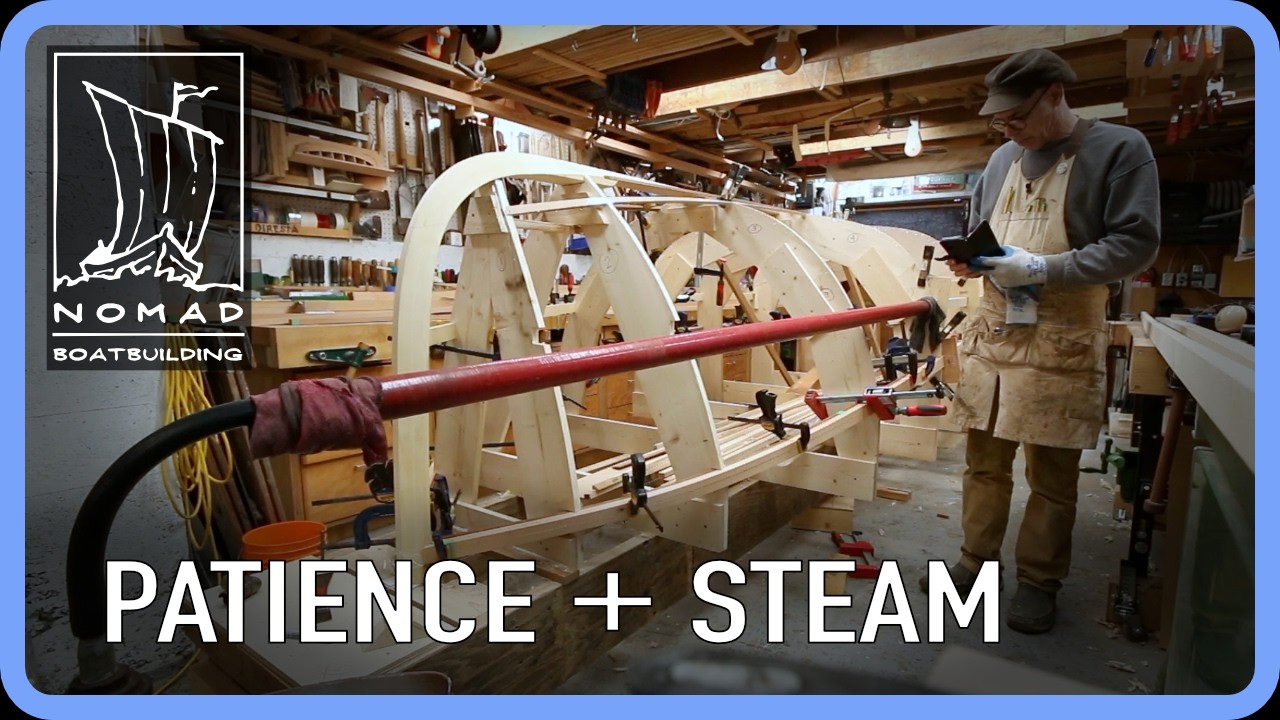
How to Understand Boat Building Plans

Howdy folks! Welcome back to Nomad Boat Building. My name is Mark Reuten. In this video, I walk through the basics of reading traditional boat plans. We look at construction drawings, lines plans, stations, waterlines, buttock lines, diagonals, table of offsets, stem profiles, and how all of that information is used to loft a boat full size. Using the plans for a historic Rushton canoe as an example, I explain what information is essential for building a boat, how designers communicate hull shape, and why a good set of drawings is worth every penny. Whether you're new to wooden boatbuilding, curious about lofting, or trying to make sense of a set of boat plans, this video will help demystify the process. Join me on Patreon: https://www.patreon.com/nomadboatbuilding Website: https://nomadboatbuilding.com/ Watch more boatbuilding videos here: https://www.youtube.com/@NomadBoatbuilding CHAPTERS 00:00 Why boat plans look confusing at first 00:11 Introduction 00:18 Historic Rushton canoe plans overview 00:44 Understanding construction drawings 01:54 Scantlings and construction details 02:45 Why the lines plan matters most 03:23 Profile, body plan and half breadths explained 03:41 Diagonals, waterlines and buttock lines 04:27 Understanding the table of offsets 05:23 Stem profile drawings 05:31 Reading plan notes and dimensions 05:58 Outside planking vs mold reductions 06:42 Lofting the boat full size 07:01 Using a bevel board 08:13 Creating stem molds and bevels 08:48 Building a boat from offsets alone 09:06 Plank width information 09:40 Why quality plans are worth buying 10:24 Different plans for different boat types 10:40 Further lofting resources 10:45 Closing thoughts