Welcome aboard to the our video site for sailors. We are being constantly blasted by scammers and pirates, so registration is invite only
contact@sailorsahoy.com with "Invite". No spam, no newsletters. Just a free account








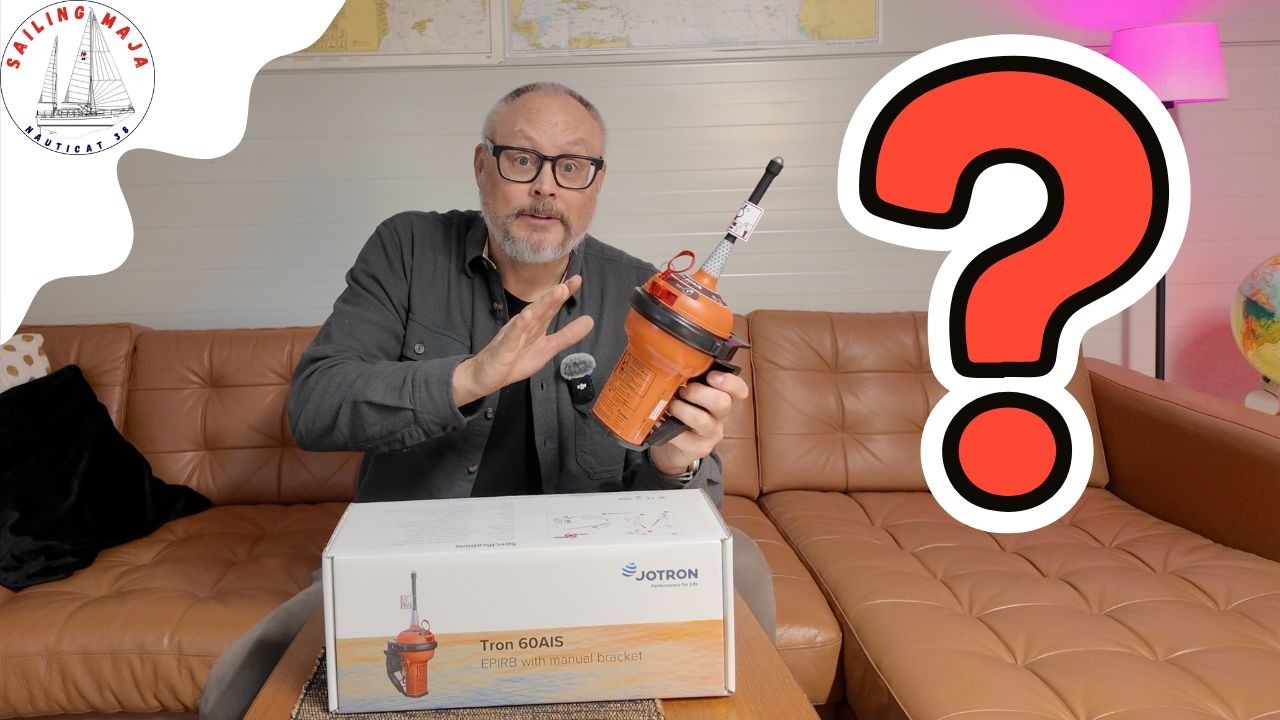




EPIRB Jotron Tron 60AIS - What's in the box, and how do you use it?

Unboxing the EPRIB Tron 60AIS from Jotron. What is in the box? How do you use this EPIRB? What documents do you get with the EPRIB? How do you fix the EPRIB to the boat? We bought this EPIRB from the Norwegian retailer Seatronic. As far as possible we buy all our maritime products from Seatronic. We have very good experience with them, and they know their stuff. Here is a link to the product: https://seatronic.no/jotron-tron-60ais-nodpeilesender NB: No affiliate, just an honest review. Here is a link to the manufacturer Jotron, still no affiliate: https://www.jotron.com/products/maritime-communication/epirb/tron-60ais-with-manual-bracket The last link is to myself, since I work as a yacht broker. Please take contact if you want me to sell your boat: https://sailing-maja.com About the Jotron EPRIB: The Jotron Tron 60AIS is an advanced EPIRB (Emergency Position Indicating Radio Beacon) with built-in AIS and GPS. It comes with a manual bracket and is designed for manual activation. It transmits vessel information via satellite with highly accurate positioning. Features include Galileo RLS support, powerful strobe light, and IR (infrared) light. Minimum 48-hour operation time and a total battery life of over 11 years. Approved for use on ships and fishing vessels. The Jotron Tron 60AIS is an EPIRB with GPS and AIS. This version is mounted in a bracket and intended for manual activation, but it will also activate automatically upon direct water contact if removed from the bracket. To activate manually: Remove the EPIRB from the bracket, pull the release tab, and slide the switch to the ON position. The strobe light will then start flashing, indicating the device is active. The EPIRB features both visible white strobe light and infrared (IR) light; the IR improves visibility for night vision equipment and search-and-rescue (SAR) operations in darkness. Key Features Approved to the latest EPIRB standard (IEC 61097-2 Ed.4 and compliant with IMO/SOLAS regulations as of July 2022) AIS target-tracking/homing technology for faster localization by nearby vessels Return Link Service (RLS) via Galileo GNSS IR LED light for night vision devices and assisted SAR Excellent visibility with a powerful top-mounted strobe light (360° coverage) Tamper-proof design Compact and robust build Total battery lifetime: 11 years and 3 months Weight: 715 g (approx. 700–715 g depending on source) Operating temperature: -20°C to +55°C Storage temperature: -30°C to +70°C Safe compass distance: 0.8 m Material: Glass-fiber reinforced polycarbonate Antenna: Flexible, rubberized with integrated strobe GNSS: Global Navigation Satellite System (supports GPS, GLONASS, Galileo – 72 channels) What is an Emergency Beacon? An emergency beacon is a simple radio transmitter with worldwide range that, in a distress situation, is activated manually or automatically to send out a distress signal. In Norway, the signal is received by the Joint Rescue Coordination Centre (Hovedredningssentralen). EPIRB An EPIRB (Emergency Position-Indicating Radio Beacon) is a vessel-mounted distress beacon registered to the boat along with its VHF MMSI number. It transmits vessel details and precise position via satellite. The Tron 60AIS EPIRB includes built-in AIS and GPS for extremely accurate positioning. It also emits a powerful strobe light to aid in locating the distress site. Additionally, the Tron 60AIS features IR light, easily detectable by rescue helicopters and similar assets. An EPIRB typically operates for at least 48 hours after activation, with battery life usually ranging from 5–10 years. On the Tron 60AIS, it exceeds 11 years. The expiration date is stamped on the unit, and it is critical to return the beacon for battery replacement when due. Manually activated EPIRBs like this are typically placed near the stern deck exit or, on sailboats, on the pushpit at the stern. The Tron 60AIS is also available in a float-free version (Category 1) that is placed externally; it features a hydrostatic release unit (HRU) and will float free and activate automatically in case of sinking—but can of course also be manually activated if needed. Best regards from Charlie and the Team Sailing Maja