Welcome aboard to the our video site for sailors. We are being constantly blasted by scammers and pirates, so registration is invite only
contact@sailorsahoy.com with "Invite". No spam, no newsletters. Just a free account
Shorts Create

Welcome back to the iFLY Foiling Academy! In Part 2 of our series, we're diving deeper into the intricacies of hydrofoil sailing on the iFLY15 catamaran. Join us as we explore the crucial elements of weight trim and sail trim – essential skills for mastering the art of foiling. In this installment, we'll guide you through the finer points of optimizing weight distribution and adjusting sail trim to harness the power of the wind and glide effortlessly across the water. These techniques will take your foiling experience to new heights. Get ready to fine-tune your sailing prowess as we share invaluable tips, tricks, and insider knowledge to help you maximize speed, efficiency, and control on your iFLY15. Stay tuned for more videos in this series as we continue our journey through the iFLY Foiling Academy. Don't miss out on the opportunity to elevate your foiling skills and become a true expert on the water – subscribe now and join us for the ultimate foiling adventure with iFLY! . For more information and to explore the full range of iFLY15 and iFLY RAZZOR Pro, visit . https:// iFLYsail.com

0
0
0
1,405

The knot commonly used to tie a fender onto the side of a boat to protect it from other boats and docks is called a "round turn and two half hitches." It is a simple and effective knot that provides a secure attachment for the fender. 👉Follow us for more tips about being a confident sailing cruiser! Here's how you tie a fender knot: 1. Start by passing the line's working end (rope) around a secure point on the boat, such as a cleat or railing. 2. Take the line's working end and make a loop around the standing part (the part of the line connected to the fender). 3. Pass the line's working end through the loop you just created. 4. Bring the line's working end around and make another loop around the standing part, similar to the first loop. 5. Pass the working end of the line through the second loop. 6. Tighten the knot by simultaneously pulling on the working end and the standing part. This knot will create a secure attachment for the fender, allowing it to protect the boat's side from impacts with other boats or docks. You can adjust the fender's height and position for optimal protection according to your specific docking situation. Follow us for more tips about being a confident sailing cruiser. #sailingexperience #boatknots #sailinglifestyle #short
0
0
0
4,249

0

0
0
0
11

Douro à Vela

0
0
0
132

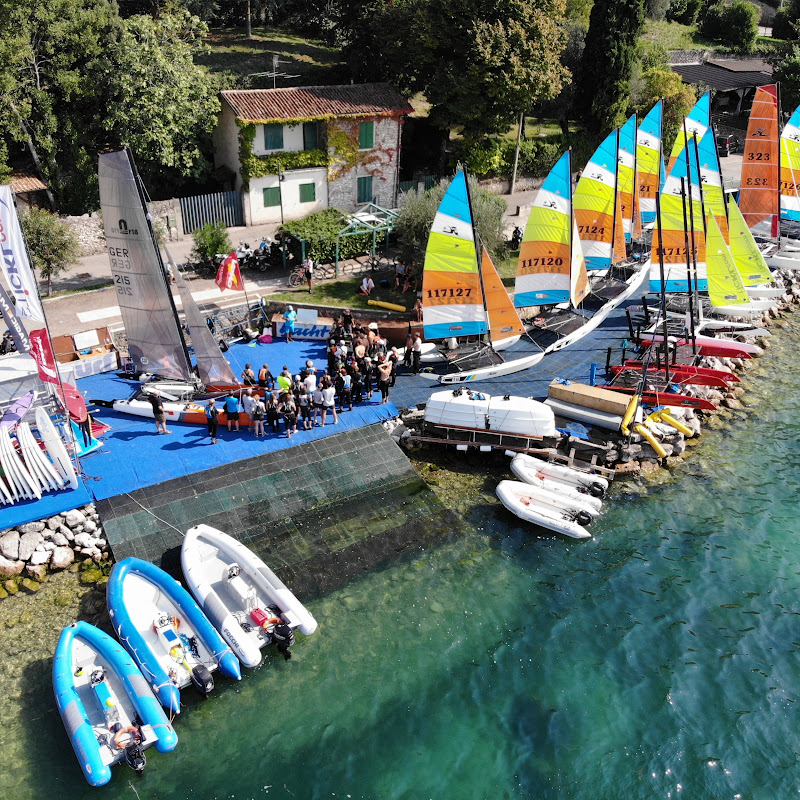
Besser Segeln lernen auf Hobie Cats in Kursen vom Einsteiger bis zum Experten in einem abgestuften Kursprogramm am Gardasee.
0
0
0
2,196
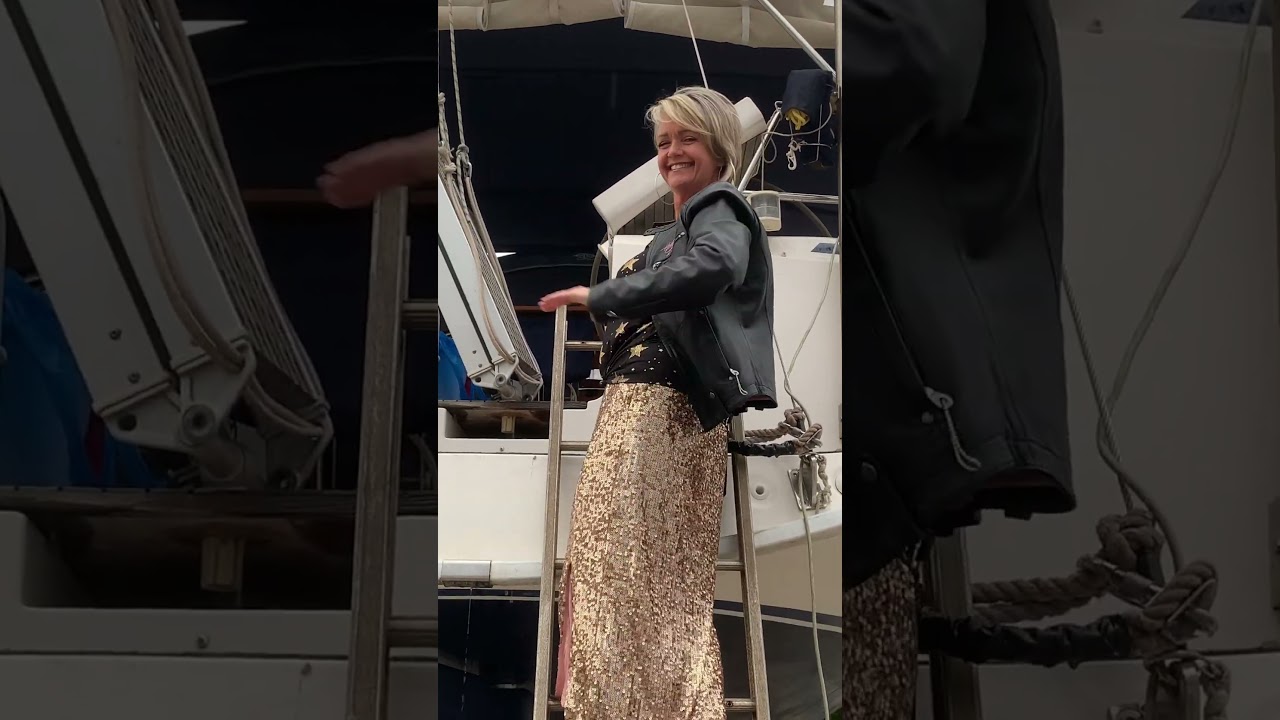
How to make climbing down a ladder in a tight dress look easy. We got invited to a post wedding reception get together but as our boat is currently on the hard we have to use ladders to get on and off. Jen does it in style.

0
0
0
1,293