Welcome aboard to the our video site for sailors. We are being constantly blasted by scammers and pirates, so registration is invite only
contact@sailorsahoy.com with "Invite". No spam, no newsletters. Just a free account
Shorts Lumikha

New to sailing? 🌬⛵ Learn why reefing your mainsail is essential for safe and comfortable sailing when the wind picks up. In this beginner-friendly sailing tip, we explain what reefing is, when to do it, and how it protects both your boat and crew. Whether you're learning to sail or brushing up on key concepts, this is a must-know safety skill for any new sailor! 📌 Topics covered: • What is reefing a mainsail? • When should you reef your sail? • How reefing helps avoid knockdowns • Why sail reduction improves comfort and control 👍 Like, 💬 comment, and 🔔 subscribe for more beginner sailing tutorials and boat handling tips! Watch the full tutorial here: https://youtu.be/RLg-cRcEmBA Playlist link to Rigging for Beginners: https://www.youtube.com/playlist?list=PLQOqsyzQgrHMeM6W5NWq-2sEsq1kcp6Eb #SailingWithCoconuts#SailingTips #Reefing #LearnToSail #BeginnerSailing #SailingForBeginners #SafeSailing #SailingBasics #SailboatTraining #SailingLife #SailingShorts

0
0
0
3,064

This is the video intro to my August monthly news letter. If you do not receive it and want to be added please email me and i will get you on the list. Best, Ian VT

0
0
0
149

0

0
0
0
1,989

Your peaceful escape with a solar powered yacht. #silentyachts #catamarans #solarpowered #sustainability #nature

0
0
0
1,553

Horizon Yachts USA had a great turn-out at the West Palm Beach Boat Show with SIX yachts on display. This video was taken the day after the boat show closed. In order of appearance are the Horizon Yachts Power Catamarans PC52 PC60 PC74. Next came the RP110, FD 85 and FD87. Contact Horizonyachtusa.com for more information.

0
0
0
5,096
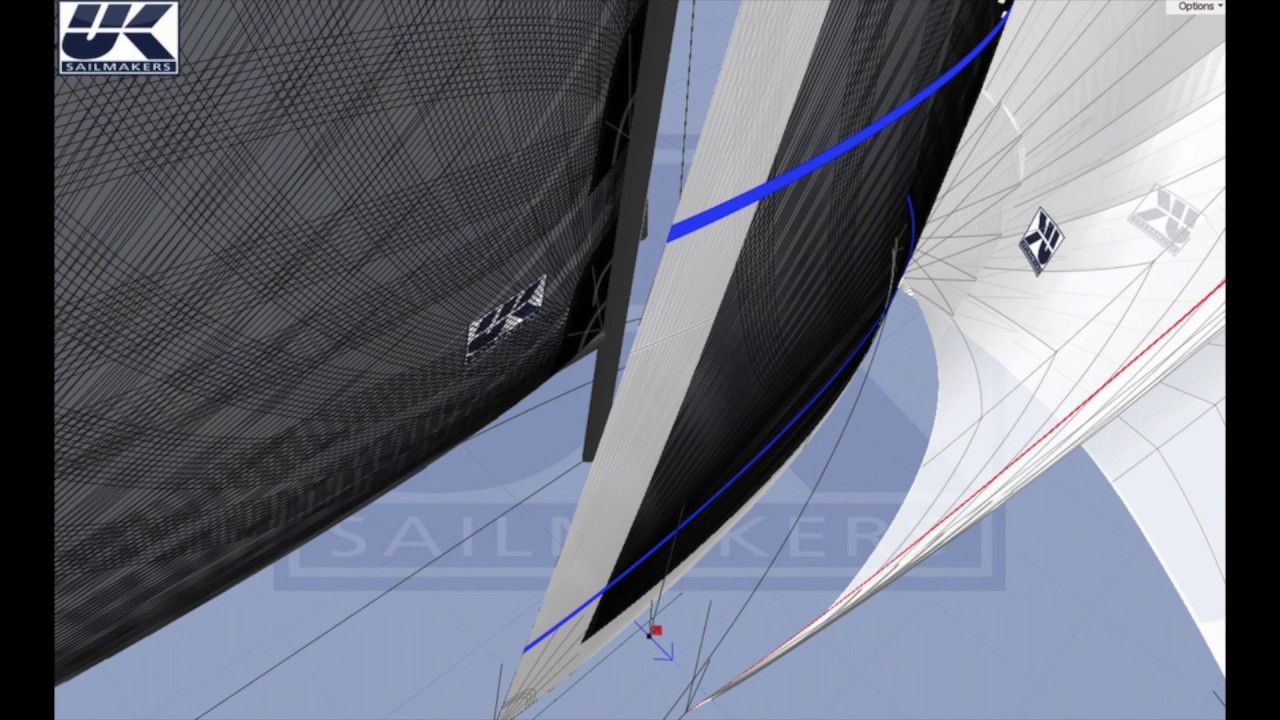
UK Sailmakers uses very powerful 3-D CAD/CAM software for sail design, which create virtual 3-D molds that can be digitally sliced into two-dimensional panels that when joined back together re-create a full-size version of the designed mold. Thanks to powerful 3-D graphic renderings, designers can see how sail fit around the spreaders and shrouds as well as make sure the clew height and sheeting angles are right. They can also analyze how a main and genoa work together to make sure the boat stays balanced. What we are looking for is a sailplan and sail shapes that put the maximum driving force in precisely the right place to produce a perfectly balanced boat – and with the least amount of drag. Pat Considine, UK Sailmakers’ chief designer, goes a step further and uses Fluid Structural Interaction software, called FSI for short, as a virtual wind tunnel for refining sail designs and sail construction. FSI calculations are used to test proposed designs and cloth choices to make sure they are not built too strong (too heavy) or too weak (too light) for their expected loads. The FSI calculations will predict whether a design and construction will keep its shape properly as the rig bends, halyards are tightened and sheets are trimmed. Shown rotating in this video are two renderings of a Tripp 47 mainsail design. The side-by-side comparison shows the sail with no backstay tension and with max backstay trim. The FSI software allows Pat to rotate the two designs together to study their shape from any angle. In this case, Pat needed to be sure the draft would not move too far aft as the sail was flattened; likewise, he had to make sure the draft was not too far forward when the backstay was eased completely. The FSI program has made extremely accurate predictions of how specific sail designs will perform once made and trimmed in a variety of wind speeds. These tests ensure sails will meet the performance needs right out of the bag.

0
0
0
1,051