Najnoviji video zapisi
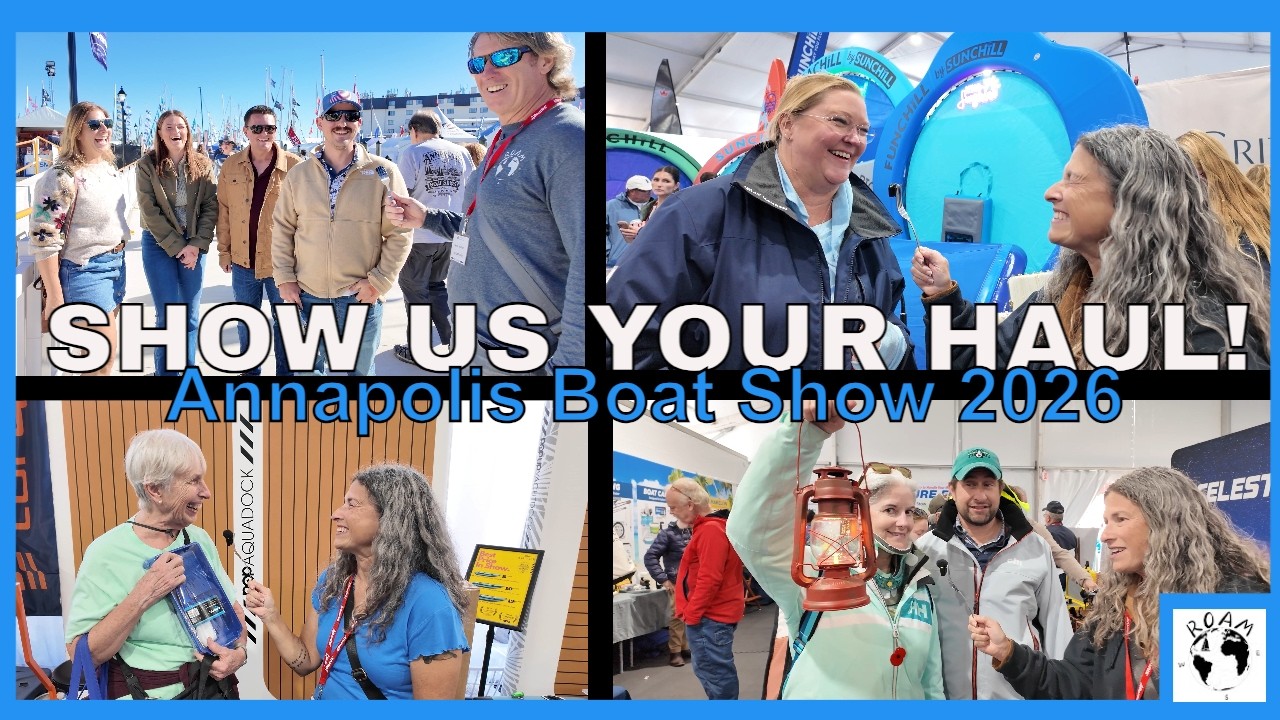
What do boaters actually buy at the Annapolis Sailboat Show? From affordable upgrades and essential boat gear to a brand-new yacht, we hit the docks to find out! In this episode, we’re exploring the Annapolis Sailboat Show to discover interesting products, meet fellow boaters, and see what people are spending their money on. We check out a man-overboard recovery module designed to help get someone back aboard safely, and meet a vendor offering something many boat owners have been waiting for: affordable tank monitoring systems. Because keeping track of what’s happening in your tanks shouldn’t have to cost a fortune! But the real fun comes when we start asking other showgoers what they actually bought. We meet boaters who’ve invested in new foul-weather gear, bags, boat-care products, and other essentials. One couple even bought an entirely new yacht! Finally, we share our own Sailboat Show purchases. One is a tiny, inexpensive item that solves a useful everyday problem. The other is a considerably more expensive purchase that we really needed for ROAM. Whether you’re shopping for your boat, looking for clever upgrades, or simply curious about what catches other sailors’ attention, come explore the Annapolis Sailboat Show with us! ⚓ In this episode: Man-overboard recovery equipment Affordable tank monitoring systems What other boaters bought at the show Foul-weather gear, bags, and boat-care products A couple’s exciting new yacht purchase Our own Sailboat Show finds, from a small practical item to a major expense What would you spend your money on at a boat show? Let us know in the comments! If you enjoy following our adventures aboard ROAM, please give the video a thumbs-up, subscribe to Sailing ROAM, and turn on notifications so you won’t miss what’s next. Thanks for watching, and keep roaming! ⛵ Sea Level 11 https://www.garnetinstruments.com/holding-tanks/ Arco Zeus Omega https://www.arcomarine.com More about us, our adventures, and how we do all this on our website.More about Roam here ⛵️https://sailingroam.com/our-sailboat/ 📲 Keep up with us on social FACEBOOK: https://facebook.com/sgsailingroam INSTAGRAM: https://instagram.com/sailing_roam ----------------------------------------------------------- WE'RE GERI AND SHAWN. A couple travelers out chasing the horizon, meeting the people, and capturing it to share with you. We’ve chosen to Roam the world by boat because, let’s face it, the most interesting path is rarely a straight line. As we learn to let go of our American drive to finish, and embrace the meandering routes across islands, oceans, continents, and people, we hope to gain a better sense of our world and our place in it. The path won’t always be comfortable or easy to find but, it will always #roam 00:00 Intro 00:36 Channel intro 00:48 Arrival 01:33 Interview 1 03:31 Dan Buoy Rescue Module Demo 05:35 Interview 2 08:53 Interview 3 07:35 Interview 4 09:08 Interview 5 10:13 Sea Level 11 11:56 Interview 6 12:56 Wrap up - What did we buy? 14:49 Like/Subscribe/Leave an emoji 15:10 End Card

A quick check in from the docks⛵️

One of our favorite things about cruising is exploring the places we visit without spending a fortune. So while we’re in Annapolis, we set out to see how much of this historic city we could experience for little or no money. First up was a self-guided walking tour of the U.S. Naval Academy. Seeing the white-clad midshipmen around Annapolis is part of what makes the city unique, and we wanted to explore the historic campus and get a glimpse of where future Navy and Marine Corps officers are trained. From there, we toured the Maryland State House and continued exploring downtown Annapolis on foot. The city is packed with history, and we loved the contrast between the energy and hubbub of Main Street and the quieter surrounding neighborhoods—with grand mansions that once belonged to Maryland governors sitting alongside old brick row houses. Then we discovered one of our favorite evenings in Annapolis: Wednesday Night Dinner Under the Stars. The streets come alive with tables filled with people enjoying dinner and drinks, twinkle lights overhead, live music playing, and an entire street full of people dancing. We didn’t even have dinner, but we didn’t need to. The atmosphere alone made it an evening worth experiencing. As cruisers, we’re always looking for ways to explore a new destination without automatically reaching for our wallets. Annapolis turned out to be a great place to do exactly that. If you’re visiting Annapolis by boat—or just looking for inexpensive ways to experience the city—come along as we explore some of the history, architecture, and atmosphere that make Annapolis special. ⚓ Thanks for watching Sailing ROAM! If you enjoyed the video, we’d love it if you’d like, subscribe, and turn on notifications to follow along as we leave the refit behind and discover what cruising on ROAM is really like. Keep Roaming! ⛵️ More about us, our adventures, and how we do all this on our website.More about Roam here ⛵️https://sailingroam.com/our-sailboat/ 📲 Keep up with us on social FACEBOOK: https://facebook.com/sgsailingroam INSTAGRAM: https://instagram.com/sailing_roam ----------------------------------------------------------- WE'RE GERI AND SHAWN. A couple travelers out chasing the horizon, meeting the people, and capturing it to share with you. We’ve chosen to Roam the world by boat because, let’s face it, the most interesting path is rarely a straight line. As we learn to let go of our American drive to finish, and embrace the meandering routes across islands, oceans, continents, and people, we hope to gain a better sense of our world and our place in it. The path won’t always be comfortable or easy to find but, it will always #roam 00:00 Intro 00:22 Channel intro 00:34 United States Naval Academy 06:54 Maryland State House 09:53 Downtown and Historic Annapolis 17:60 Dinner Under the Stars 20:17 Wrap up 20:51 Like, Subscribe 21:13 End Card

After two years of working on ROAM, we thought we’d be thrilled to spend our days fixing things, finishing projects, and getting the boat ready to cruise. Turns out… we’re tired. We’re restless, we’re tired of boat projects, and we desperately need to get off the boat for something more than our usual evening walk around town. So we went looking for an adventure. Our first attempt took us around the bend by kayak to the boat ramp at Truxtun Park, where we explored the trails and checked out the city pool, tennis and pickleball courts, and playground. It’s a perfectly nice city park—but it wasn’t quite what we were looking for. So we tried again. This time, we dinghied over to Quiet Waters Park, one of the largest parks in the Annapolis area. Getting there was an adventure in itself. Our dinghy is too large to stay at the park dock, so we brought a kayak along, anchored the dinghy offshore, and used the kayak to get back and forth. When we got there, we discovered that what we thought were trails were actually wide, paved paths. 😂 We were hoping for a real hike—something that would leave us tired, sweaty, and pleasantly sore the next day. That’s not quite what we found. But we did find something we needed just as much: a full day away from the boat and all the projects waiting for us back there. It wasn’t exactly the adventure we had imagined, but it was still a really good day. We got outside, explored somewhere new, and most importantly, got to just be together without thinking about what needed to be fixed next. For two people from Washington State, the standards for a good hike are admittedly pretty high. We’re used to trails through old-growth forests, serious elevation changes, and spectacular mountain views. Annapolis isn’t exactly the Pacific Northwest. But that’s okay. We weren’t looking for the perfect hike. We just needed to get off the boat, move our bodies, see something different, and have an adventure together. And Quiet Waters delivered. Sometimes the best cruising days don’t involve sailing at all. ⛵ ☝More about us, our adventures, and how we do all this on our website.More about Roam here ⛵️https://sailingroam.com/our-sailboat/ 📲 Keep up with us on social FACEBOOK: https://facebook.com/sgsailingroam INSTAGRAM: https://instagram.com/sailing_roam ----------------------------------------------------------- WE'RE GERI AND SHAWN. A couple travelers out chasing the horizon, meeting the people, and capturing it to share with you. We’ve chosen to Roam the world by boat because, let’s face it, the most interesting path is rarely a straight line. As we learn to let go of our American drive to finish, and embrace the meandering routes across islands, oceans, continents, and people, we hope to gain a better sense of our world and our place in it. The path won’t always be comfortable or easy to find but, it will always #roam #Annapolis #QuietWatersPark #ChesapeakeBay #Sailing #Cruising #Catamaran #Liveaboard #BoatLife #AnnapolisMD #Kayaking #Hiking #HikingAnnapolis #ChesapeakeCruising #SailingLife #CruisingLife #Adventure #MarylandParks 00:00 Intro 00:51 Channel refit 01:03 We’re looking for a break 04:21 Truxtun Park 11:45 2nd try
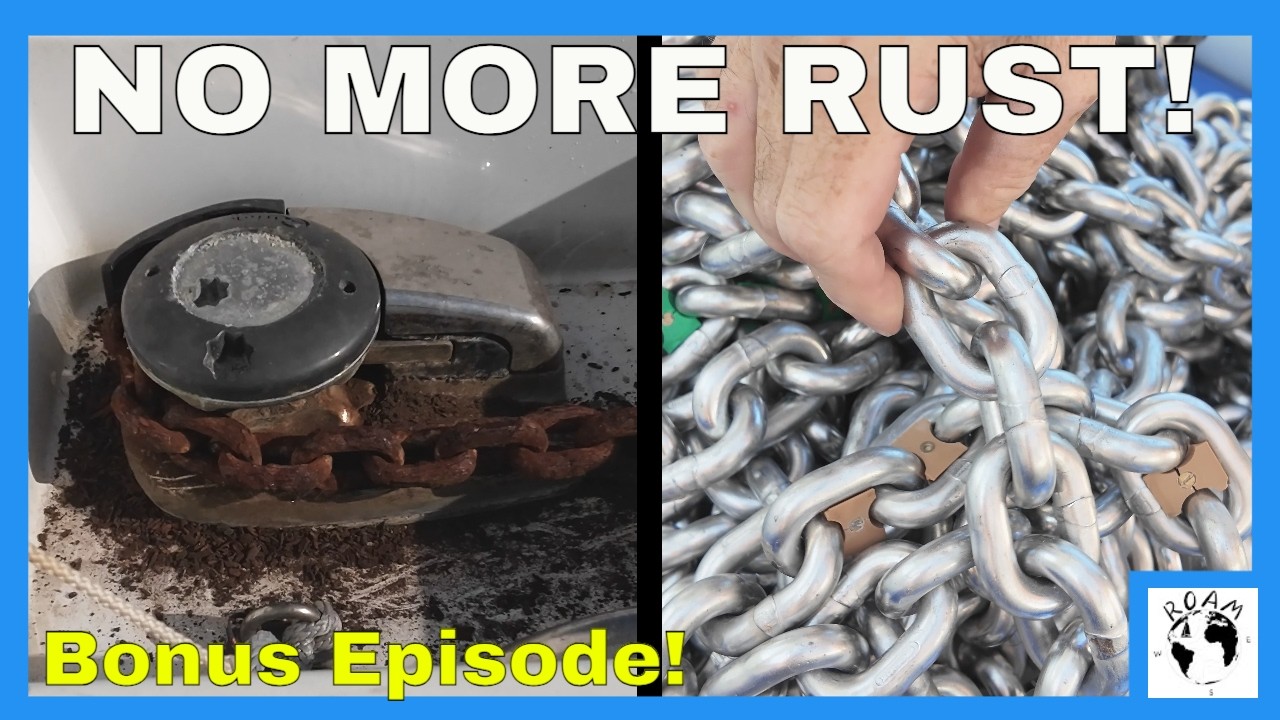
After two years in the boatyard, we’re finally tackling one of the nastier pieces of old equipment aboard ROAM: our rusty, galvanized anchor chain. We’re replacing it with Cromox stainless steel anchor chain, and in this episode we take you through the entire process—from removing the old chain and picking up the new chain at the warehouse to marking it, deploying it, and putting it into service in a very tight Chesapeake anchorage. But this isn’t just an installation video. Stainless steel anchor chain is controversial among sailors, and we understand why. There are legitimate concerns about corrosion, strength, and long-term care. We discuss those concerns and explain why, after doing our research, we decided this was the right chain for ROAM. The Chesapeake is notoriously dirty, and our new stainless chain quickly developed the ugly tan staining caused by tannins and other contaminants in the water. Stainless steel isn’t maintenance-free, and proper care is critical. Regularly rinsing the chain with fresh water helps remove salt and contaminants and keeps the chain looking—and hopefully performing—its best. To clean the staining, we used a very dilute oxalic acid solution, followed by a thorough fresh-water rinse. It’s a simple process, but it’s an important reminder that stainless chain still needs attention if you want it to stay in good condition. In this episode, we show: ⚓ Removing our old, disgusting galvanized anchor chain 🏭 Traveling to the warehouse to pick up our new Cromox chain 📏 Measuring and installing anchor chain markers 💥 Discovering that our first set of markers didn’t survive 🌈 Replacing them with simple colored zip ties 💦 Cleaning Chesapeake tannin staining from the stainless chain Marking the chain turned out to be more complicated than expected. We wanted to work from the boat end down, using the dinghy to feed the chain out while measuring each section. Because we’re sitting in a very tight anchorage with poor holding, we really didn’t want to pull the anchor that was holding well. So we found a way to do the entire job while remaining anchored. Why stainless steel? There are plenty of sailors who would never put stainless steel anchor chain on a cruising boat, and we understand the concerns. In this video, we explain what we considered, what we researched, and why we ultimately decided to trust Cromox for ROAM. We’re also very clear that stainless steel doesn’t mean maintenance-free. Regular fresh-water rinsing, inspection, and appropriate cleaning are all part of caring for the chain. Full disclosure: Cromox provided this chain to us as a marketing partner. We want to be completely transparent about that relationship. They supplied the product, but the opinions, experiences, and concerns discussed in this video are our own. We won’t partner with any manufacturer or product that we don’t believe in 100%. We aren’t claiming that stainless steel chain is automatically better than galvanized chain. We’re explaining why this particular chain made sense for our boat and our cruising plans, and what we’re learning about caring for it along the way. If you’re considering stainless steel anchor chain, replacing galvanized chain, upgrading your anchoring system, or simply wondering whether stainless chain is appropriate for cruising, we hope this gives you a useful look at both the benefits and the responsibilities that come with the choice. And after looking at the old chain we pulled off ROAM… We’re pretty happy to say goodbye to the rust. 😄 ⛵ The refit may be over, but we’re still finding ways to make ROAM better for cruising. Find Cromox here: https://www.cromox-us.com ☝More about us, our adventures, and how we do all this on our website.More about Roam here ⛵️https://sailingroam.com/our-sailboat/ 📲 Keep up with us on social FACEBOOK: https://facebook.com/sgsailingroam INSTAGRAM: https://instagram.com/sailing_roam ----------------------------------------------------------- WE'RE GERI AND SHAWN. A couple travelers out chasing the horizon, meeting the people, and capturing it to share with you. We’ve chosen to Roam the world by boat because, let’s face it, the most interesting path is rarely a straight line. As we learn to let go of our American drive to finish, and embrace the meandering routes across islands, oceans, continents, and people, we hope to gain a better sense of our world and our place in it. The path won’t always be comfortable or easy to find but, it will always #roam #Sailing #AnchorChain #StainlessSteelChain #Cromox #Anchoring #Cruising #Catamaran #Sailboat #BoatLife #Liveaboard #AnchorChainReplacement #SailingLife #DIYBoat #ChesapeakeBay #CruisingLife #BoatMaintenance #StainlessSteel #AnchorCare 00:00 Intro 00:26 Channel intro 00:42 Remove old anchor chain 00:54 Cromox warehouse 01:55 Chain markers 03:12 Chain markers - 2nd try 12:21 Why stainless anchor chain 17:34 Maintenance and inspection 20:33 Wrap up 22:30 Like/Subscribe/Emoji

How much can you really save by importing boat equipment directly from China? For our refit of ROAM, we decided to look beyond traditional marine suppliers and source a number of major components directly from Chinese manufacturers. The results were far more significant than we expected. For the specific products discussed in this video, we spent approximately $50,000 on equipment that would have cost roughly $150,000 through the U.S. sources we compared, representing more than $92,000 in savings. But saving money wasn’t the only consideration. In this episode, we break down exactly what we bought, what we paid, what comparable equipment cost in the U.S., and—perhaps most importantly—what it actually took to source these products ourselves. We discuss: 🛶 Our custom dinghy — including the specifications and customizations that made a direct-from-the-manufacturer purchase possible. 🔋 Our lithium battery cells — the foundation of our massive DIY house battery bank and one of the biggest opportunities for savings. ❄️ Air conditioning systems — including the challenges of comparing different BTU capacities and configurations when an exact like-for-like product isn’t available. ⚓ Windlass — comparing the equipment itself as well as the challenges of finding the correct marine hardware. 🔩 Custom turnbuckles — including one of the biggest lessons we learned about buying from overseas: getting exactly what you need can take time, patience, and very detailed specifications. 💡 Marine lighting — comparing quality, specifications, and pricing. ⚡ Electrical connectors and components — another category where buying directly from the manufacturer can produce substantial savings. We also talk honestly about the tradeoff between money and time. Buying directly from China isn’t as simple as clicking “buy.” You have to find manufacturers, communicate specifications, compare products, verify quality, understand certifications and materials, negotiate pricing, arrange shipping, and sometimes wait much longer than you would for something sitting on a U.S. dealer’s shelf. And when something goes wrong, returning it isn’t as easy as taking it back to the local marine supply store. So was it worth it? For us, absolutely—but there were some important caveats. One of the biggest misconceptions we want to address is the idea that “Made in China” automatically means cheap or poor quality. China manufactures everything from inexpensive consumer products to extremely sophisticated, high-quality industrial and marine equipment. The country of manufacture tells you very little about the quality by itself. The real challenge is finding the right manufacturer, the right product, and the right quality level. For everything we discuss in this video, quality was a major priority. We weren’t looking for the cheapest possible option. We were looking for equipment that met our specifications and was comparable to—or in several cases better than—the alternatives we found through U.S. suppliers. If you’re planning a sailboat refit, building a catamaran, outfitting a cruising boat, or simply wondering whether importing directly from China is actually worth it, this episode gives you the numbers and the real-world experience behind our decisions. We paid about $50,000 for roughly $150,000 worth of comparable equipment—and here’s exactly how we did it. ⛵ The refit may be over, but we’re still learning what it takes to build the cruising life we want. ☝More about us, our adventures, and how we do all this on our website.More about Roam here ⛵️https://sailingroam.com/our-sailboat/ 📲 Keep up with us on social FACEBOOK: https://facebook.com/sgsailingroam INSTAGRAM: https://instagram.com/sailing_roam ----------------------------------------------------------- WE'RE GERI AND SHAWN. A couple travelers out chasing the horizon, meeting the people, and capturing it to share with you. We’ve chosen to Roam the world by boat because, let’s face it, the most interesting path is rarely a straight line. As we learn to let go of our American drive to finish, and embrace the meandering routes across islands, oceans, continents, and people, we hope to gain a better sense of our world and our place in it. The path won’t always be comfortable or easy to find but, it will always #roam #Sailing #SailboatRefit #Catamaran #BoatRefit #DIYBoat #BoatBuilding #MadeInChina #ChinaImport #MarineEquipment #Liveaboard #CruisingLife #BoatLife #SailingLife #BoatProjects 00:00 Introduction 00:22 Channel Intro 00:33 Intro continued 03:15 Dinghy 05:37 AirCon 09:21 Batteries 15:05 M12 connectors 17:07 Class T fuses and holders 18:47 Windlass 23:14 Turnbuckles 27:29 Ceiling Lights 30:54 Universal Power Outlets 32:40 Wrap up 33:43 Like, Subscribe, and leave an emoji
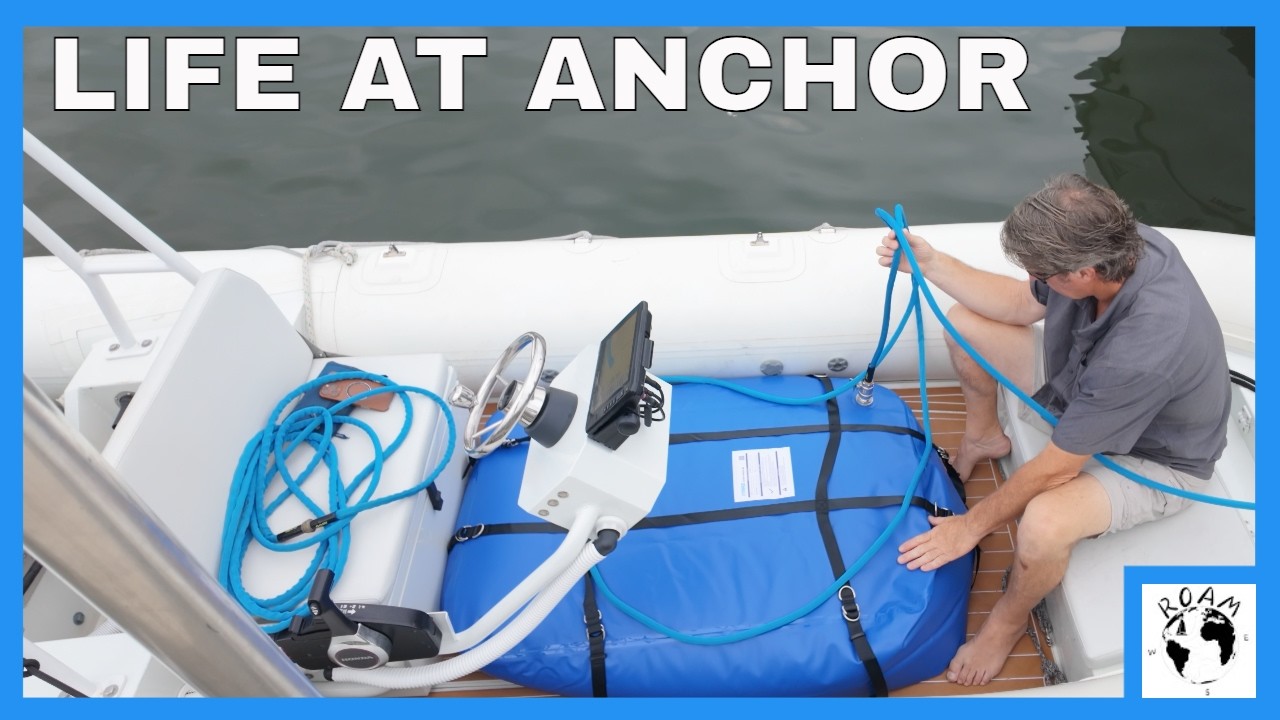
Life at anchor isn't always about sailing. Sometimes it's about solving the everyday challenges that come with living aboard full-time. In this episode, we've settled into one of our favorite anchorages in Spa Creek, Annapolis, and we're tackling three very different problems—each involving one thing we can't live without: water... and keeping the bugs out. The first challenge starts every time we weigh anchor. Anyone who's anchored in the Chesapeake knows the mud is legendary. It clings to the chain, anchor, and bridle, and without a raw water washdown pump, cleaning it off with our freshwater tanks simply isn't practical. Until we install a permanent washdown system, we came up with a temporary solution using a submersible pump, an extension cord, and a little ingenuity. It's not elegant, but it works surprisingly well. The next challenge is filling our freshwater tanks. Although ROAM is equipped with a watermaker, the Chesapeake's muddy water would quickly clog our pre-filters, making it an expensive and frustrating option. We could take the boat to a dock for free water, but doing so would mean giving up one of the very few anchorages in Spa Creek that's large enough for our 54-foot catamaran—and there's no guarantee we'd get it back. Instead, we found another solution. A 100-gallon portable water bladder rides in the dinghy to the free water dock in Annapolis, where we fill it (with permission from the Harbor Master), tow it back to ROAM, and pump the water directly into our tanks. It takes two trips and about an hour each time, but it's far easier than moving the entire boat every time we need fresh water. Finally, we tackle one of the less glamorous realities of summer cruising in the Chesapeake... Mosquitoes. Lots of mosquitoes. With the calmer conditions in Spa Creek comes an evening invasion of bugs, so Geri heads to the sewing machine to make custom mosquito screens for our salon hatches. Like many boat projects, it wasn't as simple as following an online tutorial. Most hatch screens are designed for square hatch openings, while ours have curved corners, so the design had to be completely rethought. Using spring steel wire, bug netting, and plenty of patience, the first prototypes slowly came together. They're not perfect... ...but if they let us sleep without donating a pint of blood every night, we'll call that a success. Cruising full-time isn't just about exotic destinations and perfect sunsets. It's also about solving dozens of small problems that make life aboard more comfortable, one project at a time. If you enjoy sailboat DIY projects, liveaboard cruising, catamaran life, and finding practical solutions to everyday boat problems, we think you'll enjoy this episode. ⛵ Thanks for coming along as we continue shaking down ROAM and turning her into the cruising home we've dreamed about for years. 00:00 Intro 00:17 Channel intro 00:29 Old school raw water wash down 04:11 Spa Creek 07:59 Potable water bladder 18:30 Mosquito nets 24:59 Wrap up/Like and subscribe 25:26 End Card ☝More about us, our adventures, and how we do all this on our website.More about Roam here ⛵️https://sailingroam.com/our-sailboat/ 📲 Keep up with us on social FACEBOOK: https://facebook.com/sgsailingroam INSTAGRAM: https://instagram.com/sailing_roam ----------------------------------------------------------- WE'RE GERI AND SHAWN. A couple travelers out chasing the horizon, meeting the people, and capturing it to share with you. We’ve chosen to Roam the world by boat because, let’s face it, the most interesting path is rarely a straight line. As we learn to let go of our American drive to finish, and embrace the meandering routes across islands, oceans, continents, and people, we hope to gain a better sense of our world and our place in it. The path won’t always be comfortable or easy to find but, it will always #roam #Sailing #Liveaboard #Annapolis #SpaCreek #Catamaran #CruisingLife #BoatProjects #DIYBoat #Watermaker #Anchoring #BoatLife #SailboatLife #ChesapeakeBay
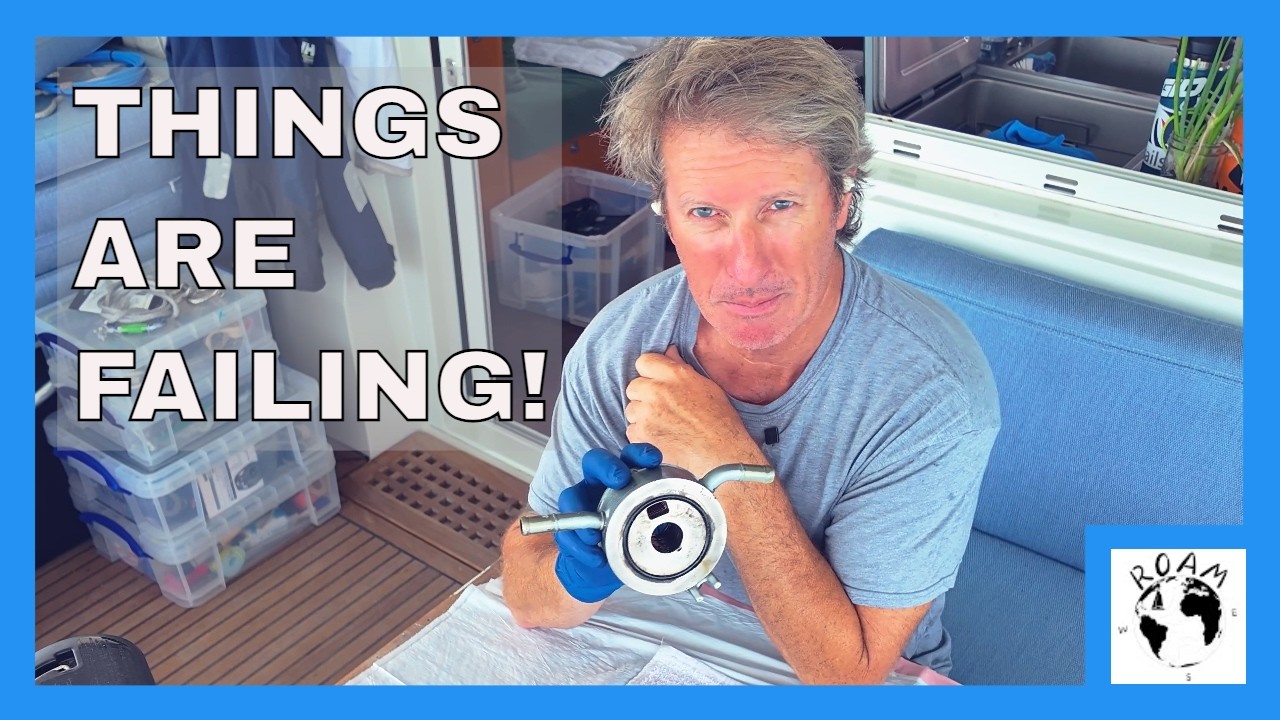
We knew the first few months after leaving the boatyard would be a shakedown cruise. After rebuilding nearly every major system aboard ROAM over the last two years, we fully expected to find bugs, experience a little "infant mortality" with new components, and spend time fine-tuning everything we'd installed. What we didn't expect... was quite this many problems, quite this quickly. In this episode, we're temporarily calling Cambridge, Maryland home while we work through a growing punch list of repairs and adjustments before continuing south. So far we've dealt with: ⚓ A failed bilge pump 🧺 A washing machine discharge pump that quit working 🔧 A leaking oil cooler on our starboard engine that mixed engine oil with the coolant Each repair has had its own challenges. Replacing the washing machine pump turned into a surprisingly complicated project thanks to the machine's European voltage and the difficulty of sourcing the correct replacement. Even after the new pump arrived and was installed, another leak led us to discover a damaged discharge hose that also needed replacing. Fortunately, the failed bilge pump is covered under warranty. While we wait for the replacement, we were able to swap in one of the identical pumps we'd already installed for another system, getting us safely back in business. The biggest challenge, however, has been our starboard engine. After discovering a failed oil cooler, Shawn spent days flushing contaminated coolant and cleaning the engine so we could safely operate it again. Sourcing the replacement cooler became its own adventure. The genuine Yanmar part carried an eye-watering price tag, while an identical industrial version had to be sourced overseas from Turkey. Until it arrives, we've come up with a temporary solution that lets us safely maneuver the boat at low power. It's not ideal, but it'll get us where we need to go. Thankfully, Cambridge has turned out to be a great place to tackle these unexpected projects. We have easy access to parts stores, hardware stores, and everything else needed to keep the repairs moving. Even better, we have good friends nearby who have helped make the delays a lot more enjoyable. When we're not turning wrenches, we're taking time to explore this historic Chesapeake town. Cambridge is rich in Colonial and Civil War history and is famously the birthplace of Harriet Tubman, whose incredible legacy is woven throughout this region and the story of the Underground Railroad. This is exactly what a shakedown cruise is for. Every repair, every adjustment, and every lesson learned makes ROAM a little more ready for the adventures ahead. The destination can wait. Right now, we're focused on building confidence in the boat—and ourselves—one repair at a time. ⛵ The refit may be over, but the learning never stops. 00:00 Intro 00:22 Channel intro 00:34 Where are we? 01:30 Oil Cooler 04:03 Cambridge on the land 09:23 Bilge Pump 11:36 Cambridge on the water 15:30 Washing Machine 17:38 Wrap up 19:16 Like and Subscribe 19:40 End Card ☝More about us, our adventures, and how we do all this on our website.More about Roam here ⛵️https://sailingroam.com/our-sailboat/ 📲 Keep up with us on social FACEBOOK: https://facebook.com/sgsailingroam INSTAGRAM: https://instagram.com/sailing_roam ----------------------------------------------------------- WE'RE GERI AND SHAWN. A couple travelers out chasing the horizon, meeting the people, and capturing it to share with you. We’ve chosen to Roam the world by boat because, let’s face it, the most interesting path is rarely a straight line. As we learn to let go of our American drive to finish, and embrace the meandering routes across islands, oceans, continents, and people, we hope to gain a better sense of our world and our place in it. The path won’t always be comfortable or easy to find but, it will always #roam #Sailing #Catamaran #ShakedownCruise #BoatRepairs #Yanmar #MarineDiesel #Liveaboard #BoatLife #DIYBoat #SailboatRefit #CruisingLife #ChesapeakeBay #CambridgeMD
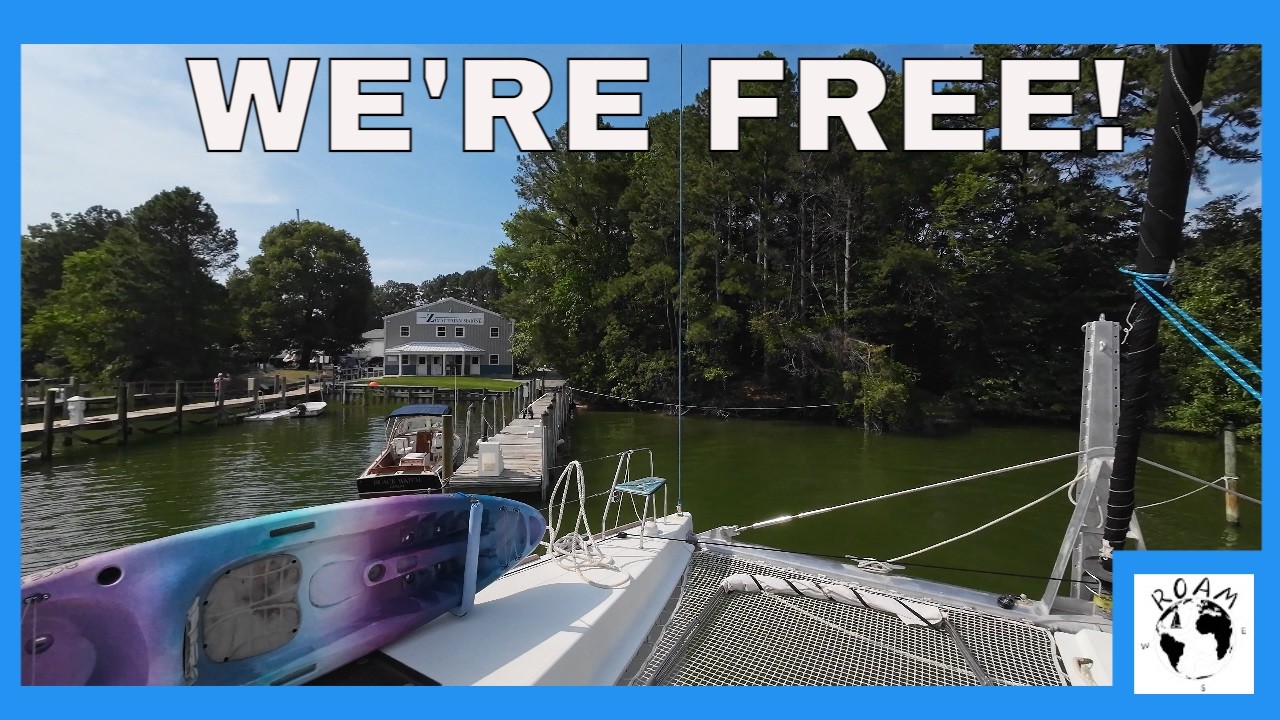
After two years on the hard, countless projects, and more than a few unexpected setbacks, ROAM finally leaves the boatyard. This is the moment we've been working toward since the day we hauled out what we thought would be a simple six-month refit. Two years later, we're motoring—and sailing—away with a boat that's been transformed from the keel up. As we shake the rust off and settle back into life under way, we're reflecting on the biggest lessons this refit taught us. Some we expected. Others we learned the hard way. In this episode, we share what we'd do differently if we ever tackled another major sailboat refit, including: ⛵ Why trying to do everything at once can slow you down more than it help 💰Importing from China can help you save significant money, but can cost you time. 🔧 Why you should test every system as you build it instead of waiting until the end 💰 Why almost every refit takes far longer and costs far more than planned—and how to prepare for that reality 🌡️ How temperature affects paints, adhesives, epoxies, plumbing, and other materials more than you might think 🚗 The hidden costs of a long haul-out, including lodging, transportation, storage, and day-to-day living expenses 🛠️ Why buying the right tool for the job is almost always worth it—even if you sell it once the project is finished ☝Be careful and cautious is you’re hiring out work. Between boatyards and third-party contractors the pitfalls are numerous. These aren't rules—just lessons learned from nearly two years of rebuilding our 54-foot catamaran while living the refit life every day. Whether you're planning your own sailboat refit, restoring a cruising boat, or simply dreaming about the cruising lifestyle, we hope these experiences help you avoid a few of the mistakes we made. Leaving the boatyard isn't the end of the journey—it's the beginning of the next chapter. There are still systems to test, bugs to work out, and plenty of adventures ahead, but for the first time in a long time, we're doing it from the water instead of the hard. Thank you to everyone who followed along through the refit. Your encouragement, ideas, and support helped us get to this day. ⛵ One step closer to sailing. 00:00 We’re ready to go 00:11 Channel intro 00:23 Leaving the boatyard 01:05 First cruise 03:40 Lesson - Reduce your scope 04:42 Lesson - Buying from China 06:11 Wicomico Yacht Club 06:42 Lesson - Test as you go 08:06 Lesson - The right tool for the job 09:20 Heading north 10:10 Lesson - More time and more money 11:51 Annapolis 12:45 Lesson - Know your material requirements 14:21 Harness Creek 14:58 Crumbl cookies 15:45 Lesson - Hiring our work 18:57 Wrap up ☝More about us, our adventures, and how we do all this on our website.More about Roam here ⛵️https://sailingroam.com/our-sailboat/ 📲 Keep up with us on social media FACEBOOK: https://facebook.com/sgsailingroam INSTAGRAM: https://instagram.com/sailing_roam ----------------------------------------------------------- WE'RE GERI AND SHAWN. A couple travelers out chasing the horizon, meeting the people, and capturing it to share with you. We’ve chosen to Roam the world by boat because, let’s face it, the most interesting path is rarely a straight line. As we learn to let go of our American drive to finish, and embrace the meandering routes across islands, oceans, continents, and people, we hope to gain a better sense of our world and our place in it. The path won’t always be comfortable or easy to find but, it will always #roam #Sailing #SailboatRefit #BoatRestoration #BoatyardLife #LiveaboardLife #Catamaran #CruisingLife #DIYBoat #BoatProjects #OffGridLiving #SailingLife

Two years ago, we hauled ROAM out of the water expecting a six-month refit. This week, we finally put her back where she belongs. Getting to splash day wasn't nearly as straightforward as we'd hoped. In fact, we were supposed to relaunch two weeks earlier—until we discovered a critical missing part: our starboard lower rudder bearing. The bearing had been removed when we hauled out and, after deciding not to replace it, we asked for it to be reinstalled. Somewhere along the way, that never happened. After two years in the yard, it was gone for good. What followed was a frantic search for a replacement. In the end, the only realistic solution was ordering a new bearing directly from the original manufacturer in France. Once we finally made contact, they identified the correct part and shipped it across the Atlantic. Two weeks later, it arrived—and thankfully fit perfectly. With the bearing installed, we were back on the launch schedule. Because of our draft, we needed a midday high tide to get back into the water, which meant the yard had only a few hours to lift us, suspend us over a drainage ditch, reinstall both rudders, and get us launched. Needless to say, it was stressful. There has been a lot of turnover at the yard over the last two years, and many of the operators handling the lift were young and relatively inexperienced. Watching our entire world hanging being lifted onto a trailer is nerve-racking under the best circumstances. Watching it happen while you're wondering whether everyone involved has done this exact maneuver before is something else entirely. Thankfully, the launch went smoothly. After a slow and careful lift—with plenty of hammering on the hull to locate bulkheads for the lifting straps—ROAM was finally lowered back into the water. For the first time in two years, her hulls were wet. Then came the moment of truth. Over the course of this refit, we replaced every underwater thru-hull, removed and rebuilt both sail drives, serviced countless systems, and opened areas of the boat that hadn't been touched in decades. As soon as we were floating, we began moving from bilge to bilge checking for leaks. The good news? Everything stayed dry. Well... almost. We did discover one issue waiting for future us: one of the keels is taking on water internally. It's not leaking into the boat and poses no immediate danger, but it will need attention the next time we haul out—hopefully somewhere warm in the Caribbean. For now, though, we're floating. After two years of hard work, setbacks, delays, redesigns, and more than a few moments when we wondered if we'd ever get here, ROAM is finally back in the water. And what a relief that feels. ⛵ One step closer to sailing. 00:00 Zero days to go 00:39 Channel intro 00:57 Unexpected splash day 03:16 Splash Day take two 07:17 Starboard rudder install 08:24 Heading to the ditch 09:31 Port rudder install 11:23 Heading to the ramp 12:09 Getting her bottom wet 12:45 Checking for leaks 13:24 She’s floating! 13:59 Wrap up 14:20 Like/Subscribe 14:40 End Card ☝More about us, our adventures, and how we do all this on our website.More about Roam here ⛵️https://sailingroam.com/our-sailboat/ 📲 Keep up with us on social FACEBOOK: https://facebook.com/sgsailingroam INSTAGRAM: https://instagram.com/sailing_roam ----------------------------------------------------------- WE'RE GERI AND SHAWN. A couple travelers out chasing the horizon, meeting the people, and capturing it to share with you. We’ve chosen to Roam the world by boat because, let’s face it, the most interesting path is rarely a straight line. As we learn to let go of our American drive to finish, and embrace the meandering routes across islands, oceans, continents, and people, we hope to gain a better sense of our world and our place in it. The path won’t always be comfortable or easy to find but, it will always #roam #SailboatRefit #BoatLaunch #SplashDay #CatamaranRefit #BoatyardLife #LiveaboardLife #DIYBoat #BoatRestoration #CruisingLife #SailingLife #Catamaran

After years of planning, researching, sourcing parts, and redesigning, we're finally building one of the most important systems on ROAM: our DIY lithium house battery bank. Instead of purchasing pre-packaged marine batteries, we imported individual 2.3-volt lithium cells directly from China and built the entire system ourselves. Why? Two reasons: cost and space. By building our own batteries, we saved approximately $40,000 compared to equivalent marine battery systems. Just as importantly, we were able to dramatically increase our energy storage density within the limited space available aboard the boat. More power, less space, and a lot more work. Our final design consists of: 🔋 Four 48-volt batteries for the primary house bank 🔋 Two 24-volt batteries for equipment not available in 48 volts ⚡ Enough stored energy to support our goal of comfortable off-grid cruising Building the bank turned out to be far more involved than simply stacking cells together. We started by constructing a custom battery box to provide a perfectly flat and level foundation. We added anti-arc protection, a Mylar isolation layer to reduce friction, and developed a somewhat unconventional tie-down system designed to keep the cells secure even in extreme conditions. Along the way, we faced plenty of challenges. Finding room for the BMS units, bus bars, contactors, fuses, and cabling while maintaining a clean layout proved harder than expected. After changing the cell arrangement partway through the build, we had to purchase new BMS sense wires and rethink portions of the installation. The result isn't quite as tidy as we'd envisioned, but it's safe, functional, and delivers exactly what we set out to achieve. Like many parts of this refit, it's a system we'll continue refining as we move closer to launch. If you're interested in: DIY lithium batteries Victron energy systems Off-grid power systems Sailboat electrical upgrades Catamaran refits Marine electrical design Liveaboard cruising preparation ...this episode is packed with practical lessons, problem-solving, and real-world DIY boat work. After years of planning, it's incredibly satisfying to finally see our power system taking shape. ⛵ One step closer to sailing. 00:00 Everyone asks us why 00:10 Channel intro 00:26 Battery box 04:51 Arc protection 06:52 Tie down system 09:50 BMS 11:38 Fuses, bus bars, and contactors 14:29 What do we have and why 16:58 Why did we do this and does it work 18:46 Like and subscribe 19:06 End Card ☝More about us, our adventures, and how we do all this on our website.More about Roam here ⛵️https://sailingroam.com/our-sailboat/ 📲 Keep up with us on social FACEBOOK: https://facebook.com/sgsailingroam INSTAGRAM: https://instagram.com/sailing_roam ----------------------------------------------------------- WE'RE GERI AND SHAWN. A couple travelers out chasing the horizon, meeting the people, and capturing it to share with you. We’ve chosen to Roam the world by boat because, let’s face it, the most interesting path is rarely a straight line. As we learn to let go of our American drive to finish, and embrace the meandering routes across islands, oceans, continents, and people, we hope to gain a better sense of our world and our place in it. The path won’t always be comfortable or easy to find but, it will always #roam #DIYLithiumBattery #BoatElectricalSystem #VictronEnergy #OffGridPower #SailboatRefit #CatamaranRefit #MarineElectrical #DIYBoat #LithiumBatteryBank #LiveaboardLife #CruisingLife #SailingLife

After two years of planning, fabricating, redesigning, and chasing down welders, our sailboat finally has a massive new solar arch—and we couldn’t be happier with how it turned out. In this episode of our catamaran refit, we install a custom stainless steel solar arch capable of supporting 4 x 575W bifacial solar panels, plus an additional two panels mounted on the coach roof for a total of 3,450 watts of solar power onboard. Getting to this point was anything but easy. We had three different welders flake out on us before finally finding someone willing to take on the project for a reasonable price. By the end, we were deeply involved in the build ourselves—designing the arch, cutting and fitting the stainless supports, and acting as the welder’s extra hands throughout the fabrication process. This wasn’t a simple bolt-on project. We handled all the heavy lifting ourselves and completed the installation without any help from the boatyard. Along the way, we also: Reused and integrated the original safety rails Added a cockpit shower and foot wash Built a strong, clean structure capable of supporting serious off-grid power generation The final result completely transformed the back of the boat. Not only does the arch look incredible, but it’s also a huge step toward our goal of building a fully self-sufficient cruising catamaran capable of running comfortably without relying on marinas or a generator. This project has been nearly two years in the making, and finally seeing the solar array mounted and complete feels like a massive milestone in our sailboat refit journey. If you’re into: Sailboat refits DIY boat projects Off-grid solar systems Catamaran upgrades Liveaboard cruising preparation Marine electrical systems …this episode is packed with real-world fabrication, problem-solving, and major progress. ⛵ One step closer to sailing. 00:00 Recap countdown 00:31 The plan 00:43 Channel intro 01:01 Coach roof panels 01:35 Measure for new arch supports 05:13 Cutting stainless 07:40 Cleaning up 08:34 Yep, still cutting stainless 10:09 Polish and reuse safety rails 11:33 Welding Day(s) 12:33 Pulling wires 12:59 Raise the panels 13:54 Shower box 14:01 Wrap up 15:03 Like and subscribe 15:25 End card ☝More about us, our adventures, and how we do all this on our website.More about Roam here ⛵️https://sailingroam.com/our-sailboat/ 📲 Keep up with us on social FACEBOOK: https://facebook.com/sgsailingroam INSTAGRAM: https://instagram.com/sailing_roam ----------------------------------------------------------- WE'RE GERI AND SHAWN. A couple travelers out chasing the horizon, meeting the people, and capturing it to share with you. We’ve chosen to Roam the world by boat because, let’s face it, the most interesting path is rarely a straight line. #SailboatRefit #SolarPower #OffGridLiving #Catamaran #DIYBoat #MarineSolar #BoatProjects #LiveaboardLife #Victron #SailingLife

One thing you can count on is the boatyard changing the plan with no notice whether you're ready or not. We were supposed to splash tomorrow morning, and instead they're putting us in at 6pm with the evening high tide. We still have a lot to do, so that's not welcome news. But first, we have to get the rudder's back in place.
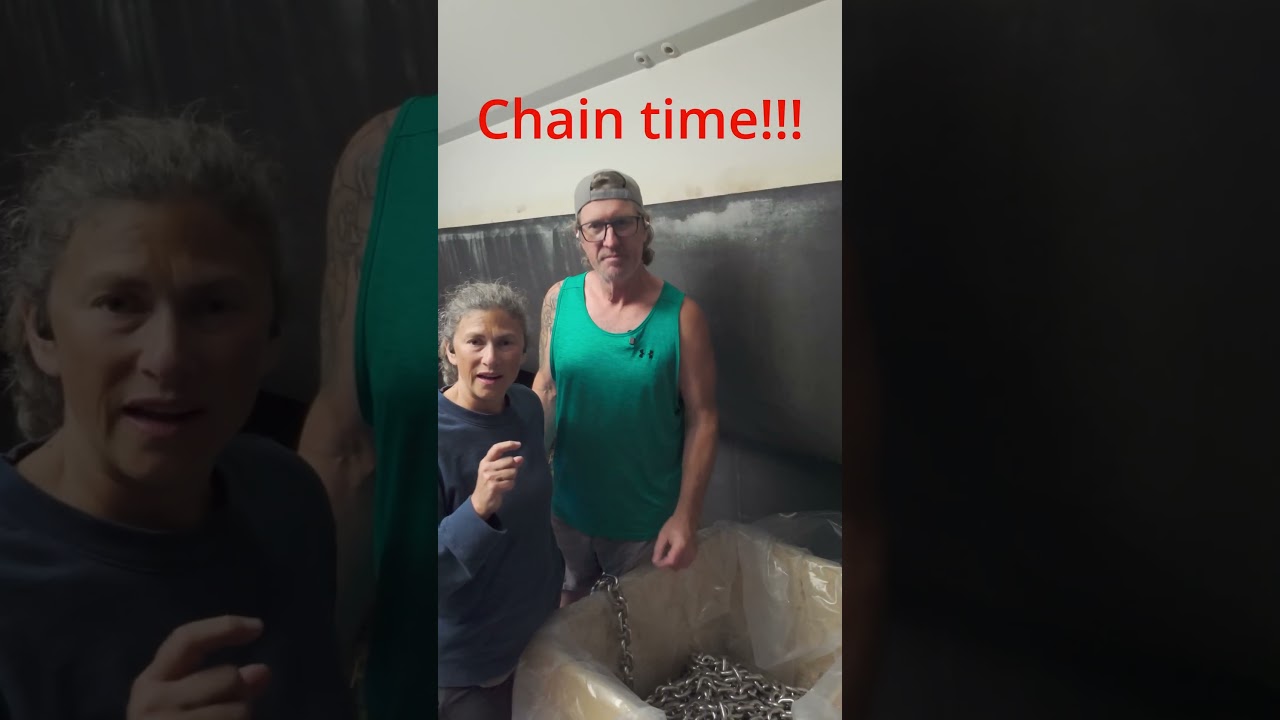
So many jobs, so little time remaining. Tomorrow we're being lifted on the trailer to put the rudders back in, so tonight is it. The last critical pieces must be done tonight. We'll sleep when we're dead! There is a ton of stuff under the boat that must be moved to make room for the trailer, and of course the chain and anchor needs to get on board. Let's get busy!

One of the remaining critical projects is wiring the wiindlass controls. What should have been a 1/2 days effort took the entire day, half the night, and still didn't quite work. Some projects are more frustrating than others.
We got a lot accomplished today, and it's a good thing because we're only 6 days from splashing! Shawn commissioned the Victron gear which means we have AC power! That means our appliances work! We also started to pretty up the boat before she goes back in, and after an entire day of work, the starboard hull below the chine is shiny and reflective. Big improvement!

We're running out of time, but today the helm controls are in and programmed. Does that mean we're ready to go? Not quite yet...

8 days lift until we splash and we're wrapping up a bunch of miscellanous projects...cut stainless for bimini frames, prep helms for new electronics, install a new muffler and more.

We have 9 days left on the hard, and today we're putting the steering back in place. Mistakes were made...

With only 10 days before we splash we have two big goals...power up the galley from the batteries and get the solar panels installed. One went great and the other was a dismal failure...