Welcome aboard to the our video site for sailors. We are being constantly blasted by scammers and pirates, so registration is invite only
contact@sailorsahoy.com with "Invite". No spam, no newsletters. Just a free account
Kurze Hose Erstellen

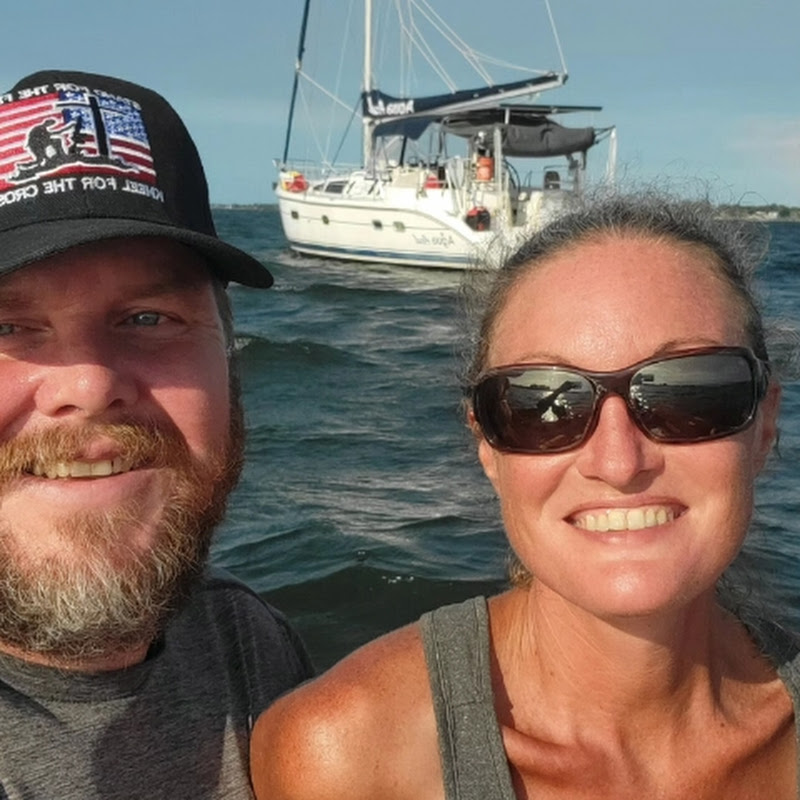
The technical reality of Luperón Bay involves managing the intersection of urban runoff and maritime safety. Primary data confirms a concentrated debris line flowing directly from the town into the harbor waters. Observations include industrial waste and plastic containers forming a distinct boundary at the edge of the current. The environmental narrative frames this as the inevitable result of municipal drainage meeting a protected bay. While Luperón remains a vital hurricane hole for the cruising community, the forensic data shows a significant accumulation of refuse that poses a direct risk to vessel systems. Operational execution remains focused on protecting the sub-surface layers of the vessel. The Babe is on deck monitoring the line as we navigate the Hunter 410 through the convergence zone. Redneck engineering protocols are in effect to ensure raw water intakes remain clear of plastic obstructions while the media layer documents the environmental flow. The conduct audit identifies the debris as urban runoff without utilizing ad hominem attacks against local infrastructure. This is a forensic look at the environmental challenges faced by the crew in the Dominican Republic. #Sailing #Luperon #DominicanRepublic #BoatLife #GreatLoop #Cruising #EnvironmentalReality #Hunter410 #OceanCleanup #HarborLife #CaribbeanCruising #MarineDebris #RedneckEngineering #TheNest #ThornyPath
0
0
0
116

The Maxi 95 was designed to accommodate a family safely and comfortably and also to sail well, the design realised all three goals. Production started in 1972 and continued into the 1980s with incremental improvements occurring each year. Manufacturing was based on the west coast of Sweden and around Lake Vnern which lies 100 km north east from the city of Gothenburg (additional descriptions can be found in our translation of the original Owners Manual). As fibreglass was a new material for boat construction, the moldings were made much thicker (and stronger) than todays productions. Osmosis is rather unknown to most yachts from that era when extra catalyst was added for extra strength. This means that the 20 year old Maxi boats are still structurally strong and ready to continue. Engines and other accessories may wear out and need replacement but the hulls continue to serve well.
0
0
0
6,244

Motorboat - Både sælges, Windy 37 Grand Mistral HT, 2006 SEK 1.775.000 Scanboat https://www.scanboat.com/en/boat-market/boats/motorboat-windy-37-grand-mistral-ht-17516941

0
0
0
175

0
0
0
0
6,222

0
0
0
0
1,627

The Riptide 41 is our second project from the Bieker Boats design firm. The boat is a water-ballasted, "high-performance gentleman's racer" that is being built with the latest carbon-composite materials. This time-lapse video, created by Geoff Thilo, shows the hull being rolled over after which structural work on the interior and bonding of the deck commenced.

0
0
0
586