Welcome aboard to the our video site for sailors. We are being constantly blasted by scammers and pirates, so registration is invite only
contact@sailorsahoy.com with "Invite". No spam, no newsletters. Just a free account
Shorts Créer

0
0
0
303

0
0
0
925

The knot commonly used to tie a fender onto the side of a boat to protect it from other boats and docks is called a "round turn and two half hitches." It is a simple and effective knot that provides a secure attachment for the fender. 👉Follow us for more tips about being a confident sailing cruiser! Here's how you tie a fender knot: 1. Start by passing the line's working end (rope) around a secure point on the boat, such as a cleat or railing. 2. Take the line's working end and make a loop around the standing part (the part of the line connected to the fender). 3. Pass the line's working end through the loop you just created. 4. Bring the line's working end around and make another loop around the standing part, similar to the first loop. 5. Pass the working end of the line through the second loop. 6. Tighten the knot by simultaneously pulling on the working end and the standing part. This knot will create a secure attachment for the fender, allowing it to protect the boat's side from impacts with other boats or docks. You can adjust the fender's height and position for optimal protection according to your specific docking situation. Follow us for more tips about being a confident sailing cruiser. #sailingexperience #boatknots #sailinglifestyle #short
0
0
0
4,249

#boatfoolssailing #heckledatsea #sailinglife Yacht People Problems Part II: BoatfFools Crew Heckled By Powerboaters Who Happen To Be Their Sailmaker Enjoy a short video of two boats meeting on the open sea! This boating adventure shows some playful banter between the crew of BoatFools on their Morgan 382 and some rowdy powerboaters who recognized them - and also happen to be their sailmakers! With friends like these - who needs enemies! It's always fun to see other boats while sailing! BoatFools Sailing: Real boats, real people, real fun! Sailboats for the Rest of Us! Join us for full boat tours, expert insights, and sailing adventures—all with a touch of humor.
0
0
0
1,964

Lors de la 51ème édition du salon nautique à flots de La Rochelle, le Grand Pavois, Yves Parlier (fondateur de Beyond the Sea) et Éric Pélaprat (technicien spécialiste de la traction par kite) envoient le LibertyKite® 80m² sur la plage des Minimes (La Rochelle) par vent faible. Cet envoi marque le début de la commercialisation de cette aile qui est à l'heure actuelle la plus grande aile LibertyKite® que commercialise Beyond the Sea.

0
0
0
432

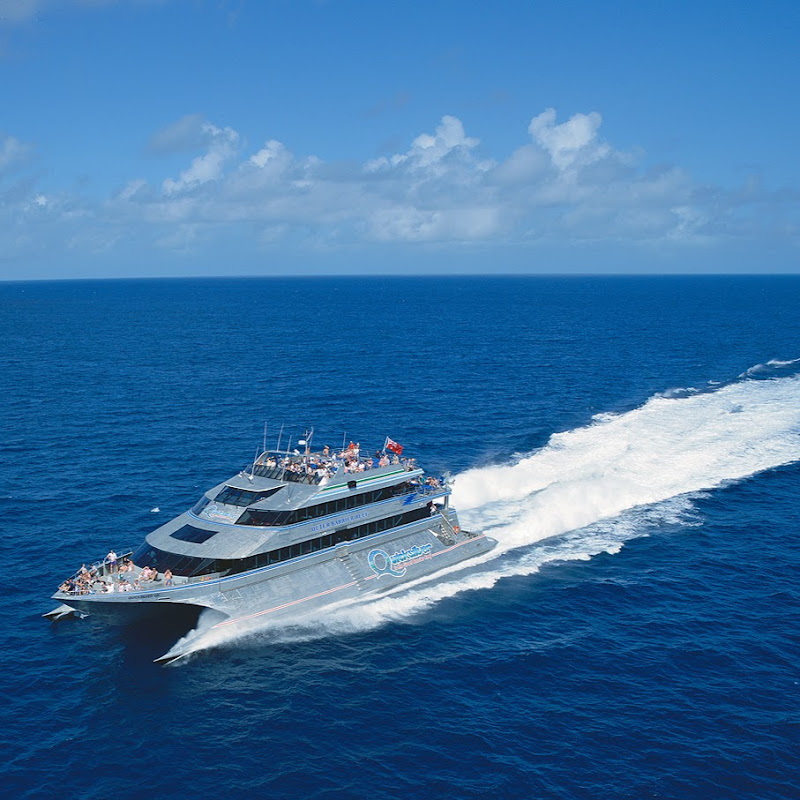
Silversonic passengers and crew recently enjoyed an amazing experience, when an Ornate Eagle Ray (Aetomylaeus vespertilio) was spotted swimming around "Barracuda Bommie", one of Quicksilver's remote dive sites on the Agincourt reefs. This gentle giant (one of the few species of eagle ray without a stinging barb) measured nearly 2.5m across the wings, and total length over 5m. The Ornate Eagle Ray is well named, as the patterns across the dorsal surface are exquisite, consisting of a mosaic of stripes and spots. Shane Down, Crew of Silversonic said, "The last time we saw an Ornate Eagle Ray was 3 years ago on Silversonic. It was an unbelievable sight and this new encounter may be the first one in Northern Australia that has been captured on video. It is a very rare and unique encounter -- like winning lotto underwater." Doug Baird, Quicksilver Cruises Environment and Compliance Manager said, "The species is not well known, and this is only the second one we have seen at one of our reef sites and there are only a few records from the northern parts of Australia (the last time an ornate eagle ray was spotted was in April 2008). They only produce 4-6 live young, making them highly vulnerable. Eagle rays live in the open ocean rather than at the bottom of the sea. They eat snails, mussels and crustaceans, crushing their shells with their extremely hard teeth. They are excellent swimmers and are able to jump several metres above the surface. They are classified as Endangered".
0
0
0
6,246
