تازہ ترین ویڈیوز
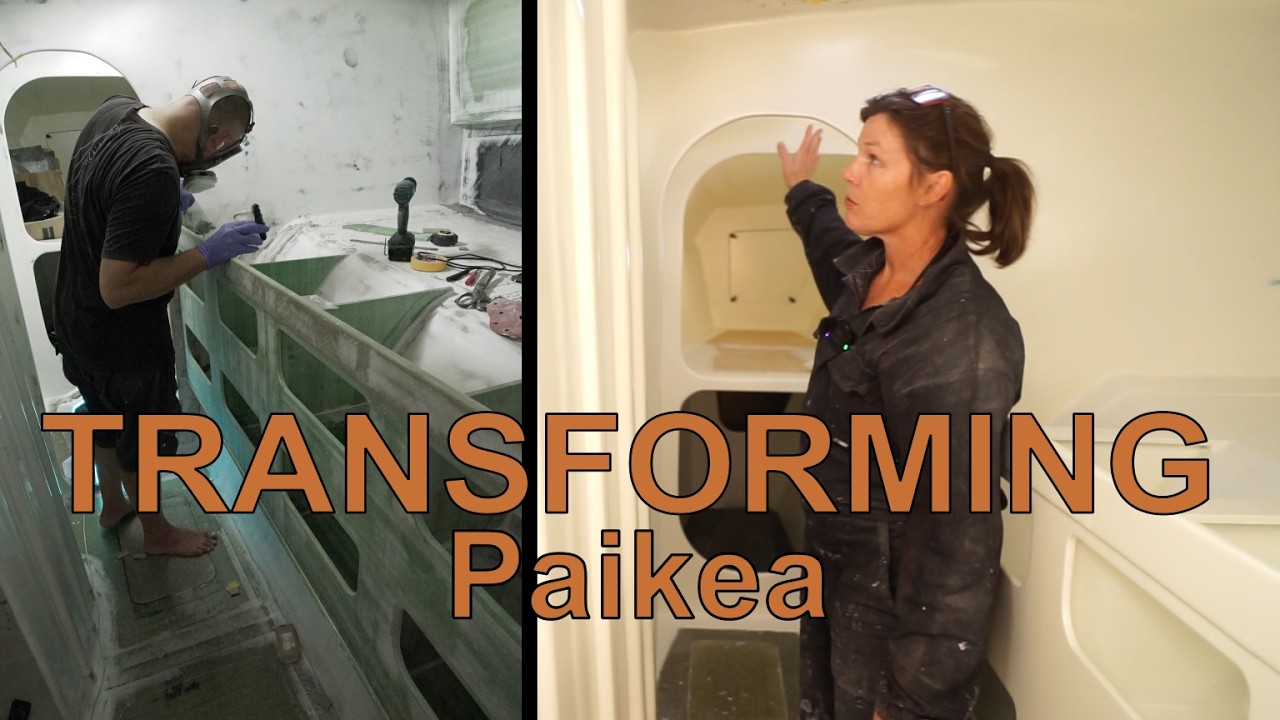
USEFUL LINKS ➜ Supporting blog post ➜ Youngbarnacles Members Hub: https://youngbarnacles.com/plans/all-access-memberships/ ➜ Free Sailing Library: https://youngbarnacles.com/free-resources/ MUSIC YouTube Audio Library ➜ https://www.youtube.com/ SAFETY DISCLAIMER: PROFESSIONAL WORK This video documents professional marine work with significant risk of injury or vessel damage. This is NOT DIY instruction. You are solely responsible for your own safety and actions. We are not liable for any application of this information. Full Disclaimer: https://youngbarnacles.com/website-disclaimer/

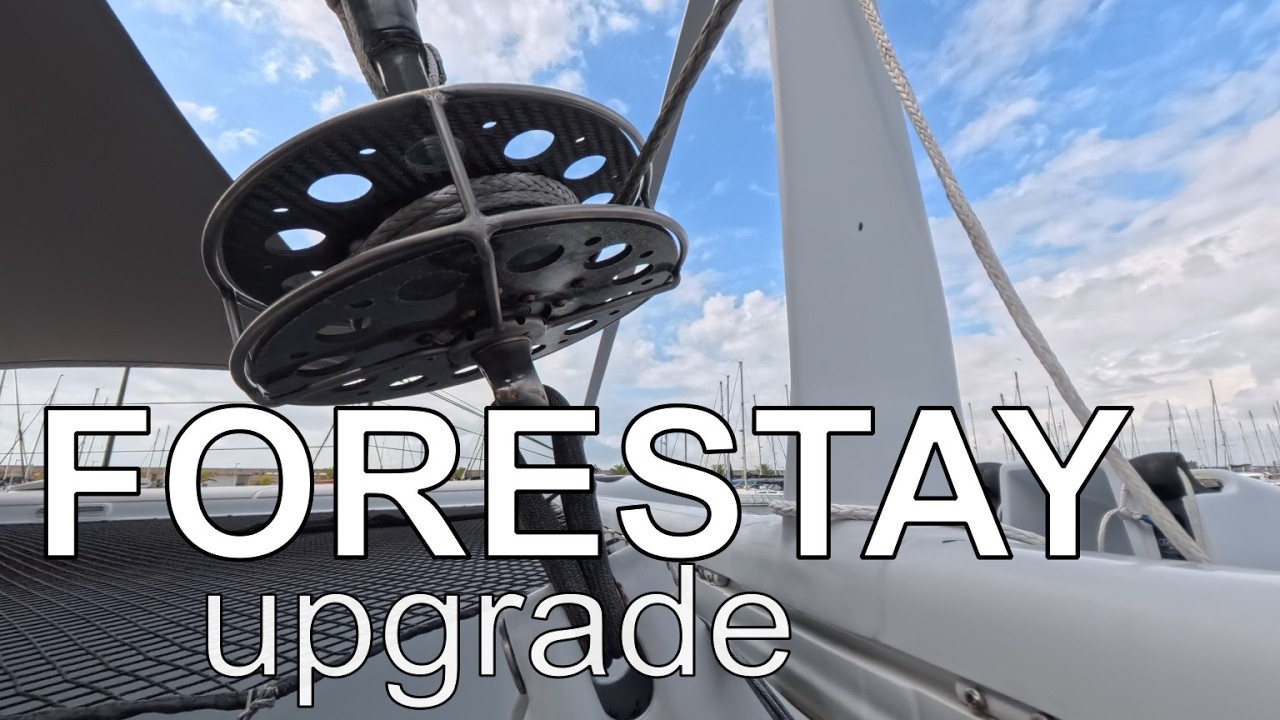
Installation of DM20 synthetic stays from @fabricaworkshop onto Paikea's carbon rig is bearing completion. The missing piece of the puzzle is the torsion cable forestay... we still need to save up the pocket money for the furler 😅 But don't they just look beeeeeautiful? 😍 The new synthetic sidestays and lowers are 14kg lighter than our wire stays/PBO lowers combo from before. Winning!

Fabrica Workshop https://www.fabricaworkshop.com/ USEFUL LINKS ➜ Supporting blog post ➜ Youngbarnacles Members Hub: https://youngbarnacles.com/plans/all-access-memberships/ ➜ Free Sailing Library: https://youngbarnacles.com/free-resources/ MUSIC YouTube Audio Library ➜ https://www.youtube.com/ SAFETY DISCLAIMER: PROFESSIONAL WORK This video documents professional marine work with significant risk of injury or vessel damage. This is NOT DIY instruction. You are solely responsible for your own safety and actions. We are not liable for any application of this information. Full Disclaimer: https://youngbarnacles.com/website-disclaimer/

USEFUL LINKS ➜ Supporting blog post ➜ Youngbarnacles Members Hub: https://youngbarnacles.com/plans/all-access-memberships/ ➜ Free Sailing Library: https://youngbarnacles.com/free-resources/ MUSIC YouTube Audio Library ➜ https://www.youtube.com/ SAFETY DISCLAIMER: PROFESSIONAL WORK This video documents professional marine work with significant risk of injury or vessel damage. This is NOT DIY instruction. You are solely responsible for your own safety and actions. We are not liable for any application of this information. Full Disclaimer: https://youngbarnacles.com/website-disclaimer/
USEFUL LINKS ➜ Supporting blog post ➜ Youngbarnacles Members Hub: https://youngbarnacles.com/plans/all-access-memberships/ ➜ Free Sailing Library: https://youngbarnacles.com/free-resources/ MUSIC YouTube Audio Library ➜ https://www.youtube.com/ SAFETY DISCLAIMER: PROFESSIONAL WORK This video documents professional marine work with significant risk of injury or vessel damage. This is NOT DIY instruction. You are solely responsible for your own safety and actions. We are not liable for any application of this information. Full Disclaimer: https://youngbarnacles.com/website-disclaimer/

USEFUL LINKS ➜ Supporting blog post ➜ Youngbarnacles Members Hub: https://youngbarnacles.com/plans/all-access-memberships/ ➜ Free Sailing Library: https://youngbarnacles.com/free-resources/ MUSIC YouTube Audio Library ➜ https://www.youtube.com/ SAFETY DISCLAIMER: PROFESSIONAL WORK This video documents professional marine work with significant risk of injury or vessel damage. This is NOT DIY instruction. You are solely responsible for your own safety and actions. We are not liable for any application of this information. Full Disclaimer: https://youngbarnacles.com/website-disclaimer/

Over 3 weeks away on a Gunboat 66 charter, a genuinely huge result for Oliver at the SFT World Tour in Lake Garda, then back to Paikea for the most refined version yet of our bunk-building technique — plus highlighting a piece of Alinghi 5 carbon integrated into Oliver's room. A lot happened. Here's all of it. Photo credit https://media.surffoilworldtour.com/ CHAPTERS 0:00 – Where We've Been 0:32 – Delivering Outnumbered Around Southern France 2:35 – Heading to Lake Garda for the SFT World Tour 4:19 – New Gear, New Stabiliser 6:28 – Race Day: Youth Division 6:40 – The Result: 4th Overall 8:32 – Back to the Boat: Oliver's Cabin Build 10:11 – Open-Top Cabinetry: The Latest Technique 12:32 – Designing the Wing Deck Bed Base 12:45 – Why You Can't Build Flat on a Wing Deck 15:29 – The Clear-Coated Carbon USEFUL LINKS ➜ Supporting blog post https://youngbarnacles.com/sv-outnumbered-olivers-pumpfoiling-win-and-a-cabin-build/ ➜ Youngbarnacles Members Hub: https://youngbarnacles.com/plans/all-access-memberships/ ➜ Free Sailing Library: https://youngbarnacles.com/free-resources/ MUSIC YouTube Audio Library ➜ https://www.youtube.com/ SAFETY DISCLAIMER: PROFESSIONAL WORK This video documents professional marine work with significant risk of injury or vessel damage. This is NOT DIY instruction. You are solely responsible for your own safety and actions. We are not liable for any application of this information. Full Disclaimer: https://youngbarnacles.com/website-disclaimer/

We're deep in the refit, and nothing is simple. From custom fuel tanks to side hatches and saloon seating, this episode covers a lot of ground. * Fuel System Overhaul * Passive Cooling Hatch * Saloon Seating Redesign * Freshwater Tanks * Harrison's Cabin CHAPTERS 0:00 - New Fuel Tank & What's Inside 1:15 - Forward Cabin Side Hatch (Airflow Design) 3:30 - Harrison's Desk & Race Yacht Recycled Carbon 4:45 - Oliver's Room: New Carbon Seat (Under 50% Weight) 7:00 - Saloon Seating Redesign: Lounging vs. Sailing 9:15 - New Plastic Water Tanks (Split System Safety) 11:30 - Custom Fuel Tank Details (Vinyl Ester, 3D Printed Gaskets) 14:45 - Fuel Locker & Deck Hatches 16:30 - Outro USEFUL LINKS ➜ Supporting blog post https://youngbarnacles.com/custom-diesel-tank-lids/ ➜ Want to go deeper? Access our detailed composites videos, project files, and community on the Youngbarnacles Members Hub: https://youngbarnacles.com/plans/all-access-memberships/ ➜ Need world-class engineering for your project? Learn more about our professional design and consultancy services at SYAS Performance: https://syasperformance.weebly.com/ ➜ Free Sailing Library: Check out our free guides on composites, systems, and seamanship: https://www.youngbarnacles.com/resources MUSIC YouTube Audio Library ➜ https://www.youtube.com/ SAFETY DISCLAIMER: PROFESSIONAL WORK This video documents professional marine work with significant risk of injury or vessel damage. This is NOT DIY instruction. You are solely responsible for your own safety and actions. We are not liable for any application of this information. Full Disclaimer: https://youngbarnacles.com/website-disclaimer/ CREDITS Thumbnail photo https://trifork.com/mirpuri-trifork-racing/

In this episode, we’re diving deep into a serious carbon fiber upgrade session. First up, we check out the tricky installation of a curved carbon-nomics panel into the cabin top (big shout out to Shane for getting that twisty piece in!). We’re sticking to our boat-building standard: if it’s black, it’s bonded with epoxy and carbon. Then we’re breaking down these incredible @C-TECH CT40 sail battens. Shayne explains why these aren’t just any carbon tubes: - How they are custom-designed for specific sails (even down to the individual pocket!). - The science of "hoop fiber" vs. "unidirectional" layup. - Why you can't just cut them in half (splitting them ruins the stiffness and causes twisting!). - How we are repurposing these high-tech race boat battens for our cruising boat. Where are we using these? - Compression Post: Future-proofing the mast base. - Push Pit: Building a carbon push pit (sorry stainless steel guy!). - Starlink Mount: Using Carbon c-tech battens for the post. - Cabin Top Stiffening: Attempting to recess these into the ceiling for wiring and strength. - Transom Beam: Stiffening the back to handle a traveler track. CHAPTERS: 0:00 - Intro & Carbon Panel Check 1:30 - Installing the twisted carbon nomex 4:00 - The C-Tech Batten deep dive (How they are made) 8:00 - Unidirectional vs Hoop fiber explained 11:00 - Why you can't split these battens 14:00 - Compression posts & future-proofing 17:00 - Starlink & Push Pit plans 20:00 - Stiffening the cabin top (The challenge) USEFUL LINKS ➜ Supporting blog post https://youngbarnacles.com/ ➜ Want to go deeper? Access our detailed composites videos, project files, and community on the Youngbarnacles Members Hub: https://youngbarnacles.com/plans/all-access-memberships/ ➜ Need world-class engineering for your project? Learn more about our professional design and consultancy services at SYAS Performance: https://syasperformance.weebly.com/ ➜ Free Sailing Library: Check out our free guides on composites, systems, and seamanship: https://www.youngbarnacles.com/resources MUSIC YouTube Audio Library ➜ https://www.youtube.com/ SAFETY DISCLAIMER: PROFESSIONAL WORK This video documents professional marine work with significant risk of injury or vessel damage. This is NOT DIY instruction. You are solely responsible for your own safety and actions. We are not liable for any application of this information. Full Disclaimer: https://youngbarnacles.com/website-disclaimer/

It still has the peel ply on but the carbon/nomex panel and CT40 sail batten are now laminated in place. Looks mint! Some high end lamination work from Shayne gping on here. The photos in the post I made this morning don't do it justice. It's a shame we are going to paint it all. Olly is pretty keen to clear coat the underside whoch is his bedroom roof so let's see if he can get it done in time before Mum comes along and bogs over it 😅🤪

Paikea refit, sailboat restoration, America's Cup boat salvage, carbon fiber repair, sailboat interior renovation, DIY boat building, Volvo Ocean Race, boat refit series, Valencia boat yard After a huge push, we’re finally at a point where the massive refit of our boat, Paikea, is showing serious progress. We’re tired, but we’re committed, and in this video, we’re giving you a full walkthrough of where we’re at. In this episode: America’s Cup Salvage: We grabbed carbon nomex panels and massive carbon sail battens from an AC catamaran Alinghi 5 that was being demolished. Will it look cool or just warped?! Structural Stiffening: See how we used a carbon batten to fix a flexy spot on the cabin roof and prevent hard points. Interior Demolition & Reconstruction: We’ve ripped out the old liner and are rebuilding the galley, companionway steps, and a MASSIVE new pantry. Upcycled Lockers: Harry is building out his cabin with lockers from the Volvo Ocean Race boat, Trifork/Ericcson 4. Aft Cabin & Shower: The shower/toilet area is finally taking shape! We’re fitting a carbon sink we’ve been saving for years and building a custom floor. Smart Plumbing: We’re installing a gravity-fed black water system to minimize pumps and complexity. Plus new hatches, stanchions etc. We’re getting there! From the "oh sh#t" phase to the "okay, we’re getting there" phase, I definitely think there is a bit of crazy here on Paikea. CHAPTERS: 0:00 - Intro & America's Cup Salvage 1:40 - Cabin Top Stiffening with Carbon Battens 3:35 - Galley, Pantry & Companionway Steps 5:50 - Harry's Upcycled Lockers (Ericsson 3) 7:40 - New Flush Hatches 8:30 - Aft Cabin: Shower, Toilet & Carbon Sink 12:25 - Aiden's Room & Plumbing Reroute 14:45 - Progress & Pizza Night USEFUL LINKS ➜ Supporting blog post https://youngbarnacles.com/ ➜ Want to go deeper? Access our detailed composites videos, project files, and community on the Youngbarnacles Members Hub: https://youngbarnacles.com/plans/all-access-memberships/ ➜ Need world-class engineering for your project? Learn more about our professional design and consultancy services at SYAS Performance: https://syasperformance.weebly.com/ ➜ Free Sailing Library: Check out our free guides on composites, systems, and seamanship: https://www.youngbarnacles.com/resources MUSIC YouTube Audio Library ➜ https://www.youtube.com/ SAFETY DISCLAIMER: PROFESSIONAL WORK This video documents professional marine work with significant risk of injury or vessel damage. This is NOT DIY instruction. You are solely responsible for your own safety and actions. We are not liable for any application of this information. Full Disclaimer: https://youngbarnacles.com/website-disclaimer/

Upwind sails are up so are we going upwind? The instrument says 150 degrees. And down here, it says we're going downwind. So which is it? In this video, we're sailing the Gunboat 66 to settle one of the most confusing topics in sailing: the difference between apparent wind and true wind. We'll break down why your instruments seem to lie, how dagger board trim changes everything, and what it actually means to be a true wind speed boat. CHAPTERS: 00:00 - Intro: Are We Going Upwind or Downwind? 01:17 - Setting Up: Gunboat 66 with Code Zero 02:17 - The Numbers: True Wind 150°, Apparent Wind 125° 03:08 - Dagger Boards: Grip, Slip, and Why They Matter 04:22 - The Simple Explanation: True Wind vs. Apparent Wind 05:30 - Adjusting Boards for Apparent Wind Shift 06:20 - Safety: Why Dagger Boards Prevent Capsizing 07:46 - Cockpit Layout & Slave Rings Discussion 08:33 - Autopilot Disaster: Why Heading Hold is Dangerous 09:13 - What is an "Apparent Wind Boat"? 10:15 - Watching the Apparent Wind Climb 11:20 - Myth Busting: True Wind Aft, Apparent Wind Forward 11:57 - Autopilot Wind Mode Explained 13:03 - Speed Over Ground vs. Speed Through Water 13:50 - True Wind Speed vs. Apparent Wind Speed 14:34 - "We're a True Wind Speed Boat" 14:51 - The Big Lie: Claiming Wind Speed with Apparent Wind 15:25 - Sail Change: Code Zero Down, Gennaker Up 16:43 - Gennaker Up: New Numbers (True 140°, Apparent 90°) 17:33 - Paddle Wheel Problems & GPS Calibration 18:21 - True Wind 9.6 kts, Apparent 6.3 kts – The Mistake Explained 19:50 - Early Morning: Goosewinged in 15 Knots 20:35 - Rain, Reefs, and Hoisting Mainsail Downwind 21:23 - Winch Layout & Flying Jammers 22:24 - Surfing: 9.7 Knots! 22:44 - Heavy Weather: True Wind 20 kts, Apparent 13 kts 23:59 - The "Wind Speed" Trap 24:47 - Using GPS for True Wind Calculations 25:20 - 10 Knots SOG = 10 Knots AWS? No, You're Not Doing Wind Speed 26:27 - Younger Crew in Shitty Weather (The Perks of Skippering) 27:31 - Parking the Boat & Wrap Up WHAT YOU'LL LEARN Why apparent wind and true wind can show opposite directions How to adjust dagger boards as the apparent wind shifts forward The safety advantage of dagger boards over fixed keels Why "heading hold" on autopilot will collapse your spinnaker How to use wind mode (apparent wind angle) correctly The difference between a "true wind speed boat" and everyone else Why comparing speed over ground to apparent wind speed is complete B.S. BOAT FOR SALE The Gunboat 66 featured in this video, Outnumbered , is currently for sale. Make/Model: Gunboat 66 Location: Spain More info https://youngbarnacles.com/gunboat-66-for-sale/ USEFUL LINKS ➜ Supporting blog post https://youngbarnacles.com/ ➜ Want to go deeper? Access our detailed composites videos, project files, and community on the Youngbarnacles Members Hub: https://youngbarnacles.com/plans/all-access-memberships/ ➜ Need world-class engineering for your project? Learn more about our professional design and consultancy services at SYAS Performance: https://syasperformance.weebly.com/ ➜ Free Sailing Library: Check out our free guides on composites, systems, and seamanship: https://www.youngbarnacles.com/resources MUSIC YouTube Audio Library ➜ https://www.youtube.com/ SAFETY DISCLAIMER: PROFESSIONAL WORK This video documents professional marine work with significant risk of injury or vessel damage. This is NOT DIY instruction. You are solely responsible for your own safety and actions. We are not liable for any application of this information. Full Disclaimer: https://youngbarnacles.com/website-disclaimer/

In this short, we look at a critical detail often missed when installing a self-tacking jib track: the load on the jib car bearings. A flat track can cause uneven wear. For the complete guide on jib track systems, curvature, and setup, watch the full video here: https://youtu.be/tb7EPtCFjNo USEFUL LINKS ➜ Supporting blog post https://youngbarnacles.com/ ➜ Want to go deeper? Access our detailed composites videos, project files, and community on the Youngbarnacles Members Hub: https://youngbarnacles.com/plans/all-access-memberships/ ➜ Need world-class engineering for your project? Learn more about our professional design and consultancy services at SYAS Performance: https://syasperformance.weebly.com/ ➜ Free Sailing Library: Check out our free guides on composites, systems, and seamanship: https://www.youngbarnacles.com/resources MUSIC YouTube Audio Library ➜ https://www.youtube.com/ SAFETY DISCLAIMER: PROFESSIONAL WORK This video documents professional marine work with significant risk of injury or vessel damage. This is NOT DIY instruction. You are solely responsible for your own safety and actions. We are not liable for any application of this information. Full Disclaimer: https://youngbarnacles.com/website-disclaimer/

A quick technical breakdown of jib sheet lead angle and the function of the clue board. The hole you select on the clue board determines the vertical angle of the jib sheet. This angle controls the draft and twist of the sail by changing where the sheet's force is applied relative to the sail's center of effort. In short: The line from the block should lead roughly to the jib's center of effort for balanced trim on a given point of sail. Selecting the wrong hole will incorrectly flatten the foot or over-tighten the leech, hurting performance. SAFETY DISCLAIMER: PROFESSIONAL WORK This video documents professional marine work with significant risk of injury or vessel damage. This is NOT DIY instruction. You are solely responsible for your own safety and actions. We are not liable for any application of this information. Full Disclaimer: https://youngbarnacles.com/website-disclaimer/ USEFUL LINKS ➜ Supporting blog post https://youngbarnacles.com/the-art-and-science-of-the-self-tacking-jib/ ➜ Want to go deeper? Access our detailed composites videos, project files, and community on the Youngbarnacles Members Hub: https://youngbarnacles.com/plans/all-access-memberships/ ➜ Need world-class engineering for your project? Learn more about our professional design and consultancy services at SYAS Performance: https://syasperformance.weebly.com/ ➜ Free Sailing Library: Check out our free guides on composites, systems, and seamanship: https://www.youngbarnacles.com/resources MUSIC YouTube Audio Library ➜ https://www.youtube.com/
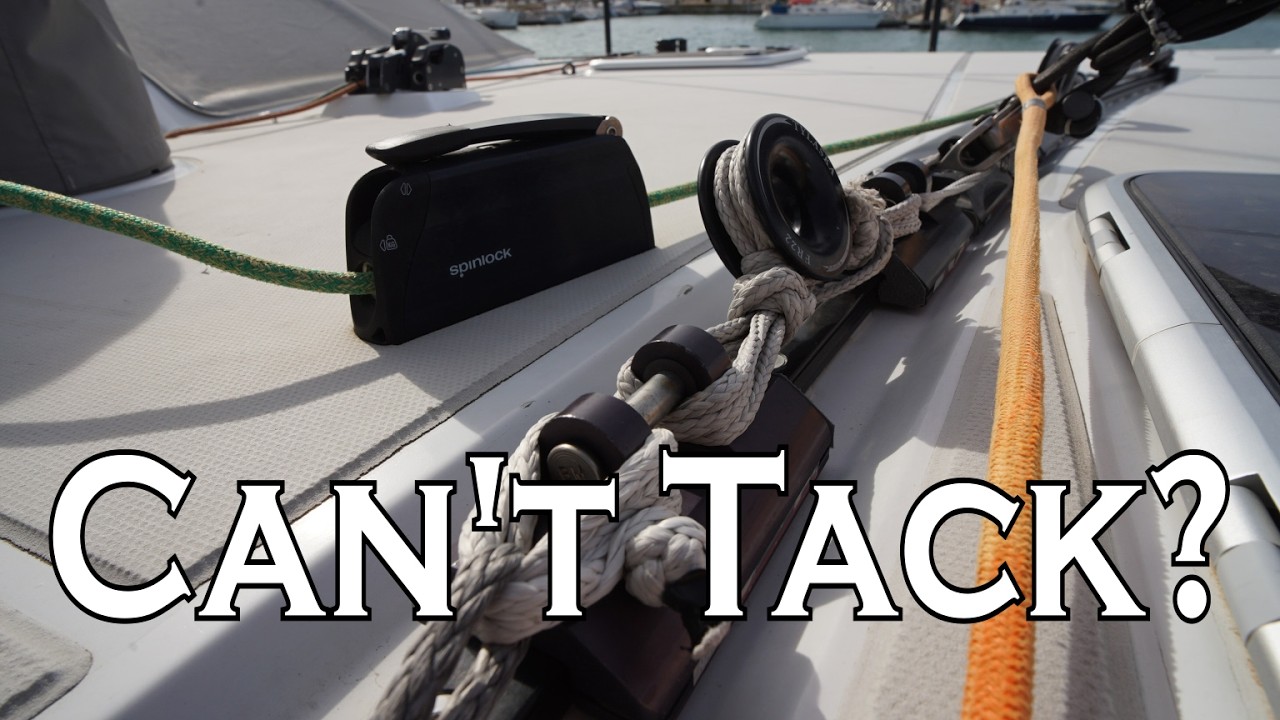
Self-tacking jibs seem like magic—just turn the wheel and the sail does all the work. But the reality is far more complicated. In this video, we break down the engineering, the compromises, and the hard truths about self-tacking jib systems on board a Gunboat 66. From curved tracks and sheeting angles to friction points and the dreaded "outforce" lines, we explore why some systems work beautifully and others leave you fighting the helm. What we cover: Why your self-tacker might not actually self-tack The critical difference between curved and straight tracks Why the sheet lead position changes everything The friction problem (and why some systems are doomed) How to spot a good setup vs. a bad compromise Whether you're shopping for a new boat, upgrading your rig, or just trying to understand why your jib keeps sticking in the middle of a tack, this video lays out the truth. CHAPTERS: 0:00 - Intro: The Promise of Self-Tacking 1:20 - The Gunboat 66 Setup 2:50 - Why the Car Won't Go Outboard 4:15 - The Mast Lead Problem 6:30 - Curved Tracks Explained 8:45 - Straight Tracks = Bad Sail Shape 11:00 - Multiple Cars & Staysail Setup 13:45 - The Vertical Curve Compromise 16:30 - Systems to Avoid 18:20 - Summary: Friction is the Enemy USEFUL LINKS ➜ Supporting blog post https://youngbarnacles.com/the-art-and-science-of-the-self-tacking-jib/ ➜ Want to go deeper? Access our detailed composites videos, project files, and community on the Youngbarnacles Members Hub: https://youngbarnacles.com/plans/all-access-memberships/ ➜ Need world-class engineering for your project? Learn more about our professional design and consultancy services at SYAS Performance: https://syasperformance.weebly.com/ ➜ Free Sailing Library: Check out our free guides on composites, systems, and seamanship: https://www.youngbarnacles.com/resources MUSIC YouTube Audio Library ➜ https://www.youtube.com/ SAFETY DISCLAIMER: PROFESSIONAL WORK This video documents professional marine work with significant risk of injury or vessel damage. This is NOT DIY instruction. You are solely responsible for your own safety and actions. We are not liable for any application of this information. Full Disclaimer: https://youngbarnacles.com/website-disclaimer/

A deep dive into the digital design workflow behind a custom composite shower floor for a sailboat refit. This isn't just CAD—it's the full cycle: starting with hands-on "Cardboard Assisted Design" (CAD) for ergonomics and feel, translating that into precise 3D computer models, verifying fits with 3D scanning, and finally preparing files for 3D printing the moulds. In this video, we cover: Transitioning from a physical cardboard mock-up to a digital 3D model. Detailed CAD design of the shower floor's drainage: creating a central valley, specifying falls (slopes), and integrating a large inspection hatch. Engineering the hatch: seal compression stops, water flow ramps, and dual retention systems (bungee & mechanical). Designing the integrated sump with a hair trap and carbon fiber drain tube. Using 3D scanning to verify CAD models against the actual, irregular hull geometry for critical component placement (like the toilet). Preparing the CAD model for 3D printing: splitting the mould, print settings for vacuum infusion (shells, infill), and lessons on material consistency. This video is for makers, boat builders, and anyone interested in the hybrid process of blending traditional problem-solving with modern digital fabrication tools. CHAPTERS: 00:00 - Intro: Cardboard to CAD 01:30 - 2D CAD Overview & Drainage Planning 03:15 - 3D CAD Deep Dive: Floor Falls & Wedges 06:45 - Hatch Design: Seals, Compression Stops & Geometry 12:10 - Sump & Drain Design 15:30 - Integrating Other Components (Toilet, Plumbing) 18:45 - Verifying with 3D Scanning 23:20 - From CAD to 3D Printed Mould 27:00 - 3D Print Setup & Settings for Tooling 29:50 - Process Recap & Conclusion USEFUL LINKS ➜ Supporting blog post https://youngbarnacles.com/boat-shower-floor-design-cad-3d-scan-print-workflow/ ➜ Want to go deeper? Access our detailed composites videos, project files, and community on the Youngbarnacles Members Hub: https://youngbarnacles.com/plans/all-access-memberships/ ➜ Need world-class engineering for your project? Learn more about our professional design and consultancy services at SYAS Performance: https://syasperformance.weebly.com/ ➜ Free Sailing Library: Check out our free guides on composites, systems, and seamanship: https://www.youngbarnacles.com/resources MUSIC YouTube Audio Library ➜ https://www.youtube.com/ SAFETY DISCLAIMER: PROFESSIONAL WORK This video documents professional marine work with significant risk of injury or vessel damage. This is NOT DIY instruction. You are solely responsible for your own safety and actions. We are not liable for any application of this information. Full Disclaimer: https://youngbarnacles.com/website-disclaimer/

Welcome back to the bilges! This week, we're deep in the design phase of a problem every boat owner faces: the shower floor. Forget standard construction—on a boat, you're battling changing trim, mandatory inspection hatches, and the nightmare of a failed pump flooding the bilge. We break down our custom solution, designed from scratch. In this episode, we cover: • The core challenge: creating proper drainage fall on a level base. • Why the pump must be in a separate compartment (and the "floating lid" logic). • Designing an integrated inspection hatch with a gutter and drain. • Our "valley" solution to handle the boat's fore/aft trim. • From Cardboard Assisted Design (CAD) to computer modeling. CHAPTERS: 00:00 - Intro: Welcome Back to the Bilges 01:01 - The Challenge: Creating Fall on a Level Base 01:24 - The Core Drivers: Drainage & Underfloor Access 02:34 - The Integrated Hatch & Drain Design 04:02 - Designing for Trim: The "Valley" Solution 05:15 - Why the Pump is NOT Under the Shower 06:20 - Problem #1: Hair & The "Floating Lid" Filter 08:41 - Problem #2: Serviceability & Easy Pump Access 11:18 - On-Site Mockup: CAD = Cardboard Assisted Design 13:00 - Hatch Mechanics: Seals, Steps, and Tool-Free Removal 16:05 - Systems Planning: Hoses, Wires & Avoiding Swiss Cheese 18:54 - From Cardboard to Computer: The Value of Physical Mockups 22:17 - Next: The Computer CAD Model & 3D Scanning USEFUL LINKS ➜ Supporting blog post https://youngbarnacles.com/boat-shower-floor-design-blueprint/ ➜ Want to go deeper? Access our detailed composites videos, project files, and community on the Youngbarnacles Members Hub: https://youngbarnacles.com/plans/all-access-memberships/ ➜ Need world-class engineering for your project? Learn more about our professional design and consultancy services at SYAS Performance: https://syasperformance.weebly.com/ ➜ Free Sailing Library: Check out our free guides on composites, systems, and seamanship: https://www.youngbarnacles.com/resources MUSIC YouTube Audio Library ➜ https://www.youtube.com/ SAFETY DISCLAIMER: PROFESSIONAL WORK This video documents professional marine work with significant risk of injury or vessel damage. This is NOT DIY instruction. You are solely responsible for your own safety and actions. We are not liable for any application of this information. Full Disclaimer: https://youngbarnacles.com/website-disclaimer/
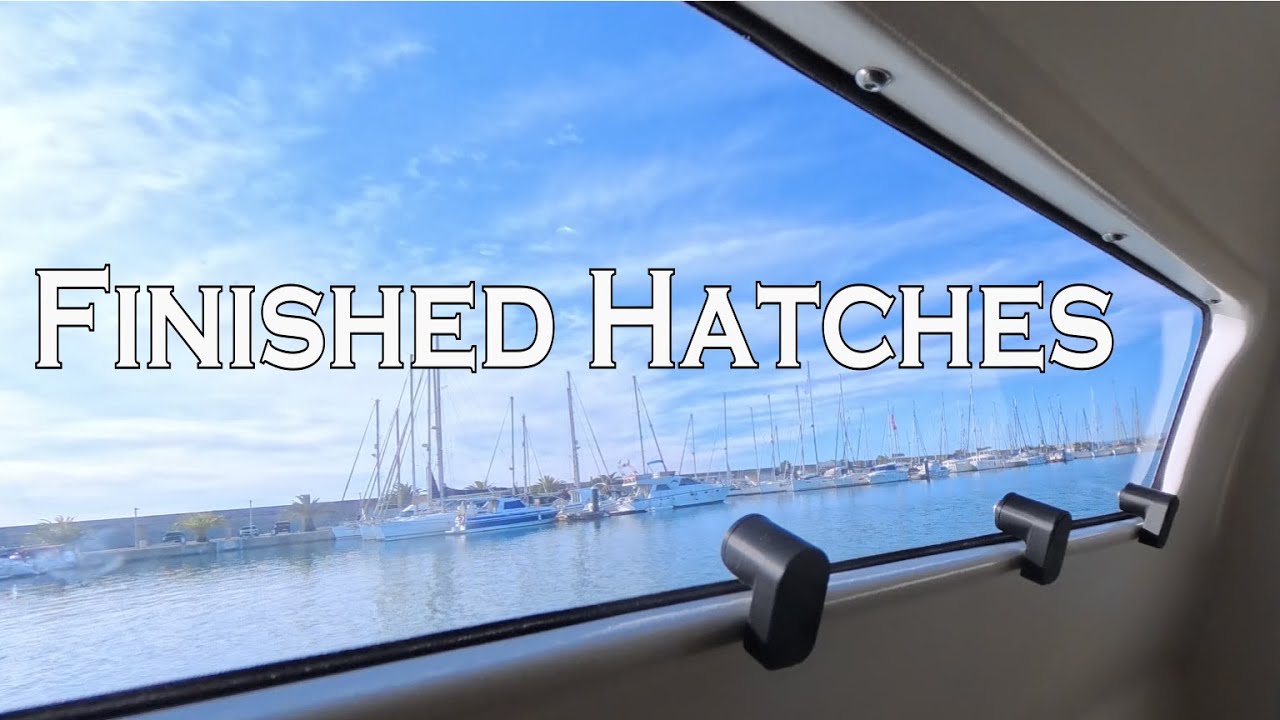
In this boat building episode, we reach a major milestone: installing the transparent acrylic lenses into our custom-built hatches! Watch the step-by-step process of making our boat watertight and bringing in natural light. We also tackle critical water management by designing and installing custom 3D-printed hatch drains, explain why MS Polymer Sealant is better than urethane for this job, and continue fairing the galley and doorways. CHAPTERS: 00:00 – Intro & Hatch Lenses Have Arrived! 01:00 – Visual Progress & Project Overview 01:38 – Hatch Drain Design & Installation Explanation 05:40 – Sanding & Prepping the Drain Area 07:10 – Gluing the 3D-Printed Drain & Using Foam Inserts 09:04 – Installing the First Acrylic Hatch Lens 11:48 – MS Sealant vs. Urethane – Which is Better? 14:44 – Clamping & Sealing the Lens 16:15 – Cat Inspector in the New Shower Pan! 19:04 – Finished USEFUL LINKS ➜ Supporting blog post https://youngbarnacles.com/acrylic-hatch-lenses/ ➜ Want to go deeper? Access our detailed composites videos, project files, and community on the Youngbarnacles Members Hub: https://youngbarnacles.com/plans/all-access-memberships/ ➜ Need world-class engineering for your project? Learn more about our professional design and consultancy services at SYAS Performance: https://syasperformance.weebly.com/ ➜ Free Sailing Library: Check out our free guides on composites, systems, and seamanship: https://www.youngbarnacles.com/resources MUSIC YouTube Audio Library ➜ https://www.youtube.com/ SAFETY DISCLAIMER: PROFESSIONAL WORK This video documents professional marine work with significant risk of injury or vessel damage. This is NOT DIY instruction. You are solely responsible for your own safety and actions. We are not liable for any application of this information. Full Disclaimer: https://youngbarnacles.com/website-disclaimer/

Deep dive into a practical fiberglass repair. When we removed the floors in Paikea's port side, we found classic core damage: delamination and a shear crack from an old impact. We had aleady fixed the same sort of problem on the starboard side so now its time to fix the damage in the port hull. CHAPTERS: 0:00 Introduction: When a Simple Job Reveals More 1:15 Damage Discovery: The Cracked Bulkhead 2:45 Forensic Tapping: Mapping the Delamination 4:30 Understanding the Failure: Core Shear & Impact Damage 6:00 Engineering the Repair: Slurry Formulation & Application 8:45 Structural Upgrade: Fabricating the New Bulkhead 12:30 Precision Fit: Templating the New Cabin Sole 15:00 Final Installation: Bedding the Composite Floor 17:30 Closeout: Weight Audit & Methodology Review This is essential knowledge for any boat owner or builder dealing with hull or deck repairs. The principles apply to any cored composite structure! USEFUL LINKS ➜ Supporting blog post https://youngbarnacles.com/ ➜ Want to go deeper? Access our detailed composites videos, project files, and community on the Youngbarnacles Members Hub: https://youngbarnacles.com/plans/all-access-memberships/ ➜ Need world-class engineering for your project? Learn more about our professional design and consultancy services at SYAS Performance: https://syasperformance.weebly.com/ ➜ Free Sailing Library: Check out our free guides on composites, systems, and seamanship: https://www.youngbarnacles.com/resources MUSIC YouTube Audio Library ➜ https://www.youtube.com/ SAFETY DISCLAIMER: PROFESSIONAL WORK This video documents professional marine work with significant risk of injury or vessel damage. This is NOT DIY instruction. You are solely responsible for your own safety and actions. We are not liable for any application of this information. Full Disclaimer: https://youngbarnacles.com/website-disclaimer/

This episode documents the removal of a leaking forward deck hatch aboard Paikea and the process of filling and structurally rebuilding the opening. The hatch over Harry’s bunk had been a long-term source of water ingress. Rather than replacing it like-for-like, we decided to remove the opening entirely and move ventilation to a side port light positioned under the gunwale, where it’s protected from direct rain and green water. The video covers: Why this hatch was removed rather than replaced Cutting and filling the deck opening Foam fitting in a cambered deck Hand laminating versus infusion trade-offs Laminate thickness, resin choice, and consolidation Why closing the opening significantly stiffens the deck panel This isn’t presented as a universal solution. It’s a record of one specific structural decision on Paikea, made within the constraints of time, access, and how the boat is actually used offshore. CHAPTERS: 00:00 Cutting another hole in the boat – why this hatch matters 01:00 Why the forward hatch keeps leaking 01:02 Decision: filling the hatch instead of replacing it 4:54 Two hatches in – preparing to fill Harry’s hatch 7:14 Shaping foam to match deck camber 09:01 Cold conditions and curing the foam 11:38 Hand laminating vs infusion (and time pressure) 15:27 Can you walk on it yet? (skin structure explained) 19:49 Overhead work and inside skin plans 01:20:00 Why the outside wasn’t infused 21:00 3D infusion explained (and why it wasn’t done here) 24:20 Infusion pleats explained – avoiding resin ridges SAFETY DISCLAIMER: PROFESSIONAL WORK This video documents professional marine work with significant risk of injury or vessel damage. This is NOT DIY instruction. You are solely responsible for your own safety and actions. We are not liable for any application of this information. Full Disclaimer: https://youngbarnacles.com/website-disclaimer/ USEFUL LINKS ➜ Supporting blog post https://youngbarnacles.com/ ➜ Want to go deeper? Access our detailed composites videos, project files, and community on the Youngbarnacles Members Hub: https://youngbarnacles.com/plans/all-access-memberships/ ➜ Need world-class engineering for your project? Learn more about our professional design and consultancy services at SYAS Performance: https://syasperformance.weebly.com/ ➜ Free Sailing Library: Check out our free guides on composites, systems, and seamanship: https://www.youngbarnacles.com/resources MUSIC YouTube Audio Library ➜ https://www.youtube.com/