Welcome aboard to the our video site for sailors. We are being constantly blasted by scammers and pirates, so registration is invite only
contact@sailorsahoy.com with "Invite". No spam, no newsletters. Just a free account
Calção Crio

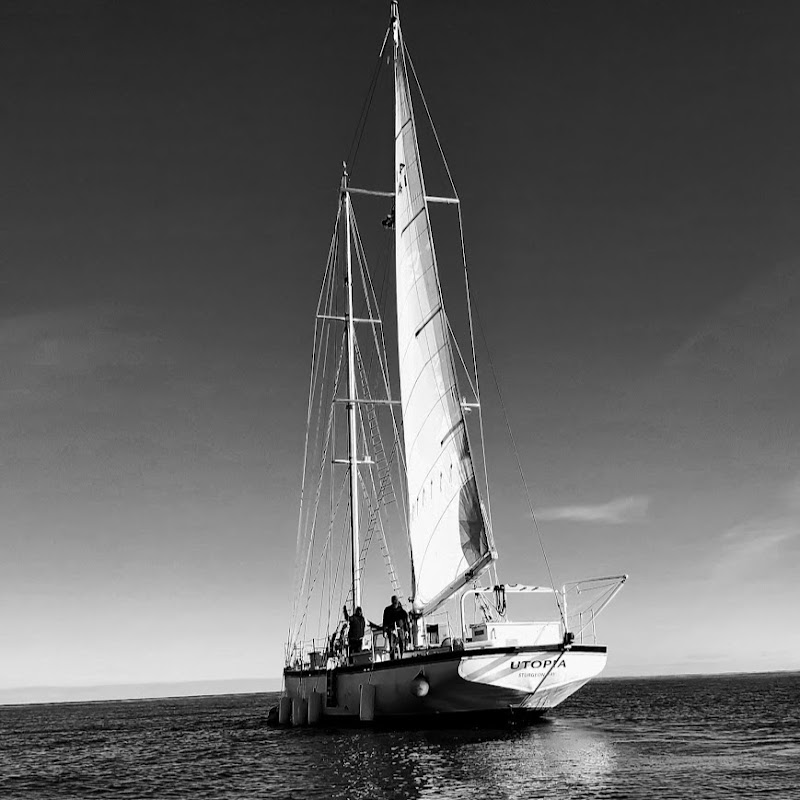
Link to full article: https://www.utopia1946.com/utopia-blog/sv-utopia-tours-post-war-europe-1948 FOLLOW US --------------------------------------------------- Facebook: https://www.facebook.com/profile.php?id=61559312643639 Instagram: https://www.instagram.com/svutopia/ Pinterest: https://www.pinterest.com/svutopia/ About the Utopia: The historic Great Lakes schooner Utopia, built in 1946, offers a fascinating glimpse into maritime history. Originally from Sturgeon Bay, you can now find Utopia in Manitowoc, Wisconsin! Dockside visitors can explore this beautifully crafted vessel, which was designed by Fred J. Peterson of Peterson Builders, Inc. in Sturgeon Bay, Wisconsin and built in 1946. Utopia’s unique features include a steel double bottom for strength, wooden hull sides for warmth, and twin Detroit diesel engines. Visitors can marvel at her elegant lines, learn about her global circumnavigation, and appreciate the craftsmanship that has kept her sailing for decades. Utopia currently resides under the stewardship of the her new owners based in Manitowoc Wisconsin, where it continues to inspire curiosity and passion for the Great Lakes among learners of all ages.
0
0
0
432

Impressionen des Segeln und der Navigation in den Ålandinseln.
0
0
0
63

0

0
0
0
2,188
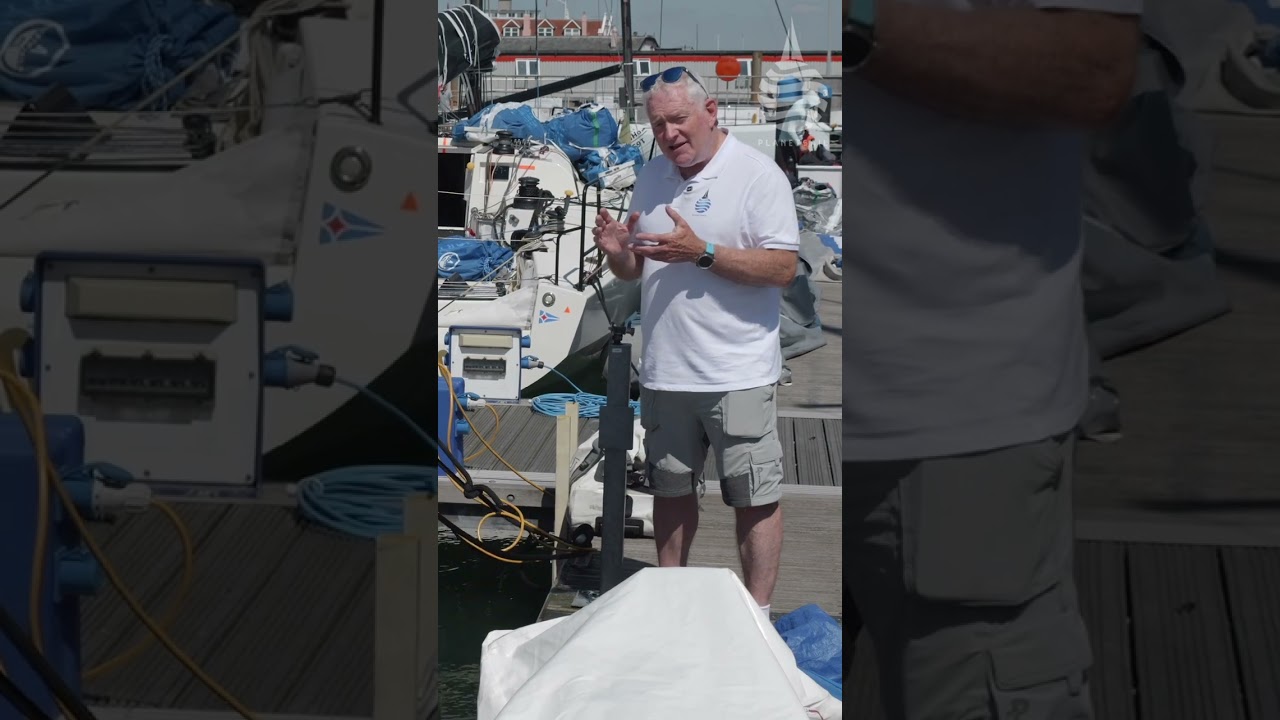
It may have been the most prestigious offshore racing trophy in the world but it's been 22 years since the last event was run - So what will the format look like this time?

0
0
0
2,482

1) Understanding your energy needs is essential to determine how much solar you need. Start by making an "energy budget". List all your consumers and their daily usage. For example, if your LED lights use 1W per bulb and you have eight bulbs on for 5 hours a day, that would be 8 Watts for 5 hours or (8x5) 40 Wh (Watt hours). I like to use kWh to keep things consistent. 40 Wh = 0.040 kWh. It's a good idea to list what you're using while at anchor and another list of what you're using while underway (for instance, you don't use your autopilot at anchor). Remember to list everything: fridge, freezer, watermaker, autopilot, nav lights, chart plotters, etc. For example, here aboard Athena, with an electric galley, fridge, freezer, watermaker, two computers, etc, we use an average of 5.5 kWh per day. 2) To give you a quick estimate, use https://globalsolaratlas.info/ to find "Global horizontal irradiation" per day for your location. Take your daily energy consumption from step 1 and divide that by the number of solar hours. In the case of Athena, located in the Caribbean, that would be 5.5kWh per day / 5 sun hours = 1.1 kW solar array. Keep in mind that this is a theoretical number that does not take into account the shading or degradation of the panels over time. Let's add 30%. 1.1 x 1.3 = 1.43 kW. You can now divide that number by the panel's Nominal Power output. In the case of Athena, our panels are 400W SunPower panels. 1430W / 400W = 3.6 panels needed to cover our 5.5 kWh per day consumption. 3) Understand that the amount of solar you can install on a small sailboat is limited by the size of the boat and heavily influenced by shading and, of course, the boat's location. The size of the panels might also be defined by the height of your stanchions or the size of an existing solar arch. Figure out where you're able and willing to install panels. That will dictate the size and number of panels. 4) Use Victron Energy's MPPT Calculator to calculate what MPPT is ideally sized for your solar panels and expected output based on location. Based on our experience in the Caribbean, the estimate provided by the guide is reasonable. https://www.victronenergy.com/mppt-calculator. Remember that it's best practice to avoid combining panels with different specs on the same MPPT. #sailboat #sailboatproject #boatwork #saillife #liveaboard #liveaboardlife #saltlife #sailing #sailingadventure #travel ingcouple #livingonaboat #solar #sailboatsolar
0
0
0
18,955

Geschafft zum NRV-Steg. Im Hintergrund läuft das Renngeschehen weiter.

0
0
0
329