Welcome aboard to the our video site for sailors. We are being constantly blasted by scammers and pirates, so registration is invite only
contact@sailorsahoy.com with "Invite". No spam, no newsletters. Just a free account
Kratke hlače Stvoriti

1) Understanding your energy needs is essential to determine how much solar you need. Start by making an "energy budget". List all your consumers and their daily usage. For example, if your LED lights use 1W per bulb and you have eight bulbs on for 5 hours a day, that would be 8 Watts for 5 hours or (8x5) 40 Wh (Watt hours). I like to use kWh to keep things consistent. 40 Wh = 0.040 kWh. It's a good idea to list what you're using while at anchor and another list of what you're using while underway (for instance, you don't use your autopilot at anchor). Remember to list everything: fridge, freezer, watermaker, autopilot, nav lights, chart plotters, etc. For example, here aboard Athena, with an electric galley, fridge, freezer, watermaker, two computers, etc, we use an average of 5.5 kWh per day. 2) To give you a quick estimate, use https://globalsolaratlas.info/ to find "Global horizontal irradiation" per day for your location. Take your daily energy consumption from step 1 and divide that by the number of solar hours. In the case of Athena, located in the Caribbean, that would be 5.5kWh per day / 5 sun hours = 1.1 kW solar array. Keep in mind that this is a theoretical number that does not take into account the shading or degradation of the panels over time. Let's add 30%. 1.1 x 1.3 = 1.43 kW. You can now divide that number by the panel's Nominal Power output. In the case of Athena, our panels are 400W SunPower panels. 1430W / 400W = 3.6 panels needed to cover our 5.5 kWh per day consumption. 3) Understand that the amount of solar you can install on a small sailboat is limited by the size of the boat and heavily influenced by shading and, of course, the boat's location. The size of the panels might also be defined by the height of your stanchions or the size of an existing solar arch. Figure out where you're able and willing to install panels. That will dictate the size and number of panels. 4) Use Victron Energy's MPPT Calculator to calculate what MPPT is ideally sized for your solar panels and expected output based on location. Based on our experience in the Caribbean, the estimate provided by the guide is reasonable. https://www.victronenergy.com/mppt-calculator. Remember that it's best practice to avoid combining panels with different specs on the same MPPT. #sailboat #sailboatproject #boatwork #saillife #liveaboard #liveaboardlife #saltlife #sailing #sailingadventure #travel ingcouple #livingonaboat #solar #sailboatsolar

0
0
0
18,952

0
0
0
0
13


0
0
0
10,809

0

0
0
0
898

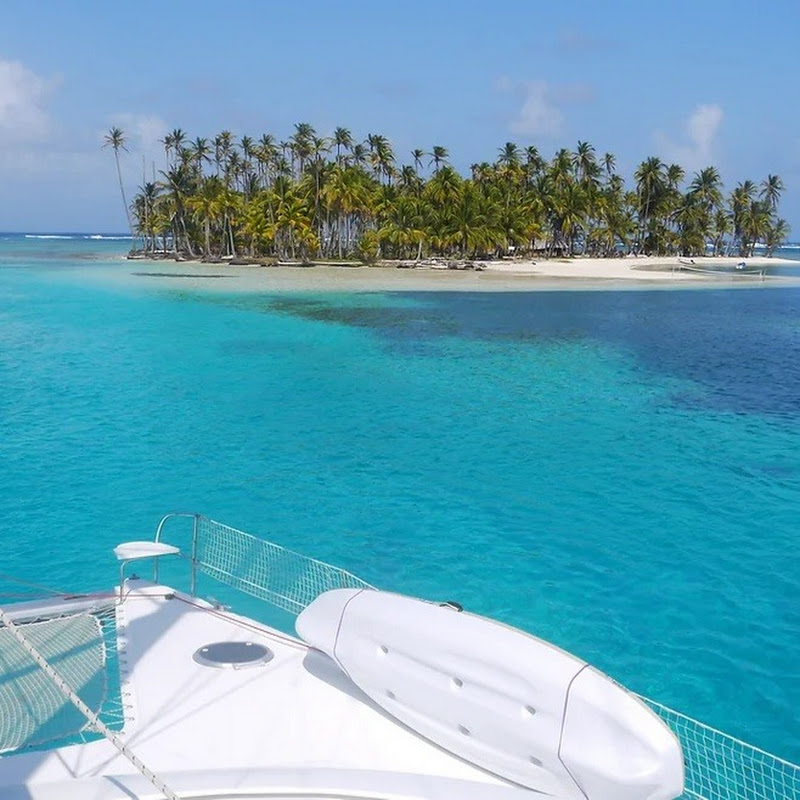
How to Visit the Pool in the San Blas Islands? Due to the distance that separates it from mainland and the landing strip, reaching the famous Pool in the outer Cays of San Blas and what can be considered Paradise within Paradise, is only recommended for 5 or more nights yacht charters. The Pool, which lies in Eastern Dutch Cays or Cayos Holandeses and South of Turtle island, is the furthest island from mainland and due to this has the clearest water visibility throughout the year. With no rivers close by and unperturbed crystal clear waters, the Pool remains best snorkeling area in San Blas Other activities in which to engage while at the Pool and that are included in our all inclusive catamaran trips, are kayaking and paddleboarding to the nearby mangroves, swimming or plane relaxin onboard. Reaching Turtle island for a beer ashore is also a must, be sure not to miss that. Visit San Blas and charter a catamaran with Catamaran Adventures San Blas
0
0
0
275

0

0
0
0
3,271