Welcome aboard to the our video site for sailors. We are being constantly blasted by scammers and pirates, so registration is invite only
contact@sailorsahoy.com with "Invite". No spam, no newsletters. Just a free account
Şort oluşturmak

0

0
0
0
22

film por "Lima"
0
0
0
286

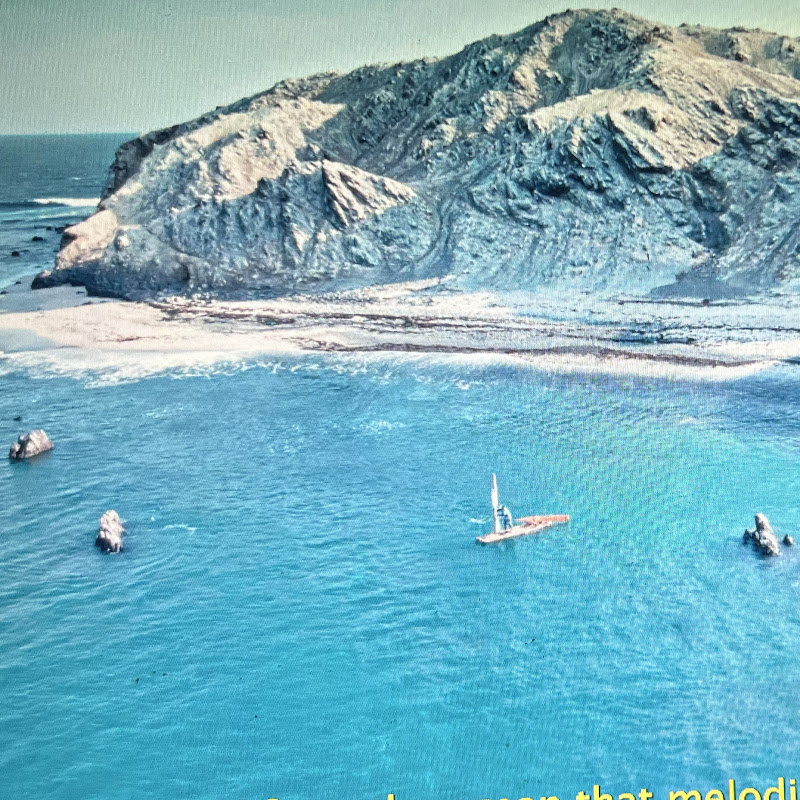
D59 : Sea spray for Didac Costa

0
0
0
2,577


0
0
0
1

www.acm-cata.com www.100pour100-cata.com Apprendre à faire le nœud de cabestan pour attacher vos pare-battages par exemple. Le nœud de cabestan ou d'amarre est un nœud couramment utilisé en matelotage et en alpinisme. Rapide à faire et à défaire, il ne risque pas de s'ouvrir sous la tension, sans pour autant se souquer (c'est-à-dire sans se serrer de lui-même sous l’effet des tensions, jusqu'à devenir très difficile a dénouer). Les deux brins se serrent indépendamment sous la traction, mais si la tension se relâche, ce nœud peut se desserrer. Il est possible de le nouer au milieu d'un cordage, même si les deux extrémités ne sont pas accessibles. ACM CATA la 1er école de croisière 100% CATA et affiliée à la FFV Vous propose de devenir autonome grâce à 4 stages + une certification Chef de bord. Retrouvez pour chaque stage de formation, 5 domaines de compétences (Technique voile ; moteur ; sécurité ; navigation et culture et sens marin) Vous pouvez effectuer ces stages sous différentes formules : en équipage, en exclusif ou coaching Contactez-nous : catamarans@sfr.fr

0
0
0
824

1) Understanding your energy needs is essential to determine how much solar you need. Start by making an "energy budget". List all your consumers and their daily usage. For example, if your LED lights use 1W per bulb and you have eight bulbs on for 5 hours a day, that would be 8 Watts for 5 hours or (8x5) 40 Wh (Watt hours). I like to use kWh to keep things consistent. 40 Wh = 0.040 kWh. It's a good idea to list what you're using while at anchor and another list of what you're using while underway (for instance, you don't use your autopilot at anchor). Remember to list everything: fridge, freezer, watermaker, autopilot, nav lights, chart plotters, etc. For example, here aboard Athena, with an electric galley, fridge, freezer, watermaker, two computers, etc, we use an average of 5.5 kWh per day. 2) To give you a quick estimate, use https://globalsolaratlas.info/ to find "Global horizontal irradiation" per day for your location. Take your daily energy consumption from step 1 and divide that by the number of solar hours. In the case of Athena, located in the Caribbean, that would be 5.5kWh per day / 5 sun hours = 1.1 kW solar array. Keep in mind that this is a theoretical number that does not take into account the shading or degradation of the panels over time. Let's add 30%. 1.1 x 1.3 = 1.43 kW. You can now divide that number by the panel's Nominal Power output. In the case of Athena, our panels are 400W SunPower panels. 1430W / 400W = 3.6 panels needed to cover our 5.5 kWh per day consumption. 3) Understand that the amount of solar you can install on a small sailboat is limited by the size of the boat and heavily influenced by shading and, of course, the boat's location. The size of the panels might also be defined by the height of your stanchions or the size of an existing solar arch. Figure out where you're able and willing to install panels. That will dictate the size and number of panels. 4) Use Victron Energy's MPPT Calculator to calculate what MPPT is ideally sized for your solar panels and expected output based on location. Based on our experience in the Caribbean, the estimate provided by the guide is reasonable. https://www.victronenergy.com/mppt-calculator. Remember that it's best practice to avoid combining panels with different specs on the same MPPT. #sailboat #sailboatproject #boatwork #saillife #liveaboard #liveaboardlife #saltlife #sailing #sailingadventure #travel ingcouple #livingonaboat #solar #sailboatsolar

0
0
0
18,952