Welcome aboard to the our video site for sailors. We are being constantly blasted by scammers and pirates, so registration is invite only
contact@sailorsahoy.com with "Invite". No spam, no newsletters. Just a free account
Calção Crio

0
0
0
0
1,012
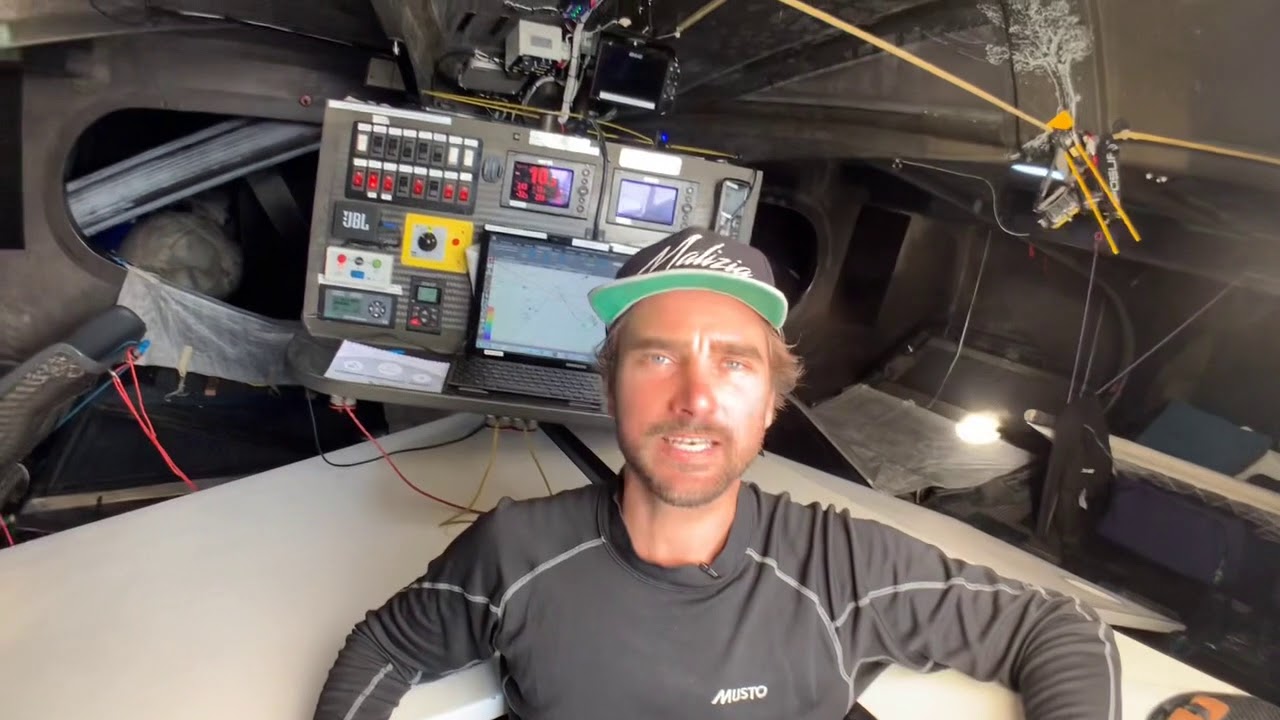
UPDATE 9/11/18 - just in from Boris Best from the upwind bouncing bam bam bam. All good here so far.Liebe grüße Tech talk: I had broken a lashing between the mast and the block for the mast rotation purchase. I left the mast rotation loose as upwind it aligns itself usually pretty nicely. This morning around 4 the boat was suddenly starting to act weirdly. I checked the wind angle display but i was upwind, although the boat was jumping over the waves and reaching at 2 knots. Heeled over a lot. I felt quickly that it was wrong with the wind instruments. I switched on the B system and find out that was broken. No surprise that the wind vane on the top of the mast was damaged after all the slamming. My heart beat rises imagining sailing the rest of the race with no instruments like in the TJV. It means a big penalty in performance. To figure out what was going on i swapped over some elements and could find that on my main system only the mast angle sensor had broken, possibly as a consequence of leaving the mast rotation open. I repaired the lashing, adjusted the mast to this upwind angle and gave the instruments a manuel input for mast angle instead of the sensor. That way my A system is now fully up and giving nice wind data again. A small issue but in the darkness and upwind - slamming is quite annoying. So happy now that i still have one functional wind vane at the top of the mast and can sail with autopilot following the wind angle… that helps a lot! To see more of Boris and his adventures check out the website at: www.borisherrmannracing.com or follow us on instagram or facebook at borisherrmannracing. We are still looking for more sponsors so if you are interested you can get in touch with us via the website.

0
0
0
183

0
0
0
0
1,662

0
0
0
0
1,375

Give it a thumbs up if you liked this episode! Get your Sailing Into Freedom Crew T-shirt: https://teespring.com/stores/sailing-into-freedom Want more? Became our patron and get access to exclusive content. https://www.patreon.com/sailingintofreedom If you would like to support with single donations click here - https://www.paypal.me/Plukky Check out some gear we have on the boat: Inverter https://www.amazon.com/Xantrex-PROWatt-Inverter-Model-806-1220/dp/B002LGEMOQ/ref=sr_1_5_mod_primary_new?dchild=1&keywords=marine+inverter&qid=1616102481&sbo=RZvfv%2F%2FHxDF%2BO5021pAnSA%3D%3D&sr=8-5 handheld radio https://www.amazon.com/Standard-Horizon-HX210-6W-Compact/dp/B07KN6LKVG/ref=sr_1_6?dchild=1&keywords=marine+radio&qid=1616102542&sr=8-6 (As an Amazon Associate I earn from qualifying purchases and I greatly appreciate your support!) Also follow us on - Instagram: https://www.instagram.com/sailingintofreedom Facebook: https://www.facebook.com/sailingintofreedom Our website: https://www.sailingintofreedom.comGive it a thumbs up if you liked this episode! Get your Sailing Into Freedom Crew T-shirt: https://teespring.com/stores/sailing-into-freedom Want more? Became our patron and get access to exclusive content. https://www.patreon.com/sailingintofreedom If you would like to support with single donations click here - https://www.paypal.me/Plukky
0
0
0
446


0
0
0
38