Welcome aboard to the our video site for sailors. We are being constantly blasted by scammers and pirates, so registration is invite only
contact@sailorsahoy.com with "Invite". No spam, no newsletters. Just a free account
Celana pendek Membuat
Lezioni di Vela - Manovre - Effetti Evolutivi - Episodio 08 L'effetto evolutivo dell'elica è il trucco delle manovre perfette svolte da tutti gli skipper che "conoscono" la barca. Abbiamo già spiegato cosa sia l'effetto evolutivo e come capire se la nostra elica sia destrorsa o sinistrorsa. Nell'ottavo video-episodio di Scuola di VELA vediamo in pratica come si possa sfruttare questo effetto per manovrare in acque ristrette arrivando a ruotare la barca anche di 180 gradi quasi sul proprio posto. L'effetto evolutivo dell'elica è il segreto delle manovre perfette Ruotare la propria barca di 180 gradi in spazi ristretti come il canale di un porto, è una manovra che diventa un gioco da ragazzi se si sfrutta l'effetto evolutivo dell'elica combinato alla pala del timone. Specialmente le barche con motore in linea d'asse ed elica vicina alla pala, l' effetto della poppa che "cammina" lateralmente, quando la barca è a bassa velocità e l'elica è in rotazione, detto effetto evolutivo dell'elica è molto pronunciato. Possiamo sfruttarlo a nostro vantaggio. Nel video viene ampiamente illustrato come giocare con pala del timone, marcia avanti e indietro, per far ruotare la barca a vela, praticamente sul proprio asse. - News di vela ogni giorno su http://www.giornaledellavela.com - Facebook https://www.facebook.com/giornaledellavela - Instagram https://www.instagram.com/giornaledellavela - Salone della nautica - The Digital Boat Show https://www.milanoyachtingweek.com/ - Shop di prodotti esclusivi Boatique.it https://www.boatique.it Clicca qui per scoprire le formule di abbonamento al Giornale della Vela https://subscribe.giornaledellavela.com/ - DISCLAIMER Il presente video è stato creato a scopo divulgativo. Il Canale Giornale della Vela e gli autori dei video non si assumono alcuna responsabilità circa l'utilizzo del contenuto di questo video. I diritti delle immagini e delle riprese rimangono ai rispettivi proprietari che sono visualizzati nei Credits. Se nel video è presente una tua fotografia o ripresa e non sei presente nei credits avvisaci subito. Dal 1974 Panama Editore si occupa del mondo della nautica e del turismo attraverso pubblicazioni cartacee e digitali; siti internet di informazione e servizio; eventi, attività di e-commerce e didattiche. Il Giornale della Vela, la rivista leader di vela in Italia ed il sito www.giornaledellavela.com sono a tua disposizione per trovare informazioni e contenuti aggiornati quotidianamente su crociere, regate, cantieristica, novità del mercato, prove barca. VIDEO CREDIT Progetto Luigi Lutz Gallerani Editing Marina Leva MUSIC CREDIT Epidemic Sound
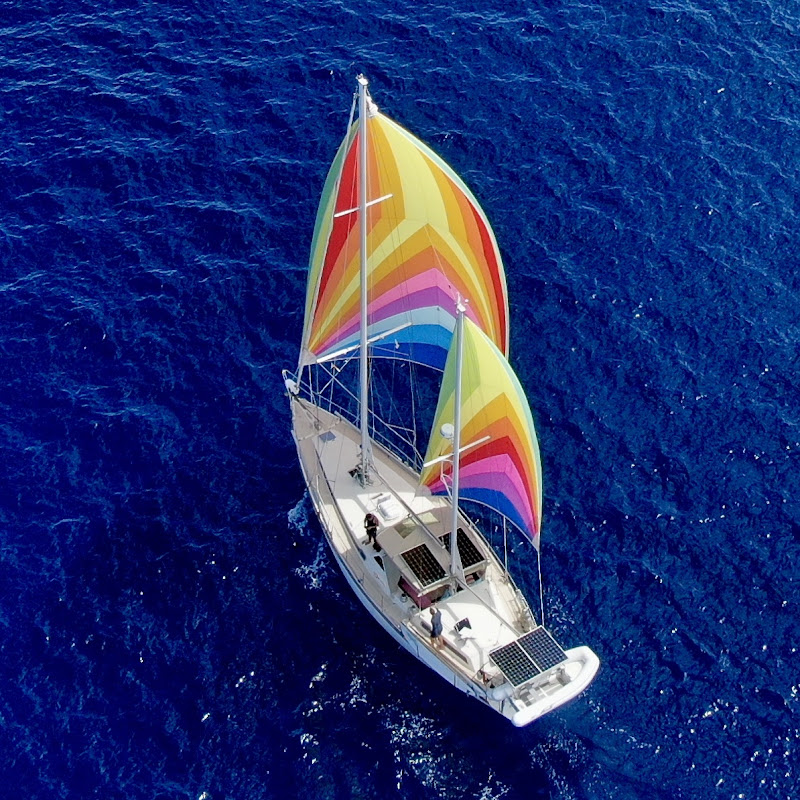
1) Understanding your energy needs is essential to determine how much solar you need. Start by making an "energy budget". List all your consumers and their daily usage. For example, if your LED lights use 1W per bulb and you have eight bulbs on for 5 hours a day, that would be 8 Watts for 5 hours or (8x5) 40 Wh (Watt hours). I like to use kWh to keep things consistent. 40 Wh = 0.040 kWh. It's a good idea to list what you're using while at anchor and another list of what you're using while underway (for instance, you don't use your autopilot at anchor). Remember to list everything: fridge, freezer, watermaker, autopilot, nav lights, chart plotters, etc. For example, here aboard Athena, with an electric galley, fridge, freezer, watermaker, two computers, etc, we use an average of 5.5 kWh per day. 2) To give you a quick estimate, use https://globalsolaratlas.info/ to find "Global horizontal irradiation" per day for your location. Take your daily energy consumption from step 1 and divide that by the number of solar hours. In the case of Athena, located in the Caribbean, that would be 5.5kWh per day / 5 sun hours = 1.1 kW solar array. Keep in mind that this is a theoretical number that does not take into account the shading or degradation of the panels over time. Let's add 30%. 1.1 x 1.3 = 1.43 kW. You can now divide that number by the panel's Nominal Power output. In the case of Athena, our panels are 400W SunPower panels. 1430W / 400W = 3.6 panels needed to cover our 5.5 kWh per day consumption. 3) Understand that the amount of solar you can install on a small sailboat is limited by the size of the boat and heavily influenced by shading and, of course, the boat's location. The size of the panels might also be defined by the height of your stanchions or the size of an existing solar arch. Figure out where you're able and willing to install panels. That will dictate the size and number of panels. 4) Use Victron Energy's MPPT Calculator to calculate what MPPT is ideally sized for your solar panels and expected output based on location. Based on our experience in the Caribbean, the estimate provided by the guide is reasonable. https://www.victronenergy.com/mppt-calculator. Remember that it's best practice to avoid combining panels with different specs on the same MPPT. #sailboat #sailboatproject #boatwork #saillife #liveaboard #liveaboardlife #saltlife #sailing #sailingadventure #travel ingcouple #livingonaboat #solar #sailboatsolar