סרטונים אחרונים

Alone on our Lagoon 400 catamaran in the Morro Jable marina at 44 °C: fitting two engine-room bilge pumps and a second autopilot for full redundancy before Cape Verde. Our Lagoon 400 came without bilge pumps in the engine rooms — if they flood, you either pump from the top or open a valve and let the water into the boat. So I bought two 2,000 GPH pumps and set about drilling the hull. Alone, because the blonde is in Italy. At sunset, because in the day it's 45 degrees. With Sikaflex that, it turns out, has an expiry date — mine expired in 2024 — so the only tube left was black, on a white boat. WD-40 helped. Then the engine room, which is not bigger than the ones on my body; a Victron Orion that has no power unless the engines are running; and two new cables I really didn't want to run. The pumps are in. Then the second autopilot — identical to the first, so B&G and Furuno each have their own and the whole system is redundant (you saw why in episode 119). Four cables through a protective pipe that was too tight, at 44.2 °C and 50% humidity, with a cable router designed by someone who hates people, a can of spray grease, and nobody to hold the other end. Seventy litres of sweat later: calibration, test… it's alive. CHAPTERS 0:00 It expired in 2024 0:19 No bilge pumps on a Lagoon 400 1:17 The hole 2:05 The Sikaflex won't come out 3:55 Black Sikaflex on a white boat 5:10 The WD-40 trick 6:08 Ten out of ten 6:45 The morning after 8:42 The engine room 9:50 That's a bust 10:25 The pumps are in 11:03 A second autopilot 11:49 The pipe 12:51 44 degrees 13:58 Doing it by myself 14:56 A person helping me 15:37 Success 16:55 Unbearable 17:59 It's alive Next: getting the boat ready for Cape Verde. Follow along so you don't miss it. Filmed aboard SV Goat, a Lagoon 400 we live on full time. Vlad supervises, from the boat. #SailingLife #Liveaboard #CatamaranLife #BoatRefit #Lagoon400 #SailboatLife #BoatWork #SailingVlog #Catamaran #DIYBoat #BilgePump #Autopilot #Sikaflex #Fuerteventura
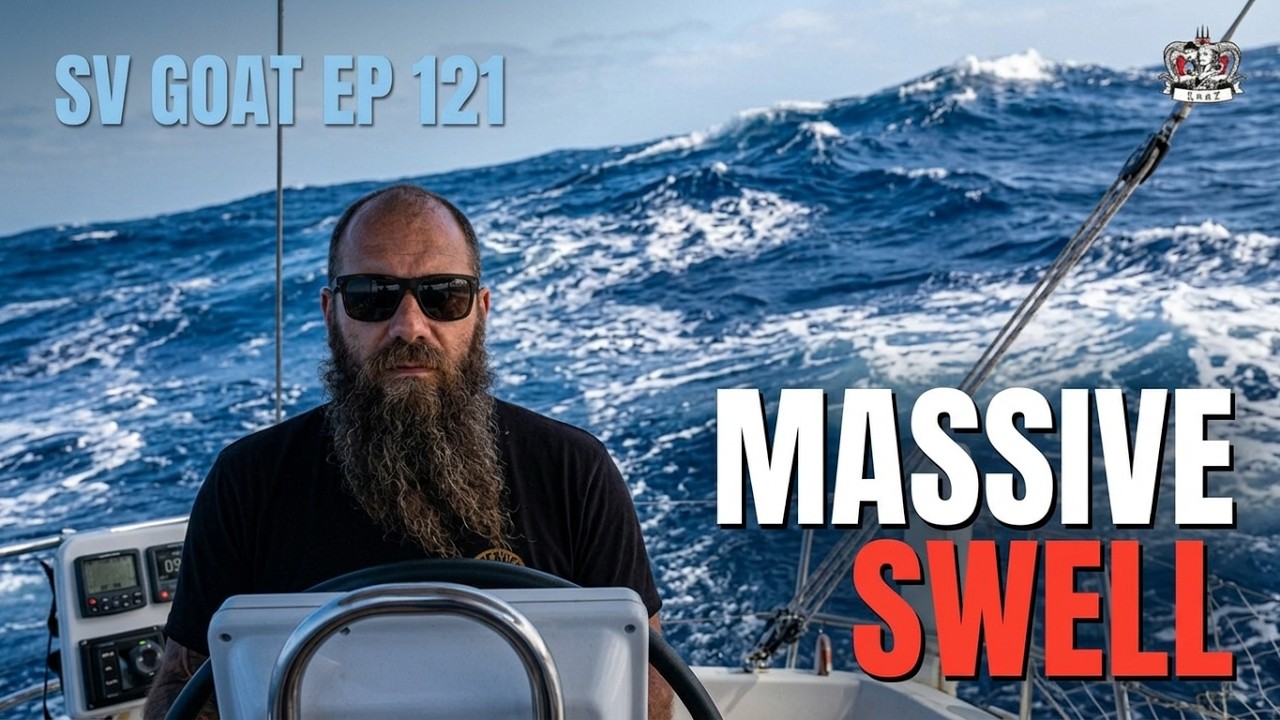
Sailing our Lagoon 400 catamaran down Fuerteventura in a three-metre Atlantic swell to Morro Jable — the last anchorage before a month in the marina and the jump to Cape Verde. Three weeks of doing absolutely nothing in Fuerteventura (friends, a resort, zero content), and then the real thing: running south with the jib out at six and a half knots, in a swell that looks like nothing on camera and is three metres in real life. That's the thing about the Canary Islands — the wind always blows north to south, so once you go down, you don't come back up. A rolly night anchored in three metres of water, flying fish off Costa Calma that refused to be filmed, Vlad supervising, and the last night at anchor before the marina. Then a week of work in Milan, and I came back to the boat alone — the blonde is staying with her family before Cape Verde — to find it full of Sahara sand from the calima. I also brought back something important: the clock from my grandfather's Amel, the Zena, the only thing that survived when she was lost in Bonaire. And we're now officially members of the Ocean Cruising Club. CHAPTERS 0:00 That wave is three metres 0:23 Three weeks of doing nothing 2:01 Once you go down, you can't go up 2:47 Six and a half knots 3:25 YouTube never shows the swell 4:41 A rolly night at anchor 5:32 The plan for September 7:42 Flying fish off Costa Calma 9:26 Morro Jable 9:49 Our last night at anchor 10:47 Back on board, alone 12:50 My grandfather's clock 14:23 The Ocean Cruising Club Next: alone on the boat with a drill, two bilge pumps and a second autopilot. Follow along so you don't miss it. Filmed aboard SV Goat, a Lagoon 400 we live on full time. Vlad supervises, from the boat. #SailingLife #Liveaboard #CatamaranLife #Lagoon400 #SailboatLife #SailingVlog #Catamaran #CanaryIslands #Fuerteventura #MorroJable #AtlanticSwell #OceanCruisingClub

Our anchor dragged at midnight in Lanzarote, the windlass on our Lagoon 400 catamaran shattered, and I pulled thirteen tons of boat back up by hand in 28 knots of wind. It started so well. La Graciosa, the little Canary island with sand for streets and not a metre of tarmac, where as always we arrived knowing nothing — a place we could spend a week just waiting for the blonde's best friend Betta to arrive. The only problem was 25 knots, no matter what you do (and a shark circling the boat). So we sailed down to Playa Blanca on Lanzarote — three hours of champagne sailing and two of complete madness — where people told us the anchorage was beautiful. Very protected. I loved it. For 55 hours. Midnight. The anchor-drag alarm. We checked the other two systems, decided it was a setting, went back to sleep. Five minutes later it went off again — and this time we were moving. Re-anchoring in the dark in a full anchorage, the windlass didn't just stop working, it came apart, and the chain started running out on its own. Bare hands on 12 mm chain, the breakwater a metre off the stern, the dinghy line wrapped round a propeller so we were down to one engine, and about thirty metres of chain hauled back by hand while it blew 28. And Betta was arriving the next day. Perfect timing. The morning after: the whole anchor up by hand again, into the marina, my foot split open, the windlass in pieces on the bow — the worm gear had eaten every tooth off its cog — and the news that getting a windlass shipped to the Canary Islands takes ten days. So we rented scooters and saw Lanzarote: the Timanfaya lava fields, the vineyards of La Geria where every vine lives in its own hole, Teguise, Arrecife and its lagoon, and a winery that failed to convince me wine is anything other than vinegar with ambition. And then Cesare, Betta's husband, helped me fit the new one: an Italwinch vertical, 1500 W instead of the old 1000, €2,900 of shiny chrome. CHAPTERS 0:00 Everything that could go wrong 0:19 La Graciosa — we know nothing 1:03 Sand streets 2:34 The church 3:00 25 knots and a plastic bowsprit 6:04 A shark around the boat 6:52 A very protected anchorage 9:38 We're almost there 10:15 Playa Blanca — I am loving it 12:28 Captain, explain the fun of this night 13:03 Three alarms 14:28 The windlass shatters 15:37 Thirteen tons by hand 16:39 Perfect timing 17:53 The broken windlass 18:29 Hercules 19:44 The morning after 22:37 Scooter day 23:51 The lava fields 25:15 Teguise 27:01 Arrecife 28:29 One step before vinegar 29:27 One vine per hole 30:37 The new windlass Next: Lanzarote — and whatever breaks next. Follow along so you don't miss it. Filmed aboard SV Goat, a Lagoon 400 we live on full time. Vlad supervises, from the boat. #SailingLife #Liveaboard #CatamaranLife #BoatRefit #Lagoon400 #SailboatLife #BoatWork #SailingVlog #Catamaran #DIYBoat #AnchorDrag #Windlass #Lanzarote #LaGraciosa #CanaryIslands

We sailed our Lagoon 400 catamaran 269.9 nautical miles from Madeira to La Graciosa in the Canary Islands, and the autopilot died on the first night. The plan sounded great: a day and fourteen hours, a beam reach, two shipping corridors to cross, a metre and a half to two metres of sea. Four hours in, the preventer on the bowsprit broke — a part I bought in Portugal that, it turns out, is made of plastic. No code zero, no wind, motor-sail. At half past nine at night the autopilot switched itself off. I found a loose negative on the controller, decided that was it, and went to sleep. It was not it. The blonde and Sasha hand-steered through the night, keeping the moon in front of the boat. At one o'clock the next afternoon we were still fighting it. With help over the phone from the electronics shop that sold us our Furuno gear, the new theory was voltage: the autopilot was dropping to eight volts for a second and shutting down. So we borrowed the power line from the deck-wash pump, ran it to the autopilot, and switched it on. Forty-three hours after leaving Madeira, at six in the morning and still dark, we arrived at La Graciosa. CHAPTERS 0:00 A very long night 0:19 The plan sounds so good 1:21 Leaving Madeira 1:58 We lost the autopilot 2:36 Go back to sleep 3:11 Steering by the moon 4:37 Still fighting at 1 pm 5:34 Eight volts 6:06 The fix 6:26 It's on 7:43 Under sail again 8:19 The bowsprit part was plastic 9:19 Where are we? 10:32 First land in the Canaries Next: La Graciosa, Lanzarote, and a night where everything that could go wrong did. Follow along so you don't miss it. Filmed aboard SV Goat, a Lagoon 400 we live on full time. Vlad supervises, from the boat. #SailingLife #Liveaboard #CatamaranLife #Lagoon400 #SailboatLife #SailingVlog #Catamaran #BoatRepair #Autopilot #OceanPassage #CanaryIslands #Madeira #DIYBoat
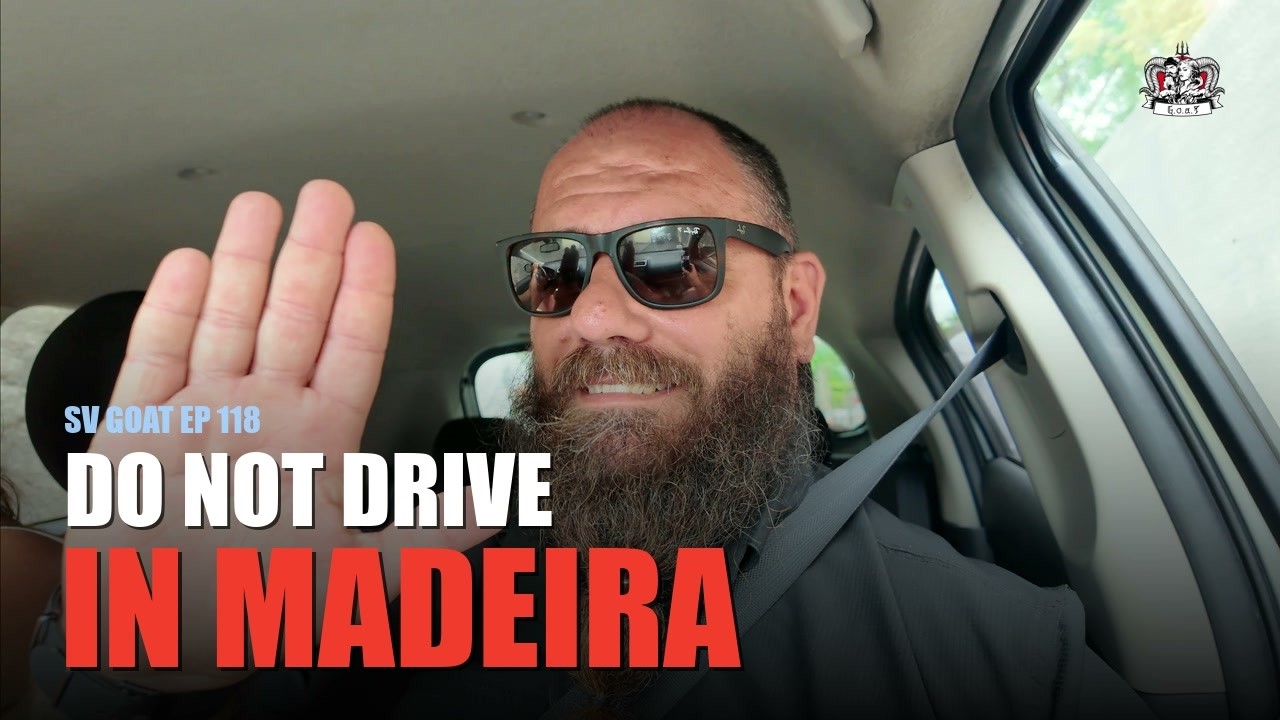
We sailed our Lagoon 400 catamaran from Porto Santo to Madeira, hired a car in Funchal, and learned the one thing nobody tells you about the island everybody talks about. The crossing is short and it has a sting in it: a hundred metres of sea where almost two knots of current run straight into fourteen knots of wind, and the water stands up and breaks for no reason you can see — and then, a hundred metres later, it simply stops. Then the courtesy flag goes up, the cliffs come out of the haze, and the first anchorage has water clearer than most famous ones in Europe. We arrived in Funchal the way we arrive everywhere: no plan, no idea what we were looking at, and a firm promise that this channel does not do tourism tips. We found the market, rediscovered that we don't actually like the pastéis de nata we have been dreaming about for five years, and decided to see the rest of the island by car. That was a mistake. Madeira's roads do not do turns. They go straight up the mountain at an angle that made us genuinely unsure the brakes were up to it, with the blonde coaching me through it one "slow" at a time. So here is the only tourism tip you will ever get from us: take the cable car. Then Câmara de Lobos, where Churchill apparently sat and painted the bay; Santana's famous thatched houses, which are exactly the tourist trap they look like; and a waterfall with no sign, no path we could see, and a route through somebody's backyard that we only found because the blonde had a hunch and Google Maps agreed with her. She did it in white linen. I did tell her. CHAPTERS 0:00 Don't do it by car 0:18 Leaving Porto Santo 1:16 A hundred metres of madness 2:21 Madeira's courtesy flag 2:47 Crystal clear water 3:50 The cliffs and the sea arch 4:43 No plan, no tourism tips 5:37 The market 6:23 Six weeks without seeing people 7:36 A really bad idea 8:34 We almost died 9:49 Italians understood turns 11:08 The tourist trap 11:57 A hint from the blonde 12:40 White linen 13:17 There it is 13:56 The waterfall Next: we leave Madeira for the Canary Islands, and the autopilot dies in the middle of the night. Follow along so you don't miss it. Filmed aboard SV Goat, a Lagoon 400 we live on full time. Vlad supervises, from the boat. #SailingLife #Liveaboard #CatamaranLife #Lagoon400 #SailboatLife #SailingVlog #Catamaran #Madeira #Funchal #CamaraDeLobos #Portugal #IslandLife #Atlantic

There is half a kilometre of breakwater on Porto Santo, and every boat that ever staged here for an Atlantic crossing has painted its name on it. We arrived after four days at sea. On the first afternoon ashore I walked the length of that wall reading other people's logos — hundreds of them, going back years, every one belonging to a crew who did exactly what we had just done. No charter boats. No day-trippers. You cannot get to this island unless you sailed here. Standing in front of it I said we had no paint, so we probably would not be leaving ours. This is the episode where that turns out to be wrong. In between: an island that refuses to be interesting for about a day and then completely changes its mind. The town on a Wednesday afternoon is shut, empty, and has, in my professional assessment, nothing to see. So we hired bicycles instead of the scooter I wanted — because the woman who rode a Harley Davidson to Norway has decided that scooters are the evil — and rode into forty-five degrees of heat to find windmills in better condition than the famous ones in La Mancha, a wild north coast with nobody on it, caves cut into the cliff, and a rock tunnel that opens onto a beach with natural pools and not one other person. It is the closest thing I have found to Ibiza before Ibiza happened. No lidos, no beach bars, no music. I would recommend it to anyone. And then, on the eleventh of July, we went down to the wall with a tin of white paint. CHAPTERS 0:00 Welcome to Porto Santo 0:40 The wall 1:30 No paint 2:15 Everyone's journey is their own 3:00 Nine kilometres of sand 3:25 No shops, no provisions, just wind 4:10 The town is closed 5:05 Columbus lived here, allegedly 5:35 Her street 6:00 Absolutely no scooters 7:15 That was a stupid idea 7:35 The windmills 8:20 The high road 8:45 Into the wild 9:20 A free Ibiza 10:25 The caves 10:40 The tunnel 11:30 Your own private beach 12:30 The thatched bar 13:25 We survived the bike trip 14:05 Committing to the tradition 14:45 Paint it high 15:20 The south side 16:00 The white is drying 16:20 Painting it 17:30 He did everything 17:45 Standing back 18:05 The wall entire 18:20 The tile 18:45 The anchorage Next: the passage to Madeira. Follow along so you don't miss it. Filmed aboard SV Goat, a Lagoon 400 we live on full time. Vlad supervises, from the boat. #SailingLife #Liveaboard #CatamaranLife #Lagoon400 #SailboatLife #SailingVlog #Catamaran #PortoSanto #Madeira #Portugal #IslandLife #Atlantic #BlueWaterSailing

530 miles. Four days. No land in any direction. We spent a fortnight buying the perfect coastal toy — a proper RIB with a real outboard, the dinghy I have wanted since we bought this boat — and one evening on a beach in Portugal being fed by complete strangers. Then we left the coast altogether. This is the crossing to Porto Santo, the first island of the Madeira archipelago, and the first time this boat has been properly offshore. Dennis came with us as extra crew. We left before dawn on the 26th and made landfall on the 29th. Some things about a passage that nobody tells you. The orca fear we have carried since Gibraltar — the hand-steering, the five metres of water, the watching for fins — simply stops. Not because anything is resolved, but because the water goes to eight hundred metres and the problem is physically behind you. And then, having been frightened for six weeks, you are left with four days of not very much at all. It gets boring. That is the honest answer. Until the third afternoon, when a front came through, flipped the wind sixty degrees, put it dead astern, and left the Code Zero and the jib and the main with nothing useful to do. So the spinnaker went up for the first time — the blue-and-white one, which has never been on this channel before. Night watches under red light. Sunrise and sunset with nothing on the horizon in any direction. A fishing rod that caught precisely nothing in four days. Vlad crossing an ocean. And then, on the fourth grey morning, a shape. Next week we are ashore on Porto Santo. CHAPTERS 0:00 “The most beautiful day” 0:32 The boatyard 0:48 The dinghy I deserve 1:47 She takes the wheel 2:18 A fire in the sand 2:31 Bart, from Holland 3:37 “Hopefully never” 3:52 We can make water again 4:12 Before dawn 4:24 Finally leaving 5:04 Sunrise 5:37 Three hundred and fifty metres 5:56 Dennis 6:35 The first Atlantic passage 8:24 Golden hour 8:35 Sunset at sea 8:51 “My favourite time” 10:00 Moonlight 10:15 Sunrise, day two 10:46 The rod goes out 10:51 The empty ocean 11:25 Between watches 11:49 The third day 12:22 Watching the sea 12:53 The first ocean squall 13:36 “It was not a decision, it was a need” 14:26 The spinnaker fills 14:52 “What more do you want” 15:03 Engines off 15:10 You sign up for days like this 16:24 Vlad crosses an ocean 16:44 The sea through the hull window 17:09 Land ho 17:48 The biggest waves I have ever seen 18:25 The island appears 19:10 Porto Santo Filmed aboard SV Goat, a Lagoon 400 we live on full time. Vlad supervises. #SailingLife #Liveaboard #CatamaranLife #Lagoon400 #SailboatLife #SailingVlog #Catamaran #Atlantic #OceanCrossing #PortoSanto #Madeira #Spinnaker #NightWatch #BlueWaterSailing

Greece marked its fishing nets with something red or white. Sicily improvised — an oil jar, but at least an orange one. In Spain a fisherman once used a life jacket, and the coastguard went full rescue mode thinking somebody was in the water. Portugal uses a single green plastic water bottle, floating flat, invisible to the eye and too small for the radar to see. Portugal is the final boss. This is the week we crossed the border. We left Mazagón at eight in the morning, spent nine hours dodging fishing gear and watching for fins, and somewhere off the coast went from one country to the next — which mostly meant an hour back on the clock and a green-and-red flag going up at the spreader. Then the entrance to Faro, a channel with tides, not much water and a plotter reading single figures. Two days on Ilha do Farol, an island of white houses and a red-and-white striped lighthouse you can see from the anchorage. Then the run to Portimão, which is the one that needed thinking about: the best orca ground sits right there, and about a hundred metres inshore of it the chart goes to three metres, then one. There is no comfortable line. This is the day the catamaran earned its keep. And then the job this whole leg has been waiting for. Our watermaker has been dead since Spain — no showers for a week, buying drinking water ashore. The new pumps were shipped to a yard that said they could fit them and then said they couldn't, so I did it on the cockpit table: one pump full of corrosion with the bearing ring destroyed and the rotor chewed up, one still working and going into the spares box. At half past one in the afternoon the pressure came up to six, and fresh water came out of the tap. Next week we head out into the Atlantic for Porto Santo. CHAPTERS 0:00 Leaving Mazagón 0:55 Past the breakwater 1:43 “The first Bergamasca to sail out of the Po” 2:57 One green bottle — Portugal’s fishing buoys 4:33 Not even the radar can see it 5:26 Inside the Ria Formosa 6:27 Parrots on the island path 7:26 Morning in the lagoon 8:54 The barrier island 10:00 Forty degrees, and no pastel de nata 13:07 Threading between the orcas and no water 13:54 “This engine is toast” 15:10 Rebuilding the pumps 16:11 It goes below 17:01 Bleeding the air 18:07 Fresh water out of the tap Filmed aboard SV Goat, a Lagoon 400 we live on full time. Vlad supervises. #SailingLife #Liveaboard #CatamaranLife #Lagoon400 #SailboatLife #SailingVlog #Catamaran #Portugal #Algarve #RiaFormosa #Portimao #Watermaker #BoatRepair #DIYBoat

Barbate is where the boats the orcas have attacked end up. We left Gibraltar at sunrise and sailed straight past it. This is the stretch of coast every sailor going to the Atlantic has to cross, and there is no answer to it. The advice is to hug the shore in about five metres of water, so we did — hand on the wheel the whole way, because if an orca hits a boat with the autopilot engaged it destroys the autopilot too. Flat sea, clear sky, the kind of day you should be sailing for pleasure, and instead we spent it watching the water for fins. Before any of that could happen the wind instrument had to be fixed. It was reading five knots in thirty, the only chandlery in Gibraltar sells almost nothing, and there is no crane in the yard to get anyone up the mast. So the Furuno sensor went on the stern arch two metres off the deck, which meant cutting into the cable — a thing I have had to do once before and was hoping to avoid twice. Then Cape Trafalgar, where the fishing nets run all the way to the beach and push you out into exactly the deep water you have been avoiding all day. A regatta none of the competitors seemed able to navigate. A week anchored off Rota with a dead watermaker and no showers. And, at the end of it, another sailboat leaving harbour a few minutes ahead of us and unknowingly doing us an enormous favour. Next week we cross into Portugal. CHAPTERS 0:00 The wind sensor that lies 1:01 Under the floor, before anything else 3:08 Cutting the Furuno cable — again 4:09 “If it was easy it wouldn’t be an adventure” 5:19 Anchor up before sunrise 6:04 Out into the morning 7:44 Sun-track on flat water 9:07 The lighthouse island 9:59 Past the lighthouse 11:08 An afternoon off the boat 12:08 The boat ahead is the bait 13:06 The orca conspiracy theory 13:57 A question for Spain about the nets 14:53 Into Cádiz 15:49 Vlad at Rota 16:45 A new boat makes new noises 17:52 A sporty day 19:04 Cheap rope Filmed aboard SV Goat, a Lagoon 400 we live on full time. Vlad supervises. #SailingLife #Liveaboard #CatamaranLife #Lagoon400 #SailboatLife #SailingVlog #Catamaran #Orcas #Gibraltar #Tarifa #Trafalgar #Cadiz #Atlantic #BlueWaterSailing

We spent a day off the boat, and Gibraltar turned out to be one of the strangest places we've been. You get there on foot by walking across the airport runway — an actual working runway, with a pedestrian crossing painted on it. Then through a tunnel cut into 300-year-old fortifications, and out onto a British high street with a Starbucks on it, in Spain, in 30 degrees. Up on the Rock there are wild monkeys that have decided the railings belong to them. Everyone tells you not to touch them. One of them climbed onto my shoulder and made the decision for me. They are, for the record, extremely soft. Also up there: St Michael's Cave, which is a cavern full of stalactites with a concert auditorium built inside it and a light show in purple. Fifty-two kilometres of tunnels the British dug into the Rock by hand, with the cannons still in them. And a glass viewing platform hanging over a 340-metre drop, which produced the biggest "oh hell no" of the trip so far. Next week we head north up the Atlantic coast toward Lisbon. CHAPTERS 0:00 "Oh hell no" 0:14 Into Gibraltar — and apparently there are monkeys 1:33 Walking across the airport runway 1:45 Through the old fortifications 1:55 A British high street in Spain 2:39 The pretty side of town 3:18 The Pillars of Hercules 3:51 Up the Rock 4:10 The Barbary macaques 4:41 "Do not touch the monkey" 5:35 St Michael's Cave 6:44 An auditorium inside a cavern 7:21 The summit ridge 7:37 The Skywalk 8:29 52 kilometres of siege tunnels 9:16 Looking down on the runway 9:59 The east face Filmed aboard SV Goat, a Lagoon 400 we live on full time. Vlad supervises, but stayed on the boat for this one. #SailingLife #Liveaboard #CatamaranLife #Lagoon400 #SailingVlog #Gibraltar #TheRock #BarbaryMacaques #StMichaelsCave #SkywalkGibraltar #Travel #Catamaran #SailboatLife #Monkeys

It took us two years to get out of the Mediterranean. This is the day we finally did it. We slipped the mooring at 7:26 in the morning and pointed at Punta de Europa — the corner where the Mediterranean stops and the Atlantic starts. Between us and it: an entire day of motoring in nine metres of water, hugging the coast, because the closest thing there is to a defence against the orcas is staying in water too shallow for them to work in. That's why the route looks insane on the chartplotter. The straight line to Gibraltar would have been quicker. It also would have taken us across a stretch with attack reports in 2023, 2024 and 2025. So we went the long way round, in and out of every bay, dodging an absurd amount of unlit fishing gear that only the radar could see. Then the Rock came up out of the haze, and about an hour later we went past it and out — England on one side, Africa on the other, close enough to be strange. Next week we start up the Atlantic coast toward Lisbon, which is the part everyone warned us about. CHAPTERS 0:00 7:26am — the day we leave the Mediterranean 0:26 Why the orcas are the problem 1:08 Nine metres of water, as close to shore as possible 1:55 Watching for fins 2:47 The navigation plan to Lisbon 3:19 "The whole orca thing sucks" 4:10 Why we can't sail the straight line 5:05 Dodging fishing gear on radar 5:30 Twelve miles out — "that's my rock" 7:13 The plan for the attack point 8:43 Officially out of the Mediterranean 9:59 An unwelcome surprise in the water 10:56 "We made it. This is the Atlantic." 11:44 The hard part is still ahead 11:59 Watching it go astern Filmed aboard SV Goat, a Lagoon 400 we live on full time. Vlad supervises. #SailingLife #Liveaboard #CatamaranLife #Lagoon400 #SailboatLife #SailingVlog #Catamaran #Gibraltar #Orcas #StraitOfGibraltar #Mediterranean #Atlantic #BlueWaterSailing #Furuno
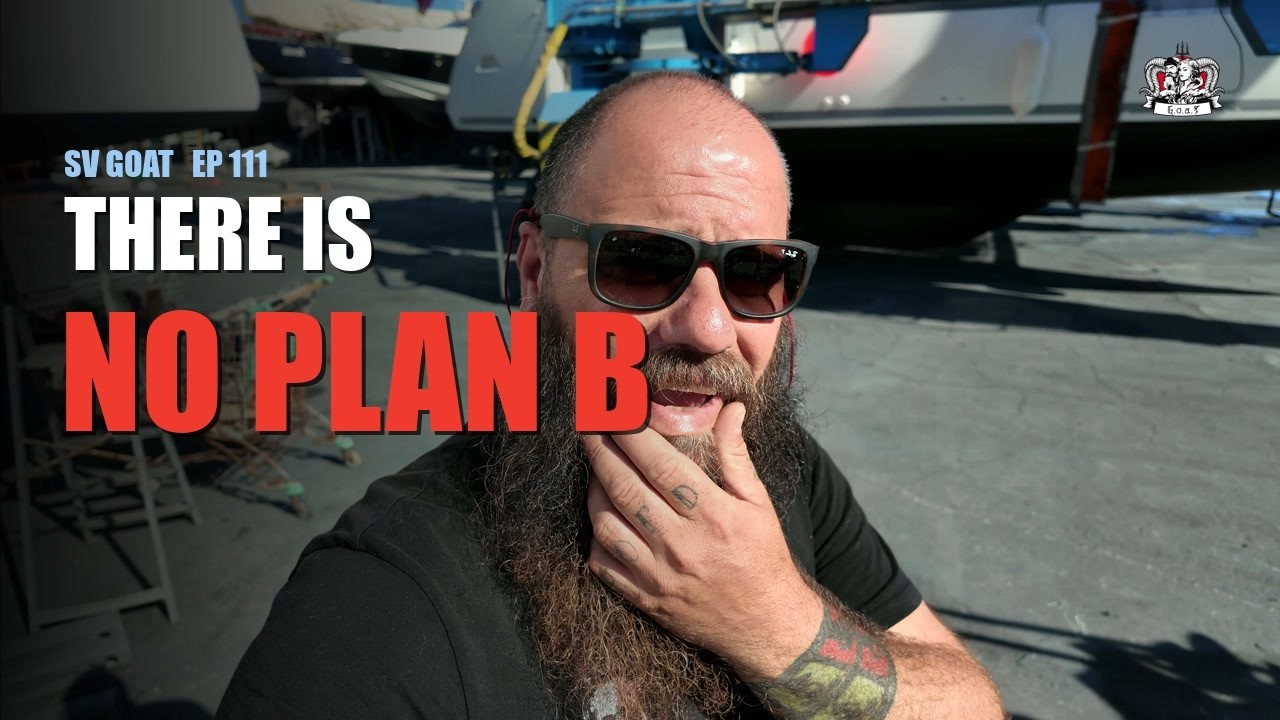
Four days out of the water in Motril, and then the bit every boat owner quietly dreads: watching everything you own hang in the air on two straps. Before that could happen there was a list. Seventy metres of anchor chain dragged out onto the hardstanding, measured and colour-banded every ten metres by hand — a full day's work in Spanish sun, and almost none of it done by me. New antifouling with cayenne pepper mixed into it, because the previous owners swore that's what people do in South Africa, and after a year mostly sitting still our hull came out very nearly clean. Both engines fully serviced: sail drive oil, motor oil, every filter, every separator. And then her name went back on the hull, which is the moment she stopped being a project again. We splashed on a windless morning. The difference a clean bottom makes is measurable: 6.1 knots at 1700rpm, against 5.5 knots at 2000rpm with a dirty one. Then we finally left the boatyard, sailed down the coast with dolphins alongside — which mostly means no orcas — and put in at Benalmádena for the night. Next week we leave the Mediterranean after two years. CHAPTERS 0:00 "There is no plan B" 0:37 70 metres of chain, marked by hand 3:24 Cayenne pepper in the antifouling 4:43 The new bottom paint 5:03 She gets her name back 5:30 Splash day 6:03 Both engines serviced 7:03 Into the slings 7:17 The moment sailors are afraid of 7:55 Back in the water 8:54 Leaving the boatyard 9:19 The gear delivery 9:44 Obsessing with a brand 10:09 Leaving Motril 10:52 Clean hull vs dirty hull 11:32 Under sail again 12:24 Vlad 12:39 Dolphins mean no orcas 13:07 Benalmádena Filmed aboard SV Goat, a Lagoon 400 we live on full time. Vlad supervises. #SailingLife #Liveaboard #CatamaranLife #BoatRefit #Lagoon400 #SailboatLife #BoatWork #SailingVlog #Catamaran #DIYBoat #Antifouling #AnchorChain #BoatYard #Motril
We hauled our Lagoon 400 catamaran out of the water for the first time, and within an hour I was elbow-deep in the one boat job nobody puts in a sailing video: dismantling sixteen years of the previous owner's plumbing. The speedometer hasn't worked since we bought her. Turns out the paddlewheel sensor was so full of filth it had its own ecosystem living inside it. That was the good news of the day. Also in this one: our first time in a travel lift, an anode inspection, a shower that won't drain, a waste pipe that took half an hour to remove exactly one of, and a Seatalk-to-NMEA-2000 cable so corroded it quietly explains about four other problems on this boat. This is the part that nobody talks about in sailing. I saw champagne in the brochure too. The big move is getting closer — follow along so you don't miss it. CHAPTERS 0:00 "A complete disaster" 0:16 7:30am on haul-out day 1:13 Taking the paddlewheel off 2:22 Into the travel lift 3:07 On the hard — checking the anodes 3:41 Why the speedometer never worked 4:50 Dismantling the pipes 5:27 "Oh my god, the smell" 6:08 The shower that doesn't drain 7:03 16 years of human sh*t 8:31 The corroded Seatalk cable 10:01 Chasing the cable through the boat 11:29 The part nobody talks about Filmed aboard SV Goat, a 2010 Lagoon 400 we live on full time. #SailingLife #Liveaboard #CatamaranLife #BoatRefit #Lagoon400 #SailboatLife #BoatWork #SailingVlog #Catamaran #DIYBoat #HaulOut #BoatPlumbing #NMEA2000
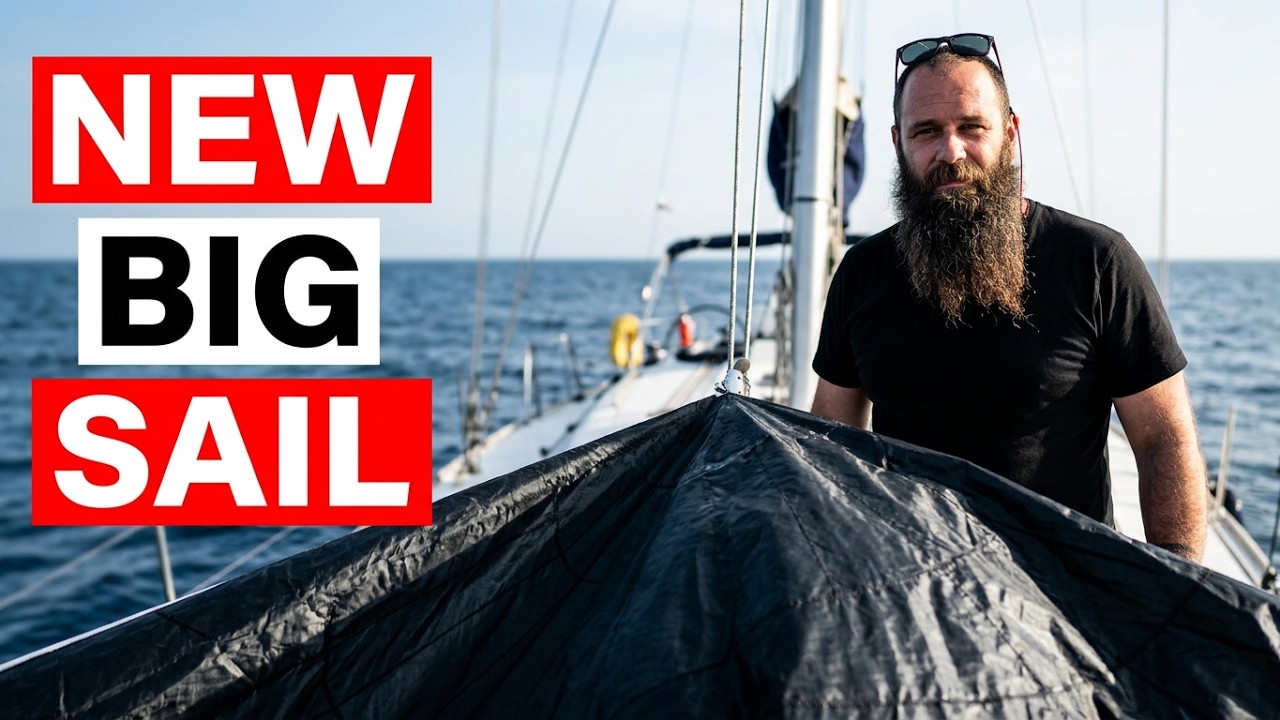
A brand-new Code Zero just arrived from the guys at Sailing Sur — complete with a torsion cable and a self-stopping furling system — and it's going up on the bow sprit today for the first time. Spoiler: it's bigger than the original, and it looks stunning in black (vanity concession noted). Below decks, the refit grind continues: a jigsaw-perfect cabinet door now hides the washing machine gap, the oven is out for good (hello, air fryer life), and a brand-new secondary electrical panel gets wired up so the radar, chartplotter, NMEA 2000, and AIS can each have their own dedicated switch. Oh, and the bearded man discovers he needs reading glasses. The sea giveth, the sea taketh. Every wire is labeled, every hatch is closed, and the only thing left to do is get the hell out of here. The big move is getting closer — follow along so you don't miss it. Follow the journey: YouTube: https://www.youtube.com/@sv_goat Rumble: https://rumble.com/user/svGoat Instagram: https://www.instagram.com/sailing_svgoat #SailingLife #Liveaboard #CodeZero #CatamaranLife #BoatRefit #Lagoon400 #SailboatLife #BoatWork #SailingVlog #Catamaran #DIYBoat #ElectricalPanel #OffGridLiving
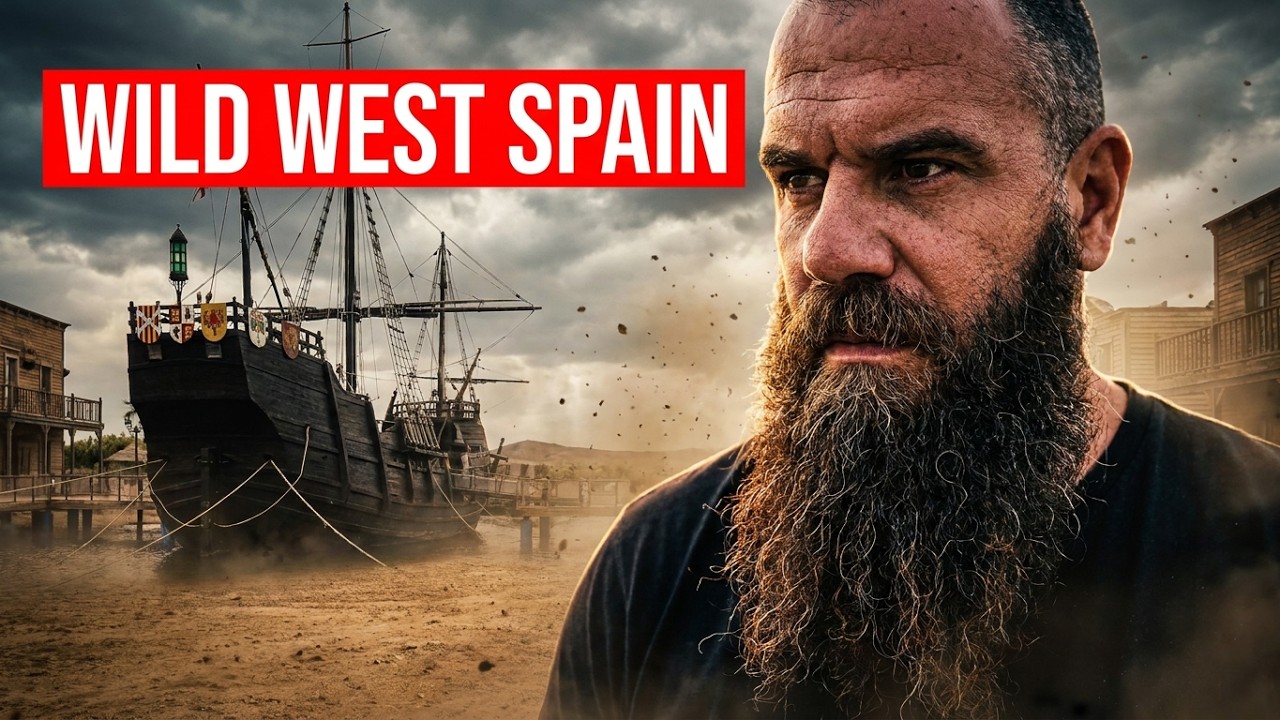
We swapped the marina for a road trip through Andalucía — and ended up standing at the exact dock where Christopher Columbus set sail in 1492. Sand-covered streets, horses tied to every porch, and a rainy wild-west village that looks like it hasn't changed in 500 years: welcome to El Rocío and Huelva. The weekend kicked off with a curveball — the Harley wouldn't start (again), the boat was coated in Calima sand like breaded chicken, and it rained sideways for most of Saturday. Still, we found the three replica caravels of Columbus, had a very philosophical moment imagining convincing a crew to sail into the unknown on those tiny ships, and discovered that the Casa de Cristóbal Colón was, of course, closed. Back in El Rocío the clouds finally parted just long enough to show you the dirt roads, the horse parking spots nailed to every house, and — naturally — a ceramic shop the Blond could not walk past. The Harley is officially getting shipped home. The adventure continues on the water. Follow the journey: ▶ YouTube: https://www.youtube.com/@sv_goat ▶ Rumble: https://rumble.com/user/svGoat ▶ Instagram: https://www.instagram.com/sailing_svgoat

Italian friends, a five-star hotel in Marbella, and a very out-of-place suitcase — the fun starts before we even get back to the boat. Then it's heads-down into the catamaran's electrical system to install dual-color LED bulbs that flip from white to red for night navigation with a simple on-off-on trick (turns out the instructions matter after all). We also tackle the Furuno chartplotter mount that's been bugging Max for weeks — cutting a teak panel to cleanly frame the unit at the helm, so it's properly sealed, secured, and actually looks like it belongs there. Jigsaw, oscillating saw (RIP — missing in action), and one very stubborn screw later, it's finally done right. Follow the journey: YouTube: https://www.youtube.com/@sv_goat Rumble: https://rumble.com/user/svGoat Instagram: https://www.instagram.com/sailing_svgoat #sailinglife #liveaboard #catamaran #marbella #boatwork #nightnavigation #furuno #chartplotter #sailingcouple #lagoon400

We almost couldn't finish this — a cut ethernet cable, a connector with nowhere to put the shield, and a hand locked in full muscle-cramp mode after hanging off the mast all afternoon. But the Furuno DRS4W NXT radar is finally alive on the chartplotter, and the difference vs. the old Halo 24 is immediately obvious. Max walks you through re-terminating a shielded RJ45 ethernet cable from scratch (with zero prior experience and a bunch of sacrificial connectors), routing the cable down from the mast, and the moment the radar rings appear on the Navionics overlay. Spoiler: it sees everything. Then The Blond takes over for a road trip to Marbella — hotel stay, plans to visit Ronda, and a cat named Vlad who nearly jumped ship to a neighbor's boat. Follow the journey: ▶ YouTube: https://www.youtube.com/@sv_goat 📺 Rumble: https://rumble.com/user/svGoat 📸 Instagram: https://www.instagram.com/sailing_svgoat #sailing #liveaboard #furuno #radar #catamaran #boatlife #sailinglife #chartplotter #DIYboat #Lagoon400 #Mediterranean #svgoat #boatrepair

After days of wiring puzzles, mystery cables, and one very bold "just go for it" moment — the Furuno 710C autopilot is ALIVE. Watch the Beard Man wrestle four cables through the hull, decode a hydraulic pump with no ground wire (spoiler: it still works), and hit that sweet "Test Complete" screen for the first time. From fixing a humidity-killed TAPO solar security camera to routing twin heavy-gauge cables through the engine bay all the way to the nav station, this episode is pure liveaboard boat-project energy — equal parts frustration, improvisation, and genuine sticker-on-the-fridge celebration when the rudder actually moves in the right direction. With the autopilot done, the only thing standing between SV GOAT and departure is the new Furuno radar swap on the mast and a few dollops of silicone on the deck. The open water is getting very, very close. Follow the journey: YouTube: https://www.youtube.com/@sv_goat Rumble: https://rumble.com/user/svGoat Instagram: https://www.instagram.com/sailing_svgoat #SVGoat #Sailing #Liveaboard #Autopilot #Furuno #BoatLife #CatamaranLife #BoatProject #DIYSailing #SailingCatamaran #Lagoon400 #MarineElectronics #CruisingLife

we had the guys from Starfurling #furlingboom onboard this week. The process is actually quite stright forward and simple. 2 guys did the job in 8h!!

StarFurl: leggerezza e praticità a portata di mano La Veleria Viganò offre soluzioni d'avanguardia, leggere e facili da utilizzare per quanto riguarda il boma avvolgiranda, disponibili a Trezzano sul Naviglio. La ditta è particolarmente orgogliosa di presentare a velisti amatoriali e professionali il sistema StarFurl, molto apprezzato per la sua estrema semplicità, che si dimostra molto leggero grazie alla realizzazione in composito, non superando il 20% del peso del suo predecessore. Il boma avvolgiranda proposto in provincia di Milano vanta inoltre un verricello integrato a circuito chiuso che, come se si trattasse di una normale dritta, vi permetterà di ammainare la randa in tutta semplicità. Modello Furlerboom Un altro cavallo di battaglia della Veleria Viganò per quanto riguarda il boma avvolgibile a Trezzano Sul Naviglio è il modello a marchio Furlerboom, che si contraddistingue per la sua estrema leggerezza. Questo tipo di boma, disponibile oggi in provincia di Milano, è realizzato in materiale composito e permette quindi di ottenere una forma rastremata. La rotaia da applicare all'albero è flessibile nei primi 4 cm: in questo modo è possibile avvolgere la randa anche con un vento apparente ad angolo di 80°.