Últimos vidéos
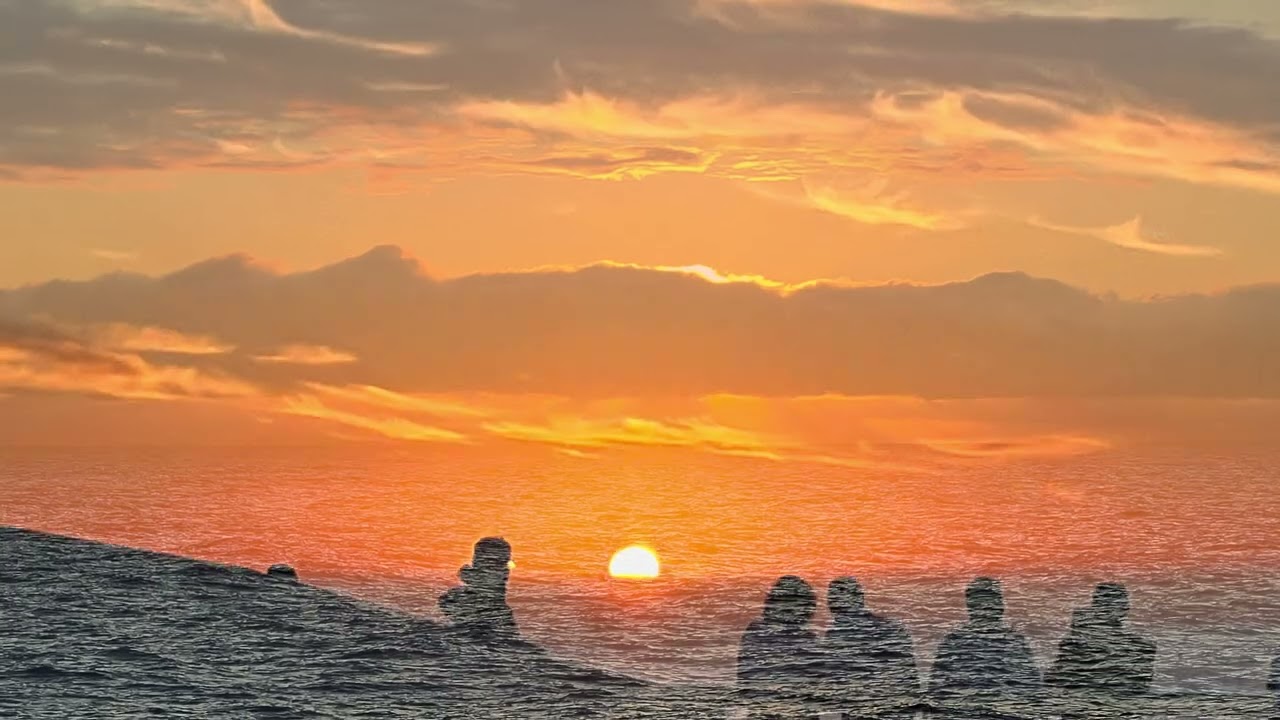
Norway invented the cheese slicer. Because apparently, cheese needs its own piece of technology. • Norway has a knighted penguin called Sir Nils Olav. He even belongs to the Norwegian King’s Guard. • Norwegians love frozen pizza so much that it is practically a national food tradition. • Norway has a town called Hell — and yes, it can freeze over • The world’s longest road tunnel is in Norway and stretches for 24.5 kilometres. That is a very long drive to nowhere in particular. • Norwegian brown cheese tastes a little like caramel — because regular cheese apparently was not exciting enough. Copyright „lost souls“ by bliss

Hammerfest is a fascinating Arctic town in northern Norway, often described as one of the world’s northernmost towns. It is known for its midnight sun in summer, polar night in winter, and an ice-free harbor despite its far-north location. Copyright John Beltran „ Clouds pull“ The Struve Geodetic Arc at Fuglenes, a UNESCO World Heritage site, is one of its notable landmarks. It sits far above the Arctic Circle, yet it has a living community, a working port, and modern industry, including the LNG site on Melkøya

Arrival of the Birds” Copyright The Cinematic Orchestra There are no trees at the North Cape because the tree line is about 150 kilometers further south. The climate is too cold, too windy, and the growing season is too short for trees to survive. Instead, the landscape is mostly covered with grass, moss, lichens, and low shrubs. The road to the North Cape was first opened in 1956, when the connection from Honningsvåg to the North Cape was completed • The North Cape is a cliff on the island of Magerøya in northern Norway. • It lies in Nordkapp municipality, in Finnmark, Norway. • The viewpoint rises about 307 meters above sea level • It is about 2,100 kilometers south of the North Pole. • Since 1999, it has been the northernmost point in Europe reachable by road from the mainland. • It is one of Norway’s best-known tourist attractions, with the iconic globe monument as a symbol • In summer, the sun can stay up all night for several weeks, while in winter there is polar night.

Lofoten is a striking archipelago in northern Norway, known for steep mountains rising straight from the sea, white-sand beaches, and colorful fishing villages. It sits above the Arctic Circle, yet has a milder climate than you might expect because of the warm North Atlantic Current. Copyright „Barefoot“ Chicane
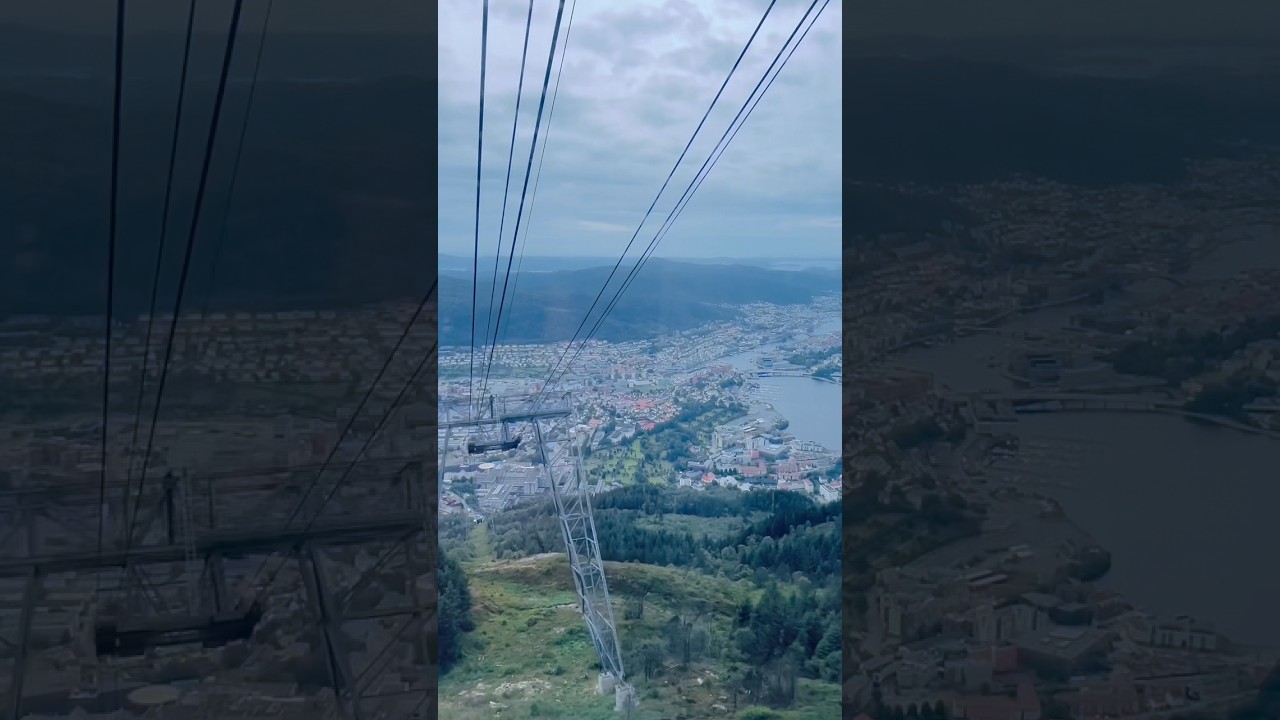
It connects the city Bergen to the summit of Ulriken, which is 643 meters above sea level. The original lift opened in 1961, and a major new version opened in 2021. The current gondolas are much larger and hold up to 51 people each

Bergen ist die zweitgrößte Stadt Norwegens und bekannt für ihre Lage zwischen sieben Bergen und den Zugang zu den Fjorden. Der Ulriken ist mit 643 Metern der höchste der umliegenden Berge und bietet einen weiten Blick über die Stadt, das Meer und die umliegende Landschaft. Er ist zu Fuß oder mit der Seilbahn erreichbar und ein beliebtes Ziel für Besucher und Einheimische. Besonders prägend ist das historische Viertel Bryggen mit seinen dicht aneinandergereihten, bunten Holzhäusern. Diese ehemaligen Handelshäuser der Hanse gehören heute zum UNESCO-Weltkulturerbe und spiegeln die lange Handelsgeschichte der Stadt wider Copyright“ it’s Beautiful Day“ by U2

At the drone show for the Rheinkirmes in Düsseldorf, 1,200 drones were used. According to reports, a few drones also failed or crashed during the show. In addition, one report put the cost of the show at around 120,000 euros. „Deepest Blue“ Copyright by Joel Edwards, Matt Schwartz and Anthony Mein Deepest Blue

Copyright Lost Souls by „Bliss“ Great Buddha & Beyond: Kamakura’s Beauty -iconic outdoor bronze statue of Amida Buddha Great Buddha of Kamakura, is an iconic outdoor bronze statue of Amida Buddha located at Kotoku-in Temple in Kamakura, Japan A 1498 tsunami demolished the Great Buddha’s temple hall but spared the statue itself, leaving it outdoors ever since; earlier 1293 waves raised local beaches by 6 feet. Cast around 1252 during Japan’s Kamakura period, the statue originally sat inside a large hall that was destroyed multiple times by typhoons, earthquakes, and a tsunami. By the late 15th century, it was left exposed to the elements, creating its distinctive open-air presence today. The statue stands 13.35 meters (43.8 feet) tall including its base, weighs about 93-121 tons, and is Japan’s second-tallest bronze Buddha after Nara’s. Key features include 1-meter-long eyes, 1.95-meter ears Hasedera Temple Figures Hasedera boasts hundreds of small Jizo Bodhisattva statues at Jizo-do Hall, symbolizing protection for children’s souls, including those miscarried or stillborn; over 50,000 have been offered since WWII, with hundreds displayed annually before burial.

Copyright Afterlife Mix “American Dream “ Plum Blossoms (Ume) Often mistaken for cherry blossoms, plum blossoms are the true "heralds of spring," blooming from late January to mid-March. They are known for a much stronger, sweeter fragrance similar to jasmine.
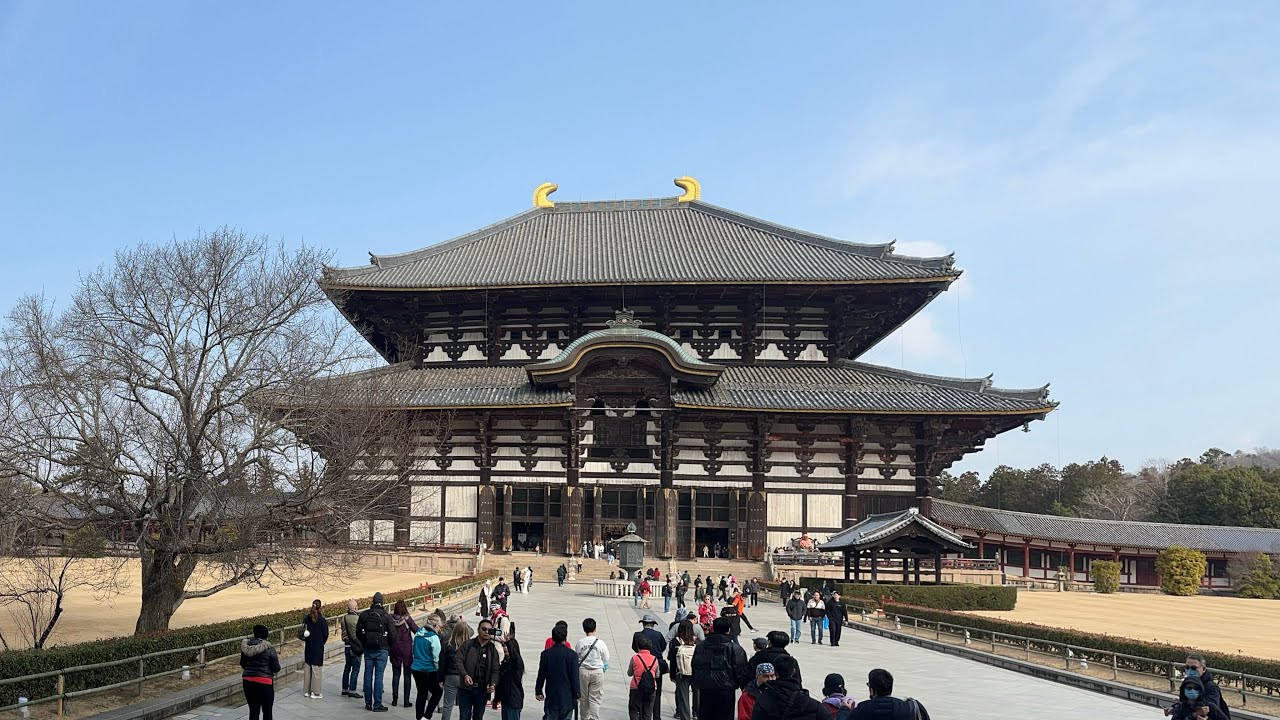
Copyright The Art of Noise „ Moments in Love“ The Tōdai-ji (Eastern Great Temple), located in Nara, Japan, is a UNESCO World Heritage site and home to the world's largest bronze statue of the Buddha Vairocana, known as the Daibutsu. Completed in 752, this massive complex and its Great Buddha Hall (Daibutsuden)—one of the world's largest wooden buildings—symbolized a massive national effort to promote Buddhism. Interesting Curiosities and Facts: * Massive Construction Effort:Building the Daibutsu nearly bankrupted Japan in the 8th century, requiring approximately 2.6 million people to contribute to its creation. * The Daibutsu's Size: The seated Buddha is nearly 15 meters (49 feet) tall, with ears 2.54 meters in length. * Rebuilt Smaller: Although the Daibutsuden is still immense, the current building (rebuilt in 1709) is only about two-thirds the size of the original 8th-century structure. * Symbolic Pillars: Inside the hall, there is a wooden pillar with a hole through its base, which is said to be the same size as the Daibutsu's nostril. Visitors believe passing through this hole brings enlightenment. * Sacred Deer: The temple grounds are filled with free-roaming, semi-wild deer considered messengers of the gods in the Shinto religion. * Unique Artifacts: In front of the hall stands an octagonal bronze lantern from the 8th century, which features rare, ancient carvings. * Government Influence: The temple was so powerful in the 8th century that the Japanese capital was moved from Nara to Nagaoka to reduce the monks' influence over government

Matsumoto Castle, built around 1594, is Japan’s oldest surviving six-story (from five external tiers) black castle, known as "Crow Castle". It is a rare "hirajiro" (flatland castle) featuring a hidden, secret floor for soldiers, a peaceful Moon Viewing Room added during peacetime, and, remarkably, survived demolition in the Meiji era thanks to local efforts. * The Hidden Floor: While appearing to be five stories from the outside, the castle has a secret, unlit sixth floor between the second and third stories. This hidden area was used to hide soldiers, store weapons, and ammunition. * "Crow Castle" Nickname: The exterior is covered in black lacquer, earning it the nickname "Crow Castle" (Karasu-jo). This design was primarily for aesthetic, contrasting with the white "Egret" castles, but also served to intimidate opponents. * A "Flatland" Fortress: Unlike most Japanese castles built on hills or mountains, Matsumoto is a hirajiro(flatland castle), built on a plain, requiring a massive, complex system of moats and interconnected walls for defense. * The Peaceful Addition: The Tsukimi-yagura (moon-viewing room) was added in the 1630s during a time of peace. It is notably less fortified than the rest of the structure, allowing the lord to host tea ceremonies and view the moon. * The Curse of Tada Kasuke:According to local legend, a farmer named Tada Kasuke, who led a tax revolt, was executed and placed a 200-year curse on the castle, causing the ruling family to suffer until they honored him. * Saved by Locals: During the Meiji Restoration (late 19th century), many castles were destroyed. Matsumoto Castle was saved from being sold and demolished when local residents and officials organized a campaign to preserve it. * Extremely Steep Stairs: The wooden interior is preserved, featuring very narrow, steep, and treacherous staircases, designed to make it hard for attackers to climb quickly.

Snow monkeys, or Japanese macaques, are highly intelligent primates, famous as the northernmost-living non-human primate, surviving temperatures below -20 in Japan. They are renowned for bathing in volcanic hot springs to stay warm and have complex social structures where females remain in the troop for life, with some even leading the group. The famous Snow Monkeys of Jigokudani are in fact Japanese macaques. This is a highly intelligentspecies of monkey which lives in large troops of over 100 individuals and is what are considered to be 'matrilineal' societies, meaning that a specific monkey's lineage and status is traced through its mother. * Intelligent Social Behavior: They are known to wash their food in water, roll snowballs for fun, and in one instance, a female named Yakei overthrew the entire male hierarchy to become a troop leader. * Sika Deer Partnerships: They have been observed working with Sika deer, sometimes sharing food or using them for warmth.

Copyright Hans Zimmer „Interstellar“ Itsukushima Shrine on the island of Miyajima UNESCO World Heritage It stands on its own weight without being buried in the seabed. * Floating Illusion: The 16.5-meter-tall red torii gate and the shrine buildings are built on a shallow, tidal beach. At high tide, they seem to float on the sea, while at low tide, you can walk directly to the gate. * Unique Construction: The current torii gate (dating from 1875) is made from decay-resistant, 500–600-year-old camphor trees. It stands on its own weight without being buried in the seabed. * No Burials/Births: Due to the strict Shinto prohibition against death and blood, burial on the island is still forbidden, and pregnant women or the severely ill are traditionally expected to stay on the mainland. *

Copyright „Arrival of the Birds „ by The Cinematic Orchestra Tragic and Curious History The 1950 Arson: The structure you see today is a 1955 reconstruction. In 1950, a 22-year-old novice monk named Hayashi Yoken set the temple on fire. He was reportedly obsessed with its beauty and saw it as an "enemy" to his own troubled existence. Literary Inspiration: This event inspired Yukio Mishima’s famous psychological novel, The Temple of the Golden Pavilion. Survival of the Phoenix: The bronze phoenix statue that currently sits on the roof is an original relic; it survived the 1950 fire because it had been removed for repairs just before the arson. Wikipedia Wikipedia +7 Architecture and Gold Three Styles in One: Each floor is built in a different architectural style: 1st Floor: Shinden-zukuri (palace style of the Heian aristocracy). 2nd Floor: Buke-zukuri (samurai residence style). 3rd Floor: Karayo (Chinese Zen temple style), which is gilded inside and out. Five Times Thicker: During the 1987 restoration, the gold leaf applied was five times thicker (0.5 micrometers) than the original coating to ensure it would last longer. The "Silver" Twin: It has a "sister" temple in Kyoto called Ginkaku-ji (Silver Pavilion). While the Golden Pavilion is covered in gold, the Silver Pavilion was never actually covered in silver. kyoto-kinkaku.com kyoto-kinkaku.com +8 The Grounds and Gardens The "Mirror" Pond: The temple stands over Kyoko-chi (Mirror Pond), designed to reflect the building perfectly. It contains 10 small islands representing Japanese mythology. The 600-Year-Old "Land Boat" Pine: A famous pine tree on the grounds, Rikushu-no-Matsu, is shaped like a sailing boat. It was originally a bonsai tree planted by the Shogun Ashikaga Yoshimitsu over 600 years ago.

Copyright Grabbitz „ Float away“

Chiliadou Beach Evia , Greece – Secrets, Myths & Movie Magic! Copyright :Hans Zimmer - „King Arthur „ (Matt Daver Remix) Location & Access • Situated on the eastern (Aegean) coast of Evia, roughly 57 km from Chalkida and 135 km from Athens; approximately a 2–2.5 hour drive . • Accessible via narrow, winding mountain roads with a final stretch on a dirt track (). Parking fills up quickly on summer weekends. Beach Characteristics • A 1.2 km long beach of mixed sand and pebbles, backed by pine/oak forests and steep cliffs . • Clear, deep waters—after only a few steps in, the seabed plunges dramatically . • Divided by a large rock into two zones: the main family section and a popular nudist section to the north . Facilities & Amenities • Partly organised: umbrellas, sunbeds, plus snack bars and taverns at either end . • Basic facilities like toilets, showers, and changing rooms provided by beach establishments . • Though officially prohibited, free camping is common—especially near the riverbed and in rocky areas . Activities & Surroundings • Excellent for climbing and deep-water soloing, especially on the central rocks and “Indian Wall” of the nudist beach . • Hiking paths and a route leading beyond the nudist area to a hidden beach with caves (Damianos Beach) . • Kayaking popular for cave exploration and access to secluded coves Award-Winning Beach • In 2022, Chiliadou won the Best European Filming Location by the EUFCN (European Film Commissions Network), thanks to its role in Ruben Östlund’s film Triangle of Sadness (which won the Palme d’Or at Cannes). Movie Star Location • Triangle of Sadness (2022), the satirical comedy/drama, filmed many of its dramatic shipwreck and island scenes right on Chiliadou’s rocky northern coast. Historical Name Origins • The name Chiliadou (Χιλιαδού) comes from the Monastery of Panagia Chiliadou, once located in the area. “Chiliadou” refers to the Virgin Mary in a form venerated in 1,000 monasteries (χίλια = a thousand).

Copyright „Lovely Day „- Bill Withers The Patras Bridge (Rio-Antirrio Bridge) is located at the strait of Rio-Antirrio The first person to officially cross the Rio-Antirrio Bridge was a torchbearer as part of the Olympic Torch Relay for the 2004 Athens Olympic Games. The Rio-Antirrio Bridge is one of the world’s longest multi-span cable-stayed bridges. • It connects the Peloponnese peninsula (Rio) with mainland Greece (Antirrio), near the city of Patras. • Officially opened in August 2004, just before the Athens Olympic Games. • Named after Charilaos Trikoupis, a 19th-century Greek Prime Minister who first proposed the idea • The bridge is about 2,880 meters (1.8 miles) long. • Built in a seismically active region, over deep water with unstable seabed — making it a major engineering challenge. • Special techniques were used to make the structure earthquake- and tsunami-resistant, including floating foundation platforms and flexible pylons.

Copyright from The Nutcracker by Pyotr Ilyich Tchaikovsky Tchaikovsky’s timeless classic The Nutcracker on stage with Central Ballet School Markou Botsari 4, 346 00 Nea Artaki, From the enchanting snowflakes to the magical Sugar Plum Fairy, every moment was filled with grace, passion, and heart. Central Ballet in Nea Artaki is a state-certified ISTD-affiliated dance school offering a rich spectrum of programs from early childhood to adults, led by experienced faculty. Its students actively engage in competitions and cultural performances.

Length: ~6,343 m (3.9 mi); Depth: 8 m (26 ft) Width: 24.6 m at surface Air Draft: Max height ~52 m under railway and road bridges Speed Limit: Strict 6 knots Typical Passage Time: ~1.5 hours

Copy right London Grammer “ hey now “ Nestled in the heart of the Aegean Sea, Skopelos is a Greek island where pine forests meet turquoise waters — and where time seems to slow down. It’s often called “the greenest island in the Aegean”. Over 80% of Skopelos is covered in lush forest, much of it pine — earning it official recognition as a “green and blue” island. Despite its fame as a filming location for Mamma Mia, Skopelos has no airport. You can only reach it by ferry — which keeps it peaceful, quiet, and less commercial than nearby Skiathos.