Welcome aboard to the our video site for sailors. We are being constantly blasted by scammers and pirates, so registration is invite only
contact@sailorsahoy.com with "Invite". No spam, no newsletters. Just a free account
Calção Crio

0

0
0
0
64
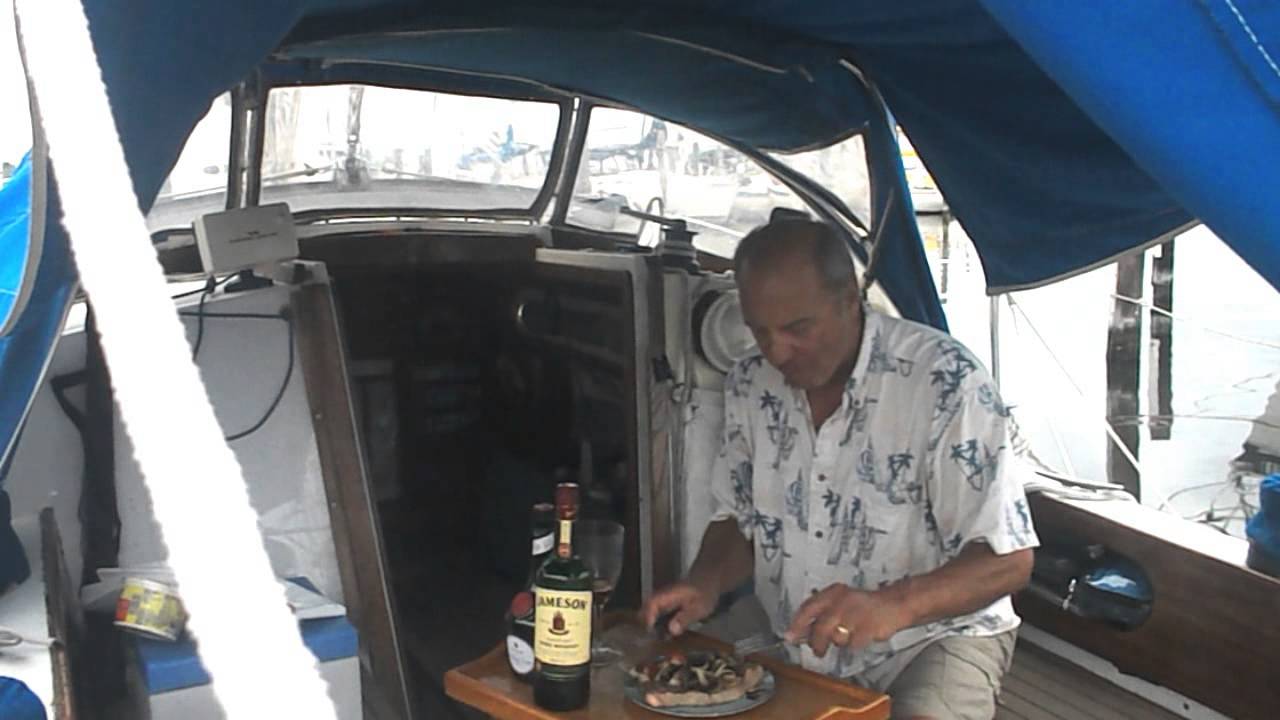
Another rainy day at the marina, good #sailingemporium #rockhall
0
0
0
943

The Power of Sail Area-to-Displacement Ratio (SA/D) in Catamaran Design. Welcome to Navel Gazing at Camp David Shorts. I'm your host, Johnathan. In today's short video, we'll uncover "The Power of Sail Area-to-Displacement Ratio (SA/D) in Catamaran Design." Learn how this crucial ratio impacts a catamaran's sailing performance, acceleration, and ability to handle various wind conditions. Discover the secrets to a smoother, faster ride on the high seas. For more in-depth knowledge on this topic, I recommend reading: "The Principles of Yacht Design" by Lars Larsson and Rolf Eliasson, published by McGraw-Hill Education (2000). "High-Performance Sailing" by Frank Bethwaite, published by Adlard Coles (2009). Don't forget to like, share, and subscribe to Navel Gazing at Camp David for more maritime insights. Thanks for watching!
0
0
0
360

0
0
0
0
524

Conheça internamente nosso veleiro de 44 pés. 👉 Inscreva-se no nosso canal e ative as notificações para mais conteúdos incríveis: https://www.youtube.com/@veleirosmj?sub_confirmation=1 🔍 Quer mais detalhes? Entre em contato 📲 WhatsApp: https://wa.me/5513981002569 Instagram: https://www.instagram.com/mjveleiros Facebook: https://www.facebook.com/VeleirosMj Site: https://www.veleirosmj.com.br Tour Virtual MJ 38 DS: https://bit.ly/tourvirtualmj38 Tour Virtual MJ 44 DS: https://bit.ly/tourvirtualmj44

0
0
0
112

Safety is key when climbing the mast onboard Linnea! And this is our version 2.0 🤯 Always use two lines in case one will fail! At the beginning we used two running halyards, which meant that the one on deck was controlling two lines at the same time, tightening one and then the other and so on. It worked, but it was a very time consuming solution and it wasn’t very safe either! Doing this instead, the one on deck only have one line to control. The prusik knot is controlled by the person in the mast, who simply just moves it along the static halyard (the one attached to the foot of the mast) while going both up and down. Simple as that! Let us know what you think of this! Do you think this is a good solution or do you have a better one you like to share? How do you do when you climb the mast? Don’t forget to save this video 🫶🏼
0
0
0
7,929