Welcome aboard to the our video site for sailors. We are being constantly blasted by scammers and pirates, so registration is invite only
contact@sailorsahoy.com with "Invite". No spam, no newsletters. Just a free account
Corti Creare

Watch Bill Henson’s JPK 45 SIRENE flying downwind with their UK Sailmakers asymmetrical spinnaker in the 2024 Rolex Sydney to Hobart Yacht Race! Making an incredible debut, SIRENE was crowned IRC Corinthian Division Champion, took 2nd place in IRC Division 2, and finished 15th overall in IRC out of 104 starters—only 74 of which crossed the finish line. Representing Fremantle Sailing Club and equipped with an expertly crafted sail inventory from UK Sailmakers Fremantle, SIRENE showcased the perfect balance of versatility and performance that defines this racer-cruiser. The sails were designed and built by UK Sailmakers, with upwind sails developed by Pat Considine (UK Sailmakers Chicago) and asymmetrical spinnakers by Geoff Bishop (UK Sailmakers Fremantle). SIRENE’s inventory included: • X-Drive mainsail with three reefs • X-Drive J2 race jib, reefable to J3 • Heavy-weather J4 staysail on a furler • Code Zero, A2, A3, A4, and a reaching jib top • Storm jib for safety compliance The sail wardrobe was meticulously planned, combining local expertise with UK Sailmakers' cutting-edge Fluid–Structure Interaction (FSI) modeling—an advanced analytical tool that simulates the interaction between sails and surrounding airflow to optimize performance. The initial sail plan was developed in collaboration with Geoff Bishop of UK Sailmakers and a local rigger, with support from FSI modeling by UK Sailmakers' lead designer, Pat Considine. This resulted in a highly effective combination of a jib with a reef and a furling staysail, minimizing jib sail changes while providing a versatile downwind staysail. Video clip provided by Bill Henson.

0
0
0
40,344
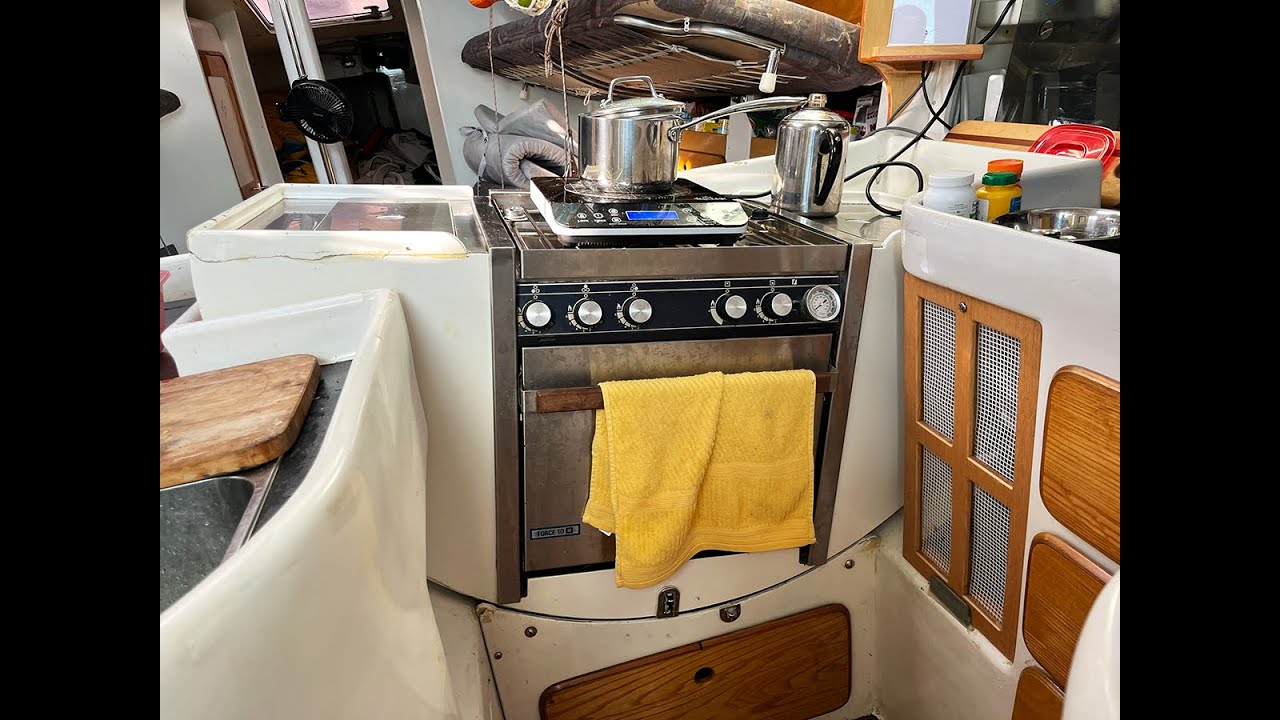
Soulmates has many custom touches, but the interior one that’s unique is the gimbled stove. The stove and oven are part of a unit that includes pot lockers on either side. The stove/oven/pot locker unit has a circular bottom that rides on halyard sheeves. Not only does the stove stay level, but the tops of the pot lockers on both sides of the stove stay level too. When the boat is heeling, the tops of the pot lockers become level surfaces that the cook can use for pouring a cup of coffee or plating dinner. I have never seen a set up like this on any other boat.
0
0
0
180

If you’re bringing your sails into the loft for service or storage using a drawstring sail bag, you may be staring at that gold UK Sailmakers bag that’s been stashed below deck for months, or even years, wondering how your sail will ever fit. Trust us: over the years, our lofts have seen some very creative folding techniques! Getting your sails serviced before the spring sailing season is key to keeping them performing at their best, and catching small maintenance issues early can help prevent costly repairs down the road. Your local UK Sailmakers loft can inspect, repair, or clean your sails, and if you’re thinking about a new one, this is the perfect time to plan for spring delivery. We can help you create a multi-year plan to suit your needs, budget, and sailing goals. Some UK Sailmakers lofts also offer collection and installation services to make it easy to bring your sails in for repair, winter storage, or return. But if you’re dropping your sails off yourself and are wondering how to fit them into a standard drawstring bag, follow this step-by-step guide—it will save you time and make your sailmaker’s job easier. Step 1: Remove any battens and sheets from the sail and lay it out on a clean, flat surface—like a dock finger, sailing club lawn, or other smooth area. Avoid dragging the sail across rough concrete or other hard, abrasive surfaces. Step 2: Flatten about an arm span’s width of the foot, keeping the remainder of the sail neatly piled beside it without twists. Step 3: Grip the foot of the sail while holding the section for your first fold taut. Keep the height of your drawstring bag in mind and make folds slightly narrower than your sail bag’s height to ensure a good fit. Step 4: Continue flaking the sail back and forth, staying between the tack and clew, all the way to the head. You don’t need to stack the luff like you would for a racing sail “sausage bag,” though you can if you prefer. Step 5: Fold over the tack edge over, then roll the sail toward the clew. Step 6: Secure the rolled sail with sail ties and slide it into your drawstring bag. Done!
0
0
0
12