close

Welcome aboard to the our video site for sailors. We are being constantly blasted by scammers and pirates, so registration is  invite only


contact@sailorsahoy.com with "Invite". No spam, no newsletters. Just a free account

শর্টস সৃষ্টি
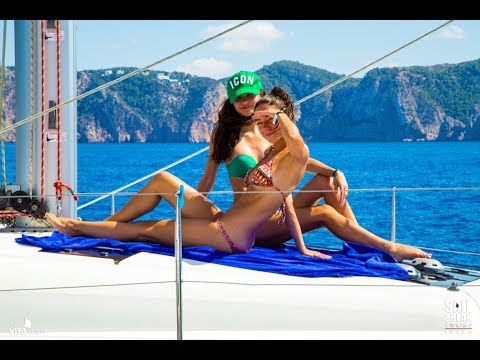
2 - 9 Eylül tarihleri arasında Marmaris çıkışlı SAIL BREAK - Greek Islands etkinliğimizin üçüncü kayıt dönemi sona ermek üzere! Simi Adası'nın eşsiz doğası, Tilos'un kusursuz koyları ve Rodos'un hem tarihi hem de gece hayatı 690 €'dan başlayan fiyatlarla sizi bekliyor! Asla geri dönmek istemeyeceğiniz, hayatınızdaki en güzel anıları size kazandıracak SAIL BREAK etkinliklerinde yelken öğrenmek veya deneyiminizi arttırmak da mümkün! Bir yat kiralayın veya bir yata dahil olun. www.sailbreak.org | 0212 427 44 01

virayatcilik2005

0

0

304

o que fazer para o Enjoo A Bordo? O problema de enjoar a bordo de veleiros, conhecido como enjoo marítimo, é uma condição que afeta muitas pessoas quando estão em alto-mar. É caracterizado por uma sensação de mal-estar, náuseas, tonturas e vômitos, e pode transformar até o passeio mais prazeroso em uma experiência desagradável. O enjoo marítimo ocorre devido a um desequilíbrio sensorial causado pelos movimentos do barco, que podem confundir o cérebro o que pode ser bem chato. mas..... existem algumas coisas que você pode fazer para minimizar o desconforto. Primeiro, tente manter-se em um local do barco onde os movimentos são menos sentidos, como o centro ou a parte traseira. Também é importante fixar o olhar no horizonte para ajudar a estabilizar o cérebro. Ah, e evite leituras excessivas ou ficar olhando fixamente para o celular, isso pode piorar as coisas! por que algumas pessoas enjoam e outras não? Algumas pessoas têm uma maior predisposição genética, enquanto outras podem se adaptar mais facilmente aos movimentos do mar. Além disso, a experiência prévia também desempenha um papel importante. Quanto mais tempo você passar em embarcações, mais provável é que seu corpo se acostume e o enjoo diminua. Se as dicas anteriores não funcionarem, existem alguns remédios de venda livre que podem ajudar a aliviar os sintomas, como comprimidos para enjoo ou adesivos atrás da orelha. Espero que você tenha uma experiência maravilhosa e sem enjoos a bordo. Aproveite o mar e divirta-se! enjoy the moment Ilha da magia, Florianópolis SC - Foco Noals

foconoals

0

0

4,854

Travesia 2009 velero Cosa Nostra (Del Plata 21)

velerocosanostraar

0

0

982

Why not check out The Med on your next sailing vacation? Bask in challenging waters admin ancient backdrops. US https://hubs.ly/H0mMN040 UK https://hubs.ly/H0mMZ4M0 Plan your next getaway today at Sunsail, a premium yacht charter brand within Travelopia, one of the world’s leading specialist travel groups, combines exceptional value vacations with a cutting-edge fleet of 500 yachts in over 20 of the best cruising destinations worldwide. Driven by freedom and adventure since 1974, Sunsail offers a wide choice of sailing vacations including flotilla, bareboat, skippered, and by-the-cabin options as well as sailing schools and regattas. Sunsail Vacations are carefully crafted for sailors, by sailors, focused on delivering unrivaled performance and service for customers across the world. Follow us at: facebook.com/sunsailusa facebook.com/sunsailuk twitter.com/sunsailusa twitter.com/sunsailuk instagram.com/sunsailholidays

sunsailholidays

0

0

4,812

sailingwithscott

0

0

329

1) Understanding your energy needs is essential to determine how much solar you need. Start by making an "energy budget". List all your consumers and their daily usage. For example, if your LED lights use 1W per bulb and you have eight bulbs on for 5 hours a day, that would be 8 Watts for 5 hours or (8x5) 40 Wh (Watt hours). I like to use kWh to keep things consistent. 40 Wh = 0.040 kWh. It's a good idea to list what you're using while at anchor and another list of what you're using while underway (for instance, you don't use your autopilot at anchor). Remember to list everything: fridge, freezer, watermaker, autopilot, nav lights, chart plotters, etc. For example, here aboard Athena, with an electric galley, fridge, freezer, watermaker, two computers, etc, we use an average of 5.5 kWh per day. 2) To give you a quick estimate, use https://globalsolaratlas.info/ to find "Global horizontal irradiation" per day for your location. Take your daily energy consumption from step 1 and divide that by the number of solar hours. In the case of Athena, located in the Caribbean, that would be 5.5kWh per day / 5 sun hours = 1.1 kW solar array. Keep in mind that this is a theoretical number that does not take into account the shading or degradation of the panels over time. Let's add 30%. 1.1 x 1.3 = 1.43 kW. You can now divide that number by the panel's Nominal Power output. In the case of Athena, our panels are 400W SunPower panels. 1430W / 400W = 3.6 panels needed to cover our 5.5 kWh per day consumption. 3) Understand that the amount of solar you can install on a small sailboat is limited by the size of the boat and heavily influenced by shading and, of course, the boat's location. The size of the panels might also be defined by the height of your stanchions or the size of an existing solar arch. Figure out where you're able and willing to install panels. That will dictate the size and number of panels. 4) Use Victron Energy's MPPT Calculator to calculate what MPPT is ideally sized for your solar panels and expected output based on location. Based on our experience in the Caribbean, the estimate provided by the guide is reasonable. https://www.victronenergy.com/mppt-calculator. Remember that it's best practice to avoid combining panels with different specs on the same MPPT. #sailboat #sailboatproject #boatwork #saillife #liveaboard #liveaboardlife #saltlife #sailing #sailingadventure #travel ingcouple #livingonaboat #solar #sailboatsolar

Saillife

0

0

18,950