Welcome aboard to the our video site for sailors. We are being constantly blasted by scammers and pirates, so registration is invite only
contact@sailorsahoy.com with "Invite". No spam, no newsletters. Just a free account
Shorts Skapa
UK Sailmakers uses very powerful 3-D CAD/CAM software for sail design, which create virtual 3-D molds that can be digitally sliced into two-dimensional panels that when joined back together re-create a full-size version of the designed mold. Thanks to powerful 3-D graphic renderings, designers can see how sail fit around the spreaders and shrouds as well as make sure the clew height and sheeting angles are right. They can also analyze how a main and genoa work together to make sure the boat stays balanced. What we are looking for is a sailplan and sail shapes that put the maximum driving force in precisely the right place to produce a perfectly balanced boat – and with the least amount of drag. Pat Considine, UK Sailmakers’ chief designer, goes a step further and uses Fluid Structural Interaction software, called FSI for short, as a virtual wind tunnel for refining sail designs and sail construction. FSI calculations are used to test proposed designs and cloth choices to make sure they are not built too strong (too heavy) or too weak (too light) for their expected loads. The FSI calculations will predict whether a design and construction will keep its shape properly as the rig bends, halyards are tightened and sheets are trimmed. Shown rotating in this video are two renderings of a Tripp 47 mainsail design. The side-by-side comparison shows the sail with no backstay tension and with max backstay trim. The FSI software allows Pat to rotate the two designs together to study their shape from any angle. In this case, Pat needed to be sure the draft would not move too far aft as the sail was flattened; likewise, he had to make sure the draft was not too far forward when the backstay was eased completely. The FSI program has made extremely accurate predictions of how specific sail designs will perform once made and trimmed in a variety of wind speeds. These tests ensure sails will meet the performance needs right out of the bag.
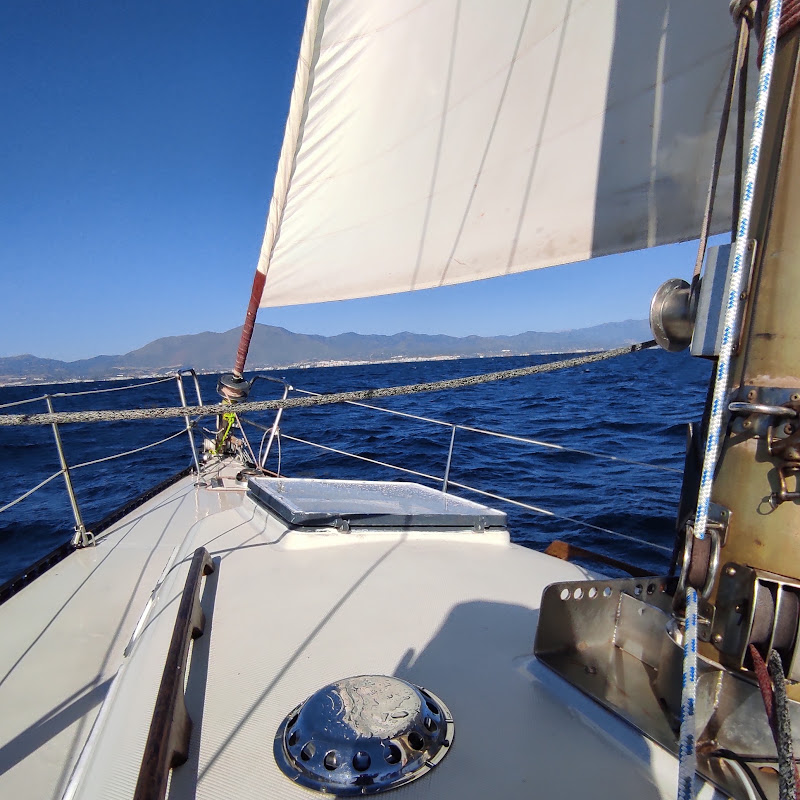
Stiamo navigando sempre verso nord est. A tratti più verso nord a tratti più verso est. La barca procede spedita, sembra scalpiti per rimettere la sua panciona blu nelle acque del mediterraneo. E noi le lasciamo briglie lasche, che possa portarci con lei! A bordo ci si risveglia pigramente (o meglio mi risveglio pigramente), il sole intorpidisce il corpo appena si alza ed è una goduria unica. Pina è meravigliosa, questa volta sono serio. (Pina sarebbe Cami). Una compagna presente, premurosa, che mi lascia sonnecchiare ma mai troppo (non ci si deve mica impigrire!). La trovo a rovesciare taniche nel serbatoio e così mi alzo e la aiuto. Rabbicchiamo per scaricare le taniche che inevitabilmente sbilanciano i pesi a bordo a dispetto del serbatoio che è più centrale. 3 taniche e mezzo andate, ne abbiamo ancora 4 e la lancetta indica il pieno. Con il gasolio siamo a posto. Si alza anche Tin, membro splendido dell’equipaggio. Operativa, solare, curiosa e intraprendente. E chi vuole di più? La giornata scorre leggera. Tutti ci riposiamo per fare il pieno di energia. Domani dovrebbe salire un po’ più di vento e noi ci faremo trovare pronti, come sempre. Gibilterra si avvicina, a breve rivedremo il continente europeo! Ora iniziamo i turni e non tocca a me, quindi… notte!! Un saluto a tutti e un grosso abbraccio. Non lo diciamo spesso ma questo canale sta crescendo e sentiamo un calore indescrivibile. E chi se lo aspettava. Siete uno spettacolo ragazzi! Vi abbraccio tutti Andrea