Последние видео

In Episode 32 of UK Sailmakers’ Lessons Learned, host Buttons Padin chats with Matt Gallagher, Rear Commodore of the Storm Trysail Club and chairman of the Intercollegiate Offshore Regatta (IOR) series, about the IOR’s role in developing future offshore keelboat sailors. STC is made up of approximately 1,100 offshore sailing enthusiasts, and one of the Club’s missions is to help young sailors transition from dinghies to offshore keelboats. To accomplish this, for the past 25 years STC and Larchmont Yacht Club have co-hosted the Intercollegiate Offshore Regatta on Long Island Sound over Columbus Day Weekend. This year’s event, October 10-11, will host teams from 45 colleges and universities. The recently completed Great Lakes IOR (September 26-27) has been sailed since 2015, co-hosted by Chicago Yacht Club and Columbia Yacht Club with 18 teams. New this year is the Pacific Northwest IOR at Seattle Corinthian Yacht Club, November 14-15, with registrations still open. Matt traces how the series started on Western Long Island Sound and how it has grown, and explains how the Storm Trysail Club and the independent Storm Trysail Foundation fund the IOR so students sail at no cost, made possible by generous boat owners and onboard owner’s reps focused on safety. He also gets into demand outpacing available boats, a new team selection process, the Callisto Cup series trophy, growing female participation, and plans to expand into more regions. Matt credits UK Sailmakers and a core group of volunteers for helping make the IOR what it is today. 00:00 Meet Matt Gallagher 00:51 IOR Origins and Growth 02:16 Club vs Foundation Explained 03:58 Finding Boats and Owners 05:21 What Sailors Take Away 06:55 Series Format and Callisto Cup 07:39 Teams and Selection Process 09:42 Safety Training Boot Camp 12:06 Keeping Graduates in Sailing 13:06 Women in Offshore Sailing 14:34 Future Expansion Plans 15:43 Thanks to UK Sailmakers 16:43 Wrap Up and Where to Watch Like and subscribe to the UK Sailmakers YouTube channel to be notified when more great content from our channel is uploaded. The Lessons Learned Podcast is also available for streaming on Spotify, Apple Podcasts, and Amazon Music. Thumbnail photo ⓒ Storm Trysail Club | Steve Cloutier.
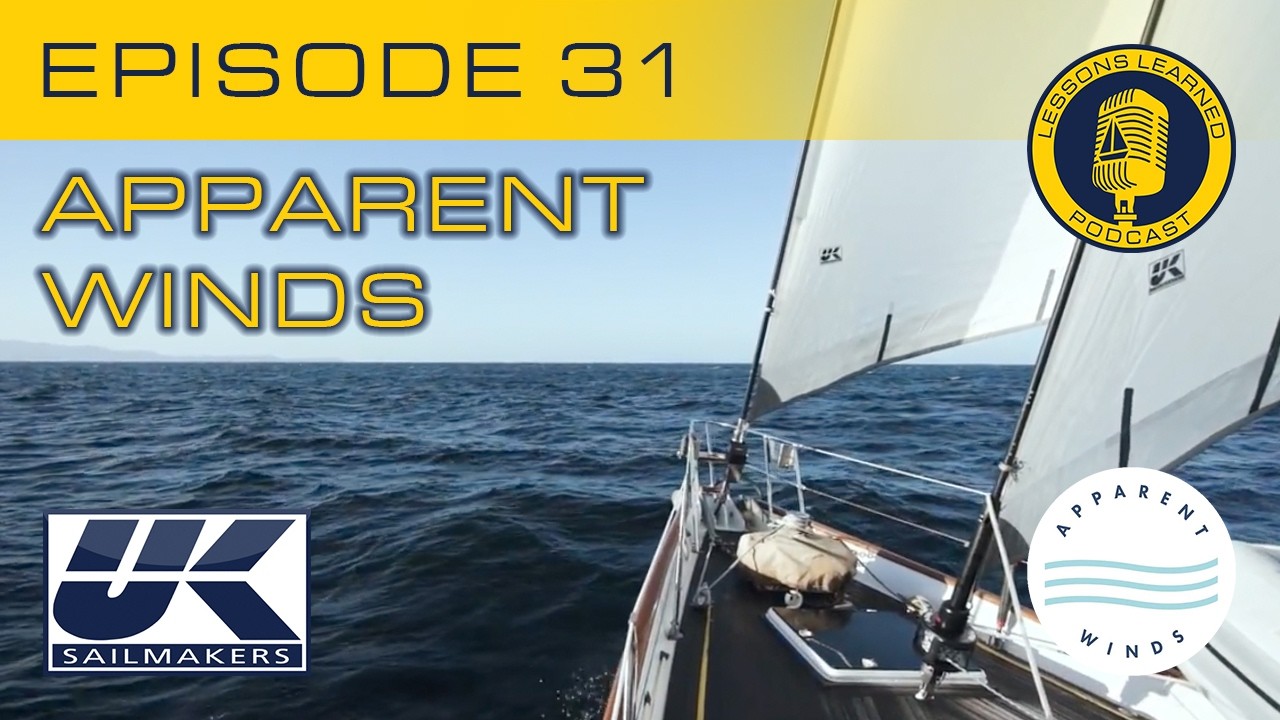
In Episode 31 of UK Sailmakers' Lessons Learned, host Buttons Padin catches up with Tripp Brower, executive director of Apparent Winds, aboard the 75 foot aluminum ketch Resilience in Mo'orea, French Polynesia, just in from Fakarava in the Tuamotus. Tripp explains how Apparent Winds grew from a planned two year circumnavigation into a 10 year expedition focused on collecting and sharing stories of community led environmental and cultural preservation, and on making "affordable science" possible by offering researchers low cost access to a capable sailing platform and accessible tools like a 6,000 meter drop camera. He traces the route from Maine to Grenada, across the Caribbean to Panama, out through French Polynesia, the Cook Islands, Samoa and Tonga to New Zealand, and back north this season through the Marquesas and the Tuamotus, with relationship building as the foundation for the work. Tripp covers the partnership behind the 12.5 million square kilometre Moananui Sanctuary, a NOAA research charter in American Samoa this October focused on coral, and introduces the crew. He also gets into how the ketch rig is handled shorthanded, his passage making advice ("don't sink" and "leave the dock"), and what is next: a refit in Whangarei, New Zealand, and a separate Chile to Antarctica expedition. Follow along with Tripp and the crew at @apparentwinds on Instagram and the Apparent Winds Expedition on YouTube. 00:00 Introduction 01:02 Mo'orea Update 01:34 Mission and Affordable Science 04:46 Deep Sea Tech and Data Gaps 06:30 Route From Maine to Polynesia 08:53 Biggest Lessons So Far 10:32 Meet the Crew 12:28 Resilience the Boat 14:29 Sails and Ketch Handling 15:42 New Passage Making Advice 17:53 What's Next: Antarctica and Beyond 19:45 Wrap Up and Where to Follow Like and subscribe to the UK Sailmakers YouTube channel to be notified when more great content from our channel is uploaded. The Lessons Learned Podcast is also available for streaming on Spotify, Apple Podcasts, and Amazon Music.

In Episode 30 of UK Sailmakers’ Lessons Learned, host Buttons Padin talks with Brendan Huffman, co-owner of the UK Sailmakers Los Angeles loft, fresh off winning ORR 4, the Gosling's Rum Division, and the perpetual Carl Schumacher Award in the 2026 Pacific Cup aboard his refit Express 37, Dorado. He took the lead in the last 100 miles of an 11.5 day race. Brendan walks through a stop-and-start two and a half year restoration, including major deck and rig updates, a cracked diesel tank that contaminated the bilge and water tank weeks before the start, and last-minute equipment changes. He details his offshore sail plan using UK's X-Drive® laminates, why he left the J1 at home, and how a spinnaker net helped prevent headstay wraps while sailing deep in rolly trade wind conditions. He also explains why he chose a five-person crew, how they managed systems and navigation, and what's next for the boat. 00:00 Introduction 01:13 Express 37 Refit Story 03:26 Setbacks and Delivery 05:35 Sail Inventory Choices 08:27 Spinnaker Net Explained 12:20 Race Results and Lessons 14:30 Five Person Crew Strategy 16:23 Favorite Race Moments 17:37 What’s Next for the Boat 19:21 Taffeta on X-Drive Sails 20:17 Conclusion Like and subscribe to the UK Sailmakers YouTube channel to be notified when more great content from our channel is uploaded. The Lessons Learned Podcast is also available for streaming on Spotify, Apple Podcasts, and Amazon Music.
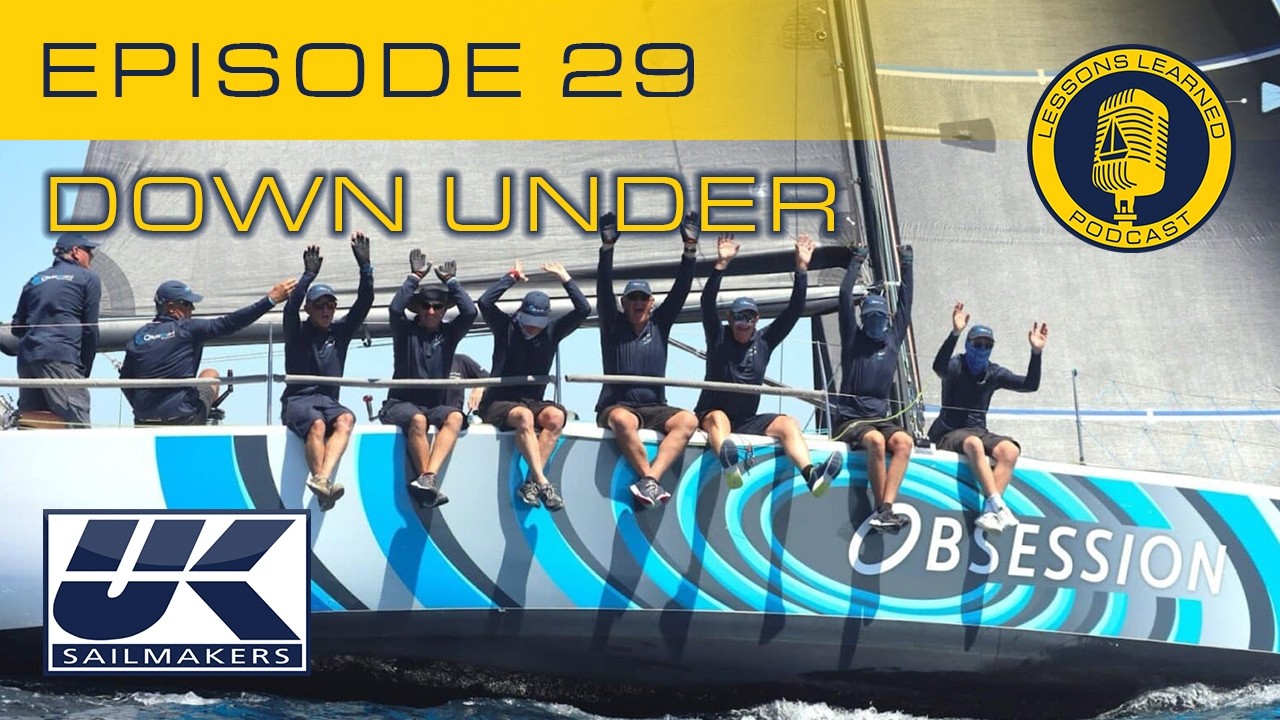
In Episode 29 of UK Sailmakers' Lessons Learned podcast, host Buttons Padin talks with Ceris and Paul Arns about Obsession, the Mark Mills designed MAT 1245 they campaign out of Western Australia. Ceris and Paul are the poster children for a husband and wife team fully committed to a racing program. "We're just committed to racing Obsession. If the boat is not used, we feel bad," Ceris noted. That commitment has paid off with back to back Ocean Racing Western Australian Championships and a long list of major wins. They trace their path from New Zealand to WA, coming back to sailing after raising a family, and building a crew culture that Ceris describes as "as much a family as we are a crew of good sailors." Paul credits three things for the results: seamanship and boat management, disciplined maintenance and sail upgrades, and strong team leadership from Geoff Bishop, owner of UK Sailmakers Fremantle. "We discussed our sail inventory, and we went entirely with UK Sailmakers' recommendations. We were a test platform for UK's new Integrated Structural Luff technology, and ISL, like all our UK sails, just plain works!" The episode also covers the WA sailing scene and clubs, what makes the MAT 1245 such a delight upwind, sea survival training, and their decision to truck Obsession 4,000 km east to race the Sydney to Gold Coast and then Hamilton Island Race Week in the Whitsundays, Queensland, which runs 15 to 22 August 2026. Whether you are building an offshore program from scratch or looking to get more out of the one you have, this episode is full of practical takeaways from two sailors who have achieved a lot in the last few years. 00:00 Introduction 01:01 How They Returned to Sailing 03:33 Building a Crew Family 05:48 Western Australia Sailing Scene 08:01 Obsession Racing Results 10:53 Keys to Consistent Success 12:04 What Makes the MAT 1245 Special 13:03 Trucking East and Big Regattas 16:05 Sea Survival Training 18:21 Sail Development with Geoff Bishop 22:16 What's Next for Obsession 23:03 Conclusion Like and subscribe to the UK Sailmakers YouTube channel to be notified when more great content from our channel is uploaded. The Lessons Learned Podcast is also available for streaming on Spotify, Apple Podcasts, and Amazon Music. Thumbnail Image: The Obsession crew on the rail at the 2025 Geographe Bay Race Week, equipped with Titanium sails from UK Sailmakers Fremantle. Photo Ⓒ TP72 Nautical Imagery.

In this Lessons Learned Short, host Buttons Padin talks with Belgian sailor Quentin Dubois after he established a world benchmark time sailing a Mini 6.5 from Miami to New York (about 900 miles), a category with no prior official record attempts. This follows his earlier 2026 record breaking transatlantic crossing from Cadiz to San Salvador in the Mini 6.5. Dubois describes choosing a strong weather window with router Basil Rochu, using the Gulf Stream for an average 2 knot push (up to 3) until Cape Hatteras, and managing changing wind strength over the passage. He details his sail plan: solent and main upwind early, then flying UK Sailmakers Matrix spinnakers from the cockpit, and praises his UK Sailmakers Belgium sails, including a reefable solent with a zipper system. Back in Belgium briefly, he plans to return to New York in early June to repair significant hull delamination found after hauling out in Raritan Bay before preparing to start another Atlantic crossing in an attempt at the west to east record. 00:00 Introduction 01:01 Weather Window and Winds 01:48 Riding the Gulf Stream 02:23 Sail Plan and Spinnakers 03:28 Singlehanded Spinnaker Handling 04:42 Sail Performance and Solent Reef 06:22 Back Home and Hull Repairs 07:26 Conclusion Like and subscribe to the UK Sailmakers YouTube channel to be notified when new content is uploaded. The Lessons Learned Podcast is also available on Spotify, Apple Podcasts, and Amazon Music.

In Episode 27 of UK Sailmakers' Lessons Learned podcast, host Buttons Padin talks with Andrew Weiss, owner of Christopher Dragon XII, and UK Sailmakers' Chief Designer Pat Considine about a major shift in offshore sail inventory: replacing the Code Zero with a smaller, flatter A3. For boats racing under ORC, particularly those that won't get up on a plane, the rating penalty paid to carry a Code Zero may not be worth it anymore. Andrew has taken his Code Zeros off the boat entirely, and instead sails with a new generation A3 spinnaker. He's getting comparable performance in typical Code Zero conditions while avoiding the rating hit, a decision that's paid off in every distance race he's entered this season heading into the Bermuda Race. Andrew and Pat trace this evolution from his early IRC experimentation with masthead Code Zeros, through the rating tradeoffs and complexity of carrying too many sails under ORC, to a "back to basics" approach for his Italia 11.98. The new A3, about 83–84% mid-girth, is designed to cover key reaching angles while simplifying onboard sail-handling decisions. Pat walks through how UK Sailmakers is designing this new generation of A3s using their ISL (Integrated Structural Luff) technology. The episode closes with a look at Christopher Dragon's full inventory for the upcoming 2026 Newport to Bermuda Race: A3, A1, two A2s, J1–J4, storm sails, and two staysails. For sailors evaluating their own offshore inventory, this episode offers a clear case study in rethinking sail selection for rating efficiency without sacrificing performance. 00:00 Introduction 01:06 Why Code Zeros Changed 02:50 ORC Rating Tradeoffs 04:10 Italia 11.98 Reset 06:59 Back to Basics A3 07:55 Designing the New A3 11:13 Code Zero Wind Range 13:33 Cloth Choices and Colors 14:37 Race Results with A3 18:08 Who Should Skip Code Zeros 20:27 Bermuda Race Inventory 21:31 Staysails and Packing Tips 22:47 Conclusion Like and subscribe to the UK Sailmakers YouTube channel to be notified when new content is uploaded. The Lessons Learned Podcast is also available on Spotify, Apple Podcasts, and Amazon Music.
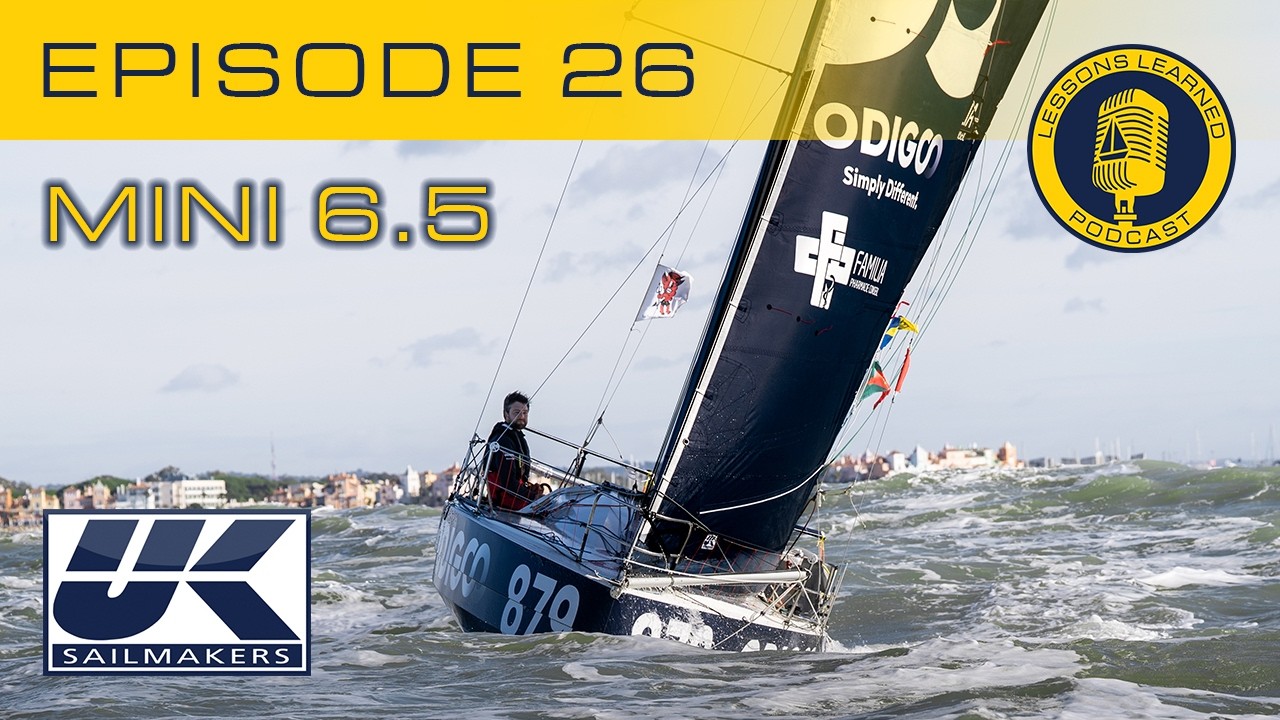
In Episode 26 of UK Sailmakers’ Lessons Learned podcast, host Buttons Padin speaks with Belgian offshore sailor Quentin Debois about his Mini 6.5 campaign, his sailing background, and his recent record-breaking Atlantic crossing. Quentin only began sailing at age 31 after a friend introduced him to a Hobie 16 on the Belgian North Sea. What started as curiosity quickly became a passion, leading him to formal training in France and ultimately into offshore racing in the demanding Mini 6.5 class—a 6.5-metre (21-foot) solo offshore racing boat known for its speed, instability, and extreme demands on both sailor and equipment. One of Quentin’s standout achievements is his recent east-to-west Atlantic record attempt, sailing from Cádiz, Spain, to San Salvador in The Bahamas via a Grand Canaria waypoint. He completed the crossing in 24 days, 19 hours, significantly lowering the previous under-7m record of 30 days, 22 hours. The campaign was supported by a dedicated team including a router, coach, technical preparer, and mental coach, highlighting the level of coordination required even in “solo” offshore racing. Preparation played a critical role. Quentin and his team fully rebuilt the boat before departure, and UK Sailmakers Belgium equipped his boat with a reefable jib, a Code 0, and A2 and A5 spinnakers that performed throughout the crossing. When he required repairs on an older mainsail for a subsequent record attempt, UK Sailmakers Miami supported a rapid turnaround to keep the campaign on track. Quentin’s approach is highly disciplined—he sails without an engine and constantly manages boat trim, including shifting approximately 250kg of internal ballast during manoeuvres. His focus now turns to future record attempts, including Miami to New York and New York back to the UK (Lizard Point), each timed around precise weather routing. Quentin Debois represents a new generation of offshore sailor—combining performance sailing, technical precision, and structured support teams to push the limits of what small offshore boats can achieve. For potential partners interested in supporting Quentin’s campaign, contact him directly at Quentin@OceanSailing.be and you can also follow his adventures on Instagram @quentindebois. 00:00 Introduction 00:41 What Is a Mini 6.5 01:35 Discovering Sailing Late 02:36 Training for Offshore Solo 03:49 Race vs Record Route 05:07 Breaking the Atlantic Record 06:21 Mental Coaching at Sea 08:19 Boat and Sail Preparation 10:59 Sail Repairs and Durability 13:33 Onto the Next Records 16:38 Weather Routing Strategy 17:55 Community Support 20:27 Overcoming Challenges 22:52 Conclusion Like and subscribe to the UK Sailmakers YouTube channel to be notified when new content is uploaded. The Lessons Learned Podcast is also available on Spotify, Apple Podcasts, and Amazon Music.
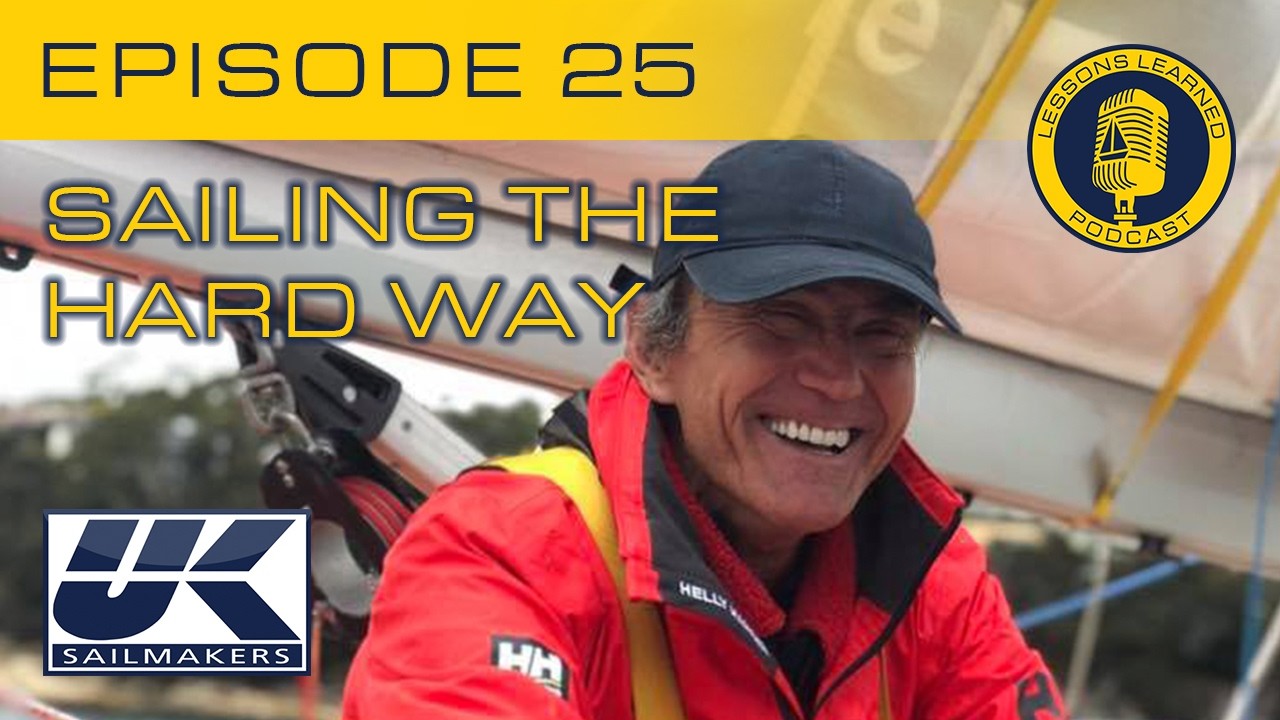
Join host Buttons Padin on the 25th episode of the Lessons Learned podcast by UK Sailmakers, where he sits down with solo circumnavigator Istvan Kopar as he prepares for his fourth and most ambitious voyage around the world. Istvan shares his journey from learning to sail on Lake Balaton behind the Iron Curtain, to 13 years in the Hungarian merchant marine, to completing a solo one-stop circumnavigation in 1990-91 with no electronics. He also recounts his experience as the only American to finish the 2018-19 Golden Globe Race, and details his upcoming Anniversary Challenge: a solo, non-stop, westbound circumnavigation at age 73, departing alongside the 2026 Golden Globe Race fleet. Istvan also discusses his Valiant 42 refit and his new sail inventory from UK Sailmakers Miami. Tune in for an inspiring conversation that will help you #SailWithConfidence. 00:00 Introduction 00:33 Sailing Behind Iron Curtain 02:34 Merchant Marine to Oceans 05:16 First Solo Circumnavigation 07:16 Three Circumnavigations Recap 08:20 Golden Globe Race Roots 11:04 Super Marathon Reality 12:30 New Westbound Mission 16:36 Anniversaries and Purpose 21:03 Choosing and Refit Valiant 42 23:58 New Sails and Rig Choices 26:23 Conclusion Like and subscribe to the UK Sailmakers YouTube channel to be notified when more great content from our channel is uploaded. The Lessons Learned Podcast is also available for streaming on Spotify, Apple Podcasts, and Amazon Music. Thumbnail Photo © Aïda Valceanu

Join host Buttons Padin as he sits down with Adam Loory for the 24th episode of Lessons Learned, the UK Sailmakers podcast series. Dive into an engaging discussion on Adam’s lifelong dream of sailing around the world, plans, and preparations for his upcoming voyage to the South Pacific. Discover detailed insights about the refit and transformation of a race boat for long-term performance cruising, the complex itinerary, key navigational preparations, and essential tips for any aspiring global sailor. Don’t miss this thrilling episode packed with valuable lessons and inspiration from Adam's journey, Reaching thru Retirement. 00:00 Introduction 00:42 Adam's Sailing Background and New Adventure 02:28 Preparing the Boat for the Journey 05:34 Route and Navigation Plans 10:04 Provisioning and Onboard Life 11:09 Advice for Aspiring Sailors 15:29 Weather Considerations and Departure Plans 19:51 Conclusion Like and subscribe to the UK Sailmakers YouTube channel to be notified when more great content from our channel is uploaded. The Lessons Learned Podcast is also available for streaming on Spotify, Apple Podcasts, and Amazon Music.

Join host Buttons Padin on the 23rd episode of the Lessons Learned podcast by UK Sailmakers, featuring Commander Gregory Storer of the United States Navy. In this extra-special episode, we step outside the world of sailmaking as Commander Storer discusses his journey from sailing small boats like Optis and Lasers in his youth to commanding the USS Springfield, an LA-class fast attack submarine stationed in Guam. Commander Storer shares how his early sailing experiences shaped his submarine navigation tactics, recounts his time at the Naval Academy, and explores the dynamics of maneuvering a submarine. The episode offers fascinating insights into the challenges and techniques of submarine operations, including man-overboard recovery and navigating tight harbors. 00:00 Introduction 00:35 Meet Commander Gregory Storer 01:09 Early Sailing Days 02:04 Transition to the Navy Academy 04:26 From Small Boats to Big Boats 06:41 Driving the USS Springfield 08:26 Maneuvering and Navigation Challenges 16:03 Man Overboard Recovery Techniques 20:41 Conclusion 21:27 Extra: On Location in Guam Like and subscribe to the UK Sailmakers YouTube channel to be notified when more great content from our channel is uploaded. The Lessons Learned Podcast is also available for streaming on Spotify, Apple Podcasts, and Amazon Music.

Join host Buttons Padin on the 22nd episode of the Lessons Learned podcast by UK Sailmakers, where he dives into the world of team racing with Jack Fenwick, the Sailing Development Manager of the Royal Thames Yacht Club. They discuss the intricacies of organizing team racing events, the role of team racing in sailing culture, and the unique events hosted by Royal Thames Yacht Club such as the Cumberland Cup. Jack also shares insights on working with Craig Millar at UK Sailmakers South Africa for custom Sonar sails to meet their club's specific racing needs. Tune in for an enlightening conversation that will help you sail with confidence. 00:00 Introduction 00:13 Meet Jack Fenwick: Sailing Development Manager 00:25 The Role of Team Racing 03:23 The Cumberland Cup and International Competitions 08:31 Sail Maintenance and Customization 12:31 Upcoming Events and Future Plans 19:08 Innovative Team Racing Formats 20:13 Working with UK Sailmakers 21:44 Conclusion Like and subscribe to the UK Sailmakers YouTube channel to be notified when more great content from our channel is uploaded. The Lessons Learned Podcast is also available for streaming on Spotify, Apple Podcasts, and Amazon Music.

Some times it pays to break the rules. While sailing back from the Bras d’Or Lakes to Halifax, we left on Friday Aug. 22nd, the day that Hurricane Erin was going by. Sailing superstition says it’s bad luck to set off on a Friday. Also, most sailors stay in safe harbors when such a big storm is any where nearby. Yet, I didn’t break the rules idly; I watched the track of the storm and had chosen ports bailout ports. Getting home from the Bras d’Or Lakes to Halifax is normally an upwind slog because of the prevailing southwest summer breezes. The northern edges of Hurricane Erin would create a strong northeasterly that would make the trip a fast, downwind ride. This was a chance too good to pass up. I determined the risk was worth the reward. Several hours into our surfing session down the south coast of Nova Scotia, we noticed blue sky to the north over the land and angry grey clouds to the south out to sea. During the day, we jibed downwind between the shore and the meanest looking clouds. Soulmates ended up having a great, fast sail. We averaged 9 knots for the 95-mile 11-hour passage from the exit of the Bras d’Or Lakes to Beaver Island Harbor, which is nearly two thirds of the way to Halifax. The wind blew in mid-20s with some solid gusts into the 30s, but since we were on a very broad reach with a double-reefed main and small jib, heeling was minimal. Our highest speed was a surf to 20.2 knots and had uncountable number of surges over 15 knots. There were hour-long stretches where we averaged 11 knots. Being comfortable in, and prepared for, high winds allowed us take advantage of these conditions. My decision to sail bore fruit, as the day after the storm, we had to motor the remaining 60 miles to Halifax because the prevailing southwesterly had returned. Comfort and preparation are the result of years of sailing in incrementally stronger winds and learning from those experiences. All sailors would do well to expand their sailing skills as did my crewmate Keven; she started out skeptical of my plan, but was smiling at the end of the our successful sail. I broke one other superstitious rule — we sail with bananas as part of our larder.

Welcome to the twenty-first episode of Lessons Learned, the UK Sailmakers podcast hosted by Buttons Padin. In this episode, Buttons is joined by UK Sailmakers’ lead designer, Pat Considine, to break down the effects of headstay sag on sail performance—and to show how our headsails with ISL (Integrated Structural Luff) technology provide a modern solution. They explore what headstay sag is, why it matters for both boat speed and pointing ability, and the traditional methods sailors use to manage it. Pat also highlights the latest onboard equipment that helps control sag. Finally, they dive into how UK Sailmakers’ ISL technology takes performance even further. ISL is now available on new X-Drive and Titanium headsails, as well as Code Zeros. 00:00 Introduction 00:38 Understanding Headstay Sag 01:51 How to Control Sag 04:36 Halyard Tension & Sail Shape 05:08 Integrated Structural Luff Sails 06:05 How to Use ISL Sails 08:15 Boat Considerations 10:00 Determining Load Transfer 12:06 Conclusion Like and subscribe to the UK Sailmakers YouTube channel to be notified when more great content from our channel is uploaded. The Lessons Learned Podcast is also available for streaming on Spotify, Apple Podcasts, and Amazon Music.

While on my cruise to the Canadian Maritimes, I have had to singlehand my boat Soulmates while waiting for friends to join me as crew changes have not been seamless. This video and article talk about how I felt tested by the wind gods in my ability to singlehand my boat.

Besides the auto pilot, the one piece of equipment that makes shorthanded sailing easier and more enjoyable is my Lazy Cradle. Controlling a mainsail when you lower it can be a challenge even with full crews, but when shorthanded, it can be a bigger problem. However, with my Lazy Cradle, that problem goes away. A Lazy Cradle is a sail cover that is attached to the top of the boom under the mainsail and the upper edges are raised in place with the boat’s lazy jacks. The lazy jacks guide the sail down into the cover. With the Lazy Cradle I can literally drop my mainsail into the cover faster than a furling main can be rolled into the mast or boom. I just release the halyard and gravity does the rest. Coming into a harbor is no problem; just drop the sail and it is out of the way without the need to flake or furl. With the sail in the cover, you can concentrate on the channel and traffic instead of sail handling. Then, when I’m at anchor, I can zip the cover over the sail and then zip the front piece that goes around the mast and the sail is protected from the sun’s harmful UV rays until our next sail.

After sailing halfway around the world, I think that many people spend too much time preparing for heavy winds and not enough time for preparing for light air sailing, which is more likely found on traditional routes. Unless you sail a “super tanker,” boats can’t carry enough diesel to cover thousands of miles. Even if you can carry enough fuel for daysails and short cruises, who wants to motor downwind smelling diesel fumes that envelop the cockpit when your speed under power is similar to the windspeed. Cruising spinnakers will make your sailing much more enjoyable.

Welcome to the twentieth episode of Lessons Learned, the UK Sailmakers podcast series hosted by Buttons Padin. In this episode, Buttons explores the art of sailing photography with world-renowned yachting photographer Sharon Green. Sharon shares how she got her start behind the lens—shaped by the influence of her Hall of Fame sailor father, Don Green—and reflects on capturing some of the sport’s most iconic images. She offers practical tips for shooting on the water, in the water, and from the air, and explains the importance of equipment, timing, and perspective. From helicopter shoots to racecourse challenges, Sharon reveals what it takes to create both dynamic and technically precise sailing photos, along with advice for aspiring photographers looking to break into the field. 00:00 Introduction and Guest Introduction 00:46 Sharon Green's Background and Early Influences 03:13 Getting Started in Sailing Photography 03:31 Tips for Better Sailing Photography 03:53 Challenges and Techniques in Sailing Photography 06:10 Equipment and Camera Handling 12:28 Helicopter Photography 17:33 Protecting Your Camera on the Water 24:02 Working with Other Photographers 25:33 Capturing Personal Moments and People Shots 27:51 Conclusion Like and subscribe to the UK Sailmakers YouTube channel to be notified when more great content from our channel is uploaded. The Lessons Learned Podcast is also available for streaming on Spotify, Apple Podcasts, and Amazon Music.

Welcome to the nineteenth episode of UK Sailmakers' Lessons Learned podcast series, hosted by Buttons Padin. In this episode, Buttons speaks with Butch Ulmer, former president of UK Sailmakers and a member of the Sailing Hall of Fame. Together, they break down the 2025 changes to the Racing Rules of Sailing, with this episode's particular focus on obstructions and proper hailing protocol. Butch shares tactical advice including what to do (and what not to do) when you find yourself in a tough spot like Boat 1 in the “coffin corner” shown in the thumbnail. Whether you're a seasoned racer or just getting into the sport, this episode offers valuable insights from a true rules expert and world-class sailor. 00:00 Introduction 00:29 Meet Butch Ulmer: Sailing Hall of Famer 01:04 Understanding Obstructions in Sailing 02:43 Hailing for Room to Tack: Rules and Scenarios 06:08 Illegal Hails and Anticipation Strategies 10:11 Port-Starboard Situations and Final Thoughts 11:36 Conclusion Like and subscribe to the UK Sailmakers YouTube channel to be notified when more great content from our channel is uploaded. The Lessons Learned Podcast is also available for streaming on Spotify, Apple Podcasts, and Amazon Music.

These clips show my voyage from Nassau in the Bahamas to Key Biscayne, Fla., to Cape Canaveral, Fla., in December of 2024.
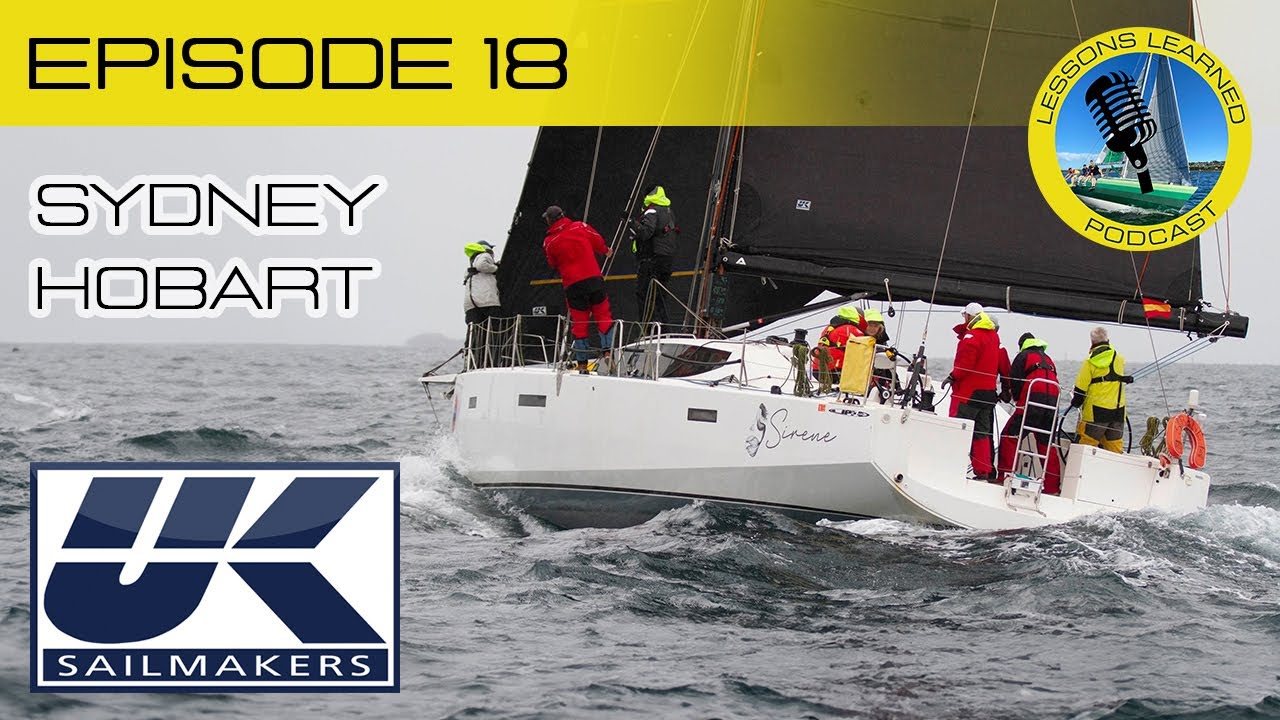
Join us for the eighteenth episode of Lessons Learned, UK Sailmakers' podcast series. Listen as host, Buttons Padin, talks with Bill Henson about his thrilling experiences aboard his JPK 45 SIRENE. From purchasing the boat in Lorient, France, to participating in the Middle Sea Race, sailing through the Suez Canal, and recently racing in the Sydney Hobart, Bill shares his unique insights and modifications that enhanced the boat's performance. Explore Bill's adventures sailing 25,000 miles, contending with challenging conditions, and balancing both racing and cruising in remote locations. Learn about his collaboration with Geoff Bishop of UK Sailmakers Fremantle for specialized sail solutions that supported his journey. Don't miss this episode packed with sailing tales and valuable lessons. You can also read more about SIRENE's Sydney Hobart race in the News section of the UK Sailmakers Website. 00:00 Introduction and Guest Welcome 00:48 Choosing the JPK 45: Features and Customizations 03:28 Cruising in Western Australia 04:34 Mediterranean Adventures and the Middle Sea Race 06:06 Navigating the Red Sea and Indian Ocean 08:30 Sydney Hobart Race Experience 11:15 Sail Inventory and Customizations 16:30 Future Plans and Closing Remarks Video Image Credits: Bill Henson Thumbnail Photo © Bernie Kaaks Like and subscribe to the UK Sailmakers YouTube channel to be notified when more great content from our channel is uploaded. The Lessons Learned Podcast is also available for streaming on Spotify, Apple Podcasts, and Amazon Music. UK Sailmakers is proud to have the Lessons Learned Podcast Series recognised as the #1 Sailing Podcast in the UK by FeedSpot.