Laatste video's
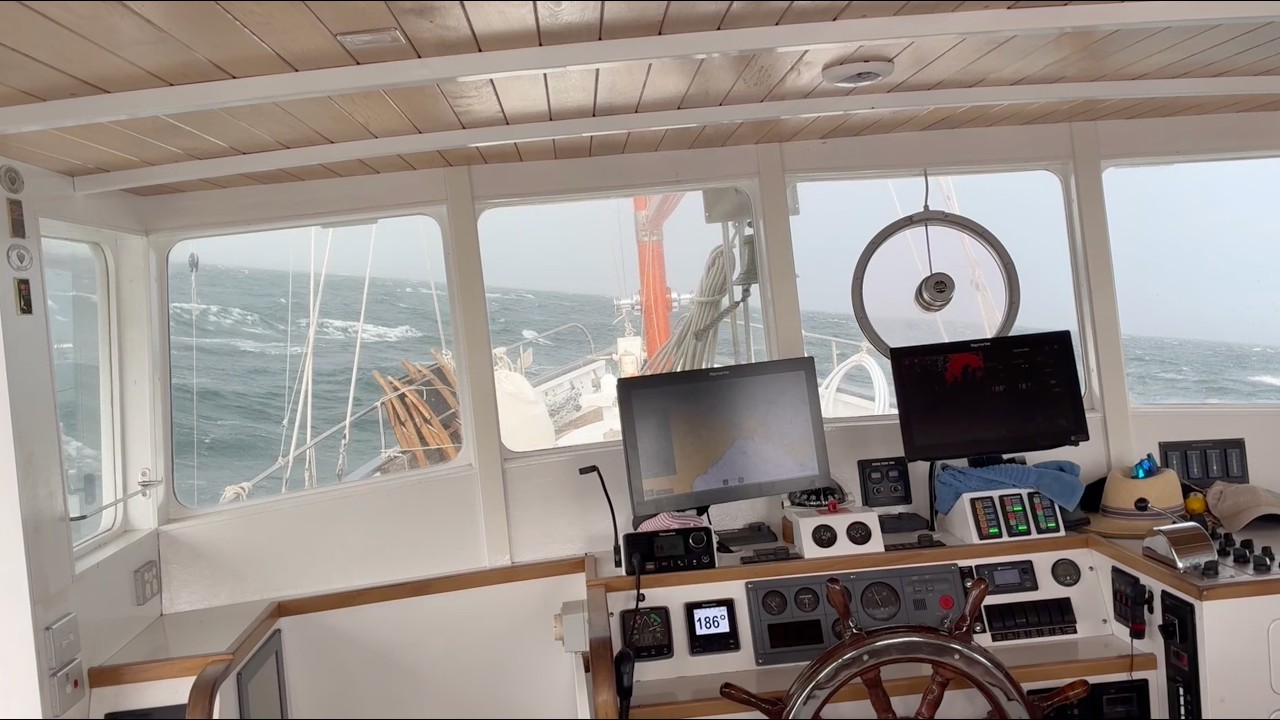
In Part Four Jim takes the boat through a nasty little Port Philip squall from St Kilda to Martha’s Cove for a haul out and to work on the extensive maintenance list. MAINTENANCE LIST Winter and Spring 2026 SHIPWRIGHT - DICK BLAKE • Recoat masts and spars • Replace blocks on top of mast • Anti foul • Touch up topsides - rust mark on stern • Varnish wooden sheet blocks • Paint anchor windlass • Paint white horizontal surfaces - aft cabin top and wheelhouse roof - redo non skid • Paint green painted areas on bulwarks • Locks on hatch to forward cabin - adjust • Rearrange back panel in head to allow access to Y valve for toilet • Halyard winch service • Fit bin in galley bench • Reefing arrangements for sails • Sealant on main mast • Sealant on base of mizzen mast • Bottom of mizzen mast • Home for top of flue - currently with water pump locker • Seal portholes in forward cabin RIGGING • Reefing arrangements for sails • Tighten rig • Check and report for survey ELECTRICAL – STEVE ROSS • Replace engine start batteries bank 2 flat • Order 2 x spare macerator pumps • Repair Aft cabin GPO - new cable • Fit Starlink • Extend fire pump cable • Correct electrical connections in forward head • LED in galley over range hood intermittent • Change lithium house to 3 x separate 200 Ahr with individual protection • Replace Aft bilge pump • Replace fresh water pressure and salt water pumps • Implement change to bait tank pump • Set of seals and parts for vacuflush toilets • Changeover DC to DC battery charger • Saloon LED lighting replacement • Consider under cabinet lights in saloon • Replace fire sensors in engine room REFRIGERATION • Leak in DC fridge • Leak in green system • Check and tune white and yellow systems PLUMBING • Check salt water system MACHINERY & ENGINEERING - LEE BEAR • Change engine oil & filters • Change primary & secondary fuel filters • Change crank case breather filter • Change engine & gearbox annodes • Fit new impellar & keep old one as spare • Fit new belt to house alternator • Change annodes in sea water manifolds • General check over for any leaks or loose bolts • Change oil absorbent bilge mat • Table in saloon - new locking mechanism • Raise height of filler pipes to just below deck height • Caps for hydraulics • Spare parts - starter motor • Survey inspections - shaft and steering gear / sea cocks • Remove rudder, steering gear & rudder shaft • Clean up rudder shaft for inspection ( shaft in new condition ) • Remove prop & prop shaft, clean up shaft for inspection ( minor pitting & rust stains within stern tube area ) • Remove centre section of main engine seacock ( pitting on ball along sealing edge ) • Dismantle & clean up shaft seal parts, all in good condition • Reinstall prop shaft assembly & realign engine( engine needed to be lifted around 10mm at front & 4mm at back ) • Pack up belt guard to give clearance after lifting engine • Fit new centre section in seacockFit new rudder shaft seal & reinstall rudder assembly & grease all steering gear components • Inspect table mechanism • Remove pin from bow roller & measure up, straighten pin & side plate & reassemble. DINGHY • Service • Fuel filter COMBI UNIT • Desalination - pressure pump not 100% speed - low pressure pump not working. Over pressure at 60% speed - mostly okay at 40% • Yellow system- belt squeak • Change position of controller

In Part Three of the Adventures of MARGARET PEARL, Jim tells us about the latest Mechanical Service in preparation for the trip to Hobart and on the PNG.

In my last reel, I talked about adventures being “an activity with more than a modicum of uncertainty in the outcome” and how there would be a few adventures on the way before we kicked off the big trip in January 2027. It only took a week or so before that statement became very true. This reel covers some of the preparation of Margaret Pearl for the trip. As we were on board recording the footage that follows, I moved a sail bag on the deck which bumped a bucket which knocked over the tripod on which my mobile phone was mounted which fell onto the rail of Margaret Pearl and ejected my mobile phone from its Mount into about 4 m of water in the berth at St Kilda. The whole scene was very reminiscent of the game of mousetrap.
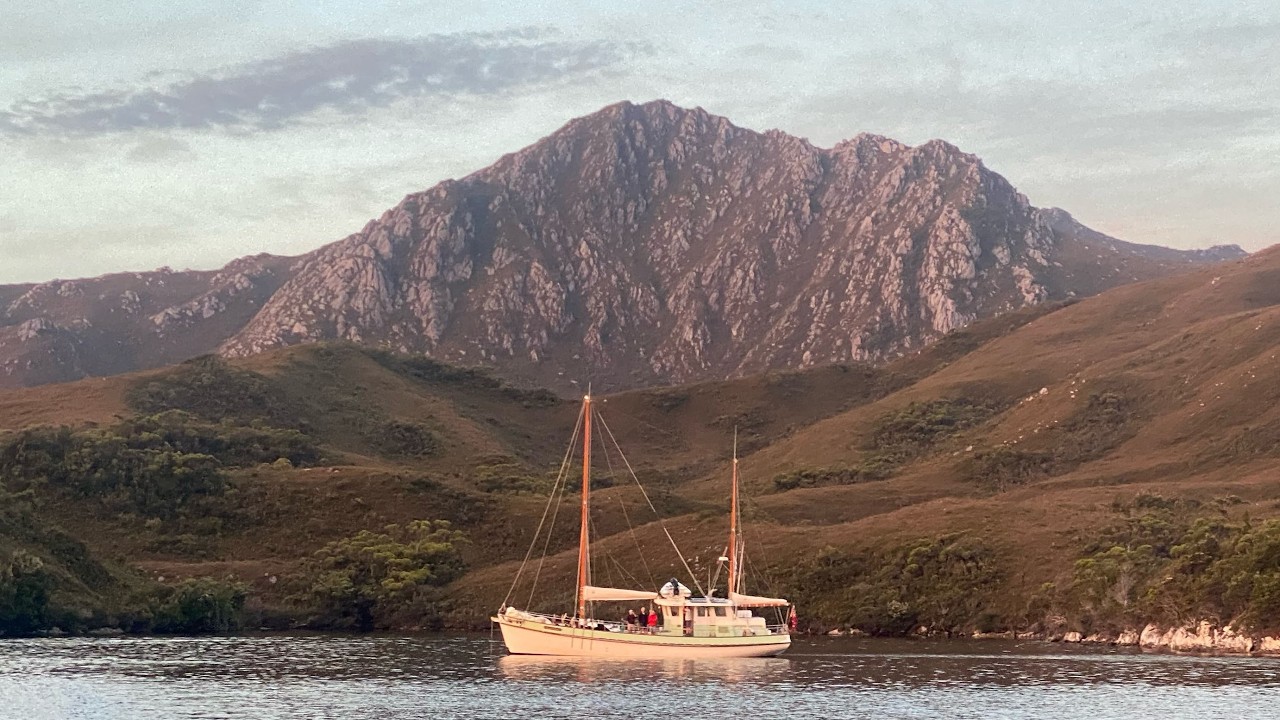
It’s July in Melbourne. Middle of winter. I’m my office in the Melbourne CBD trying to make a quid but increasingly thinking about our next adventure on Margaret Pearl. My definition of adventure is “an activity with more than a modicum of uncertainty in the outcome”. Almost any activity can be an adventure if the right mindset is engaged. For me, it’s not always about danger and physical risk. A trip to city by train can be an adventure………The higher the level of uncertainty - the bigger the adventure. And by any measure our 2027 cruise in Margaret Pearl has the makings of a big adventure. It’s just an idea at present and I thought that there might be some interest out in internet land to follow the planning and preparation of the adventure and then on our travels.

This week we have a chat with Jim Woods about his plans for a trip in 2027 from Hobart to the Louisiades in his beautiful Cray Boat, the MARGARET PEARL. Jim talks about preparing a Bass strait boat for the tropics, how to manage the fuel supply issues, what keeps him awake at night and why he’s undertaking this great adventure.

At the Auckland Wooden Boat Festival we caught up with the charming Iain Valentine aboard FRANCES ; Skipper Robin Kenyon of ARIKI; and Ken Fyfe of TITUS CANBY to soak in the pleasure that is seeing three extraordinary, living pieces of yachting history. Below you’ll find a little more information about each vessel and a link to the video.

The small Swahili coastal town called Lamu is UNESCO heritage listed site of cultural significance. The labyrinth of narrow laneways is crowded with people and donkeys going about their business, not for the tourists (who are few and far between) but carrying out the commerce that’s been going on here for a couple of millennia. And for a few days each November the largely Muslim community celebrates their culture and races their dhows. These craft which first appeared on this coast five centuries before Jesus recruited his first fisherman, were designed primarily as trading vessels. They have a characteristic lateen sail, which hangs off a long boom, suspended at an angle from a short forward leaning mast. They are objects of beauty, but more importantly they are highly effective sailing craft, chiselled into their current form by two and a half millennia of practical experience. In Lamu a few dhows still work under sail, delivering coral blocks, salt, sand and the occasional tourist to where they need to be. Globally, the Indian Ocean Dhow is one of only a dozen types of wind powered craft that are still used for genuine commerce or subsistence. In November each year, just as the easterly trade winds become established, the dhows are transformed to race! There solid masts and booms are replaced with lighter racing versions, new sails are sewn from Indian cotton panels, and their hulls are patched and painted with whatever is available. With minuscule budgets, they rely far more on ingenuity and generations of unwritten seafaring lore, than technology to make each boat go fast! The lateen rig is labour intensive and the crews of twenty five or more crowd aboard a 30ft boat and sing as they wrestle their way around the 20 nautical mile course. Continual bailing is needed to stop the dhows sinking while a respected afterguard perches on a small decked area above the transom, elegant in their embroidered kofia caps, nursing the tiller and scanning the water for changes in wind and tide.

It was another week to remind ourselves that we are doing this out of choice not obligation. A dramatic night in the windy passage between Corsica and Sardinia, taught us some good lessons, and put the breaks on any overconfidence that might have been creeping in.

A few of the additions we made to our 50 year old S&S Swan 47 before we moved aboard to live.

Getting to know our 1978 S&S Swan 47 on a short passage from France to Corsica


James Wood's custodian of the cray boat MARGARET PEARL does some investigation into Jukung sailing in Bali

Captain Mia is born and bred on the Island of Lamu in Eastern Kenya. He took me for a sail and explained the basics of tacking and gybing a dhow, the history the area and how the ultra competitive annual dhow racing works.

Having just finished their Championship, competitors and festival goers gathered for a discussion on history and future of the class. The discussion was hosted by SWS editor Sal Balharrie

There are not many boats that can sail competitively in the Sydney-Hobart one month, and then show up at the Australian Wooden Boat Festival the next, and outshine many of the other more pampered exhibitors. You can make a good case that LOVE & WAR is Australia’s most successful ocean racing yacht. Fifty two years ago she was drawn by Olin Stephens when he was at the peak of his extraordinary powers. Since then she has won the Sydney-Hobart on three occasions, and is rarely in the bottom two thirds of the fleet. In the the recent 2024 event, she again won her division, and came 14th overall, in conditions that were not always her forte. It would be a brave pundit who definitively predicts that, given the right weather, she couldn’t win the event a fourth time!

Superb weather on the Royal New Zealand Yacht Squadron Opening Day - and Roger Mills was at the start to record the Classic Yachts racing. AThey sailed a short harbour course for the season opener, in fresh south westerly winds and sunshine. Rawhiti A2 took line honours looking rather overpowered at times with her large Genoa. Ariki was close behind - 41 seconds - and took out the handicap win.

The Story of Holly and Jordy and the yacht CLARE... "I was just scrolling Facebook one day, and we had been in the market for a timber boat for a little while. And occasionally I would send Holly ridiculous things from boats online or on Facebook. I'd come across this Maurice Griffiths boat, and I sent it to Holly. They were asking 800 bucks . And I was like, Oh, you must be dreaming. So I sent it to Holly, and she was like, Oh, you got to get it now. "

To read the full story of EVENING TIDE visit www.southernwoodenboatsailing.com Bob Perry, although well and truly an American, has a small connection to Australia. In 1957 when Perry was twelve, he and his family moved from Sydney, to Vancouver, British Columbia. At the beginning of his ninth-grade year, they moved again to Mercer Island, Washington, an area renowned for its school system. Here, his interest in sailboats really clicked. He met famous designer William Garden, joined the local yacht club, and excelled at mechanical drawing. 60 years on, his designs are some of the most successful cruising yachts around such as the Tatoosh 42, Tayana 37 and the Valiant 40. Throughout his career he has designed boats for many well recognised brands in the yachting industry, such as Tayana, Cheoy Lee, Valiant, Ta Shing, Islander and Passport. But the design we were in Launceston to see is a close relative of the Baba 40, but unlike all her sister ships this is the only one in the world made out of timber. It's called a Perry 40.

Paul discusses the philosophy of the festival, the registration process, its Tasmanian heritage and hints at what he's planning for February 2025

With the 100th Nationals of the 12ft Cadet Dinghies to be held at RBYC in early January, here's a video of the 1987 Stonehaven taken and edited by Trent Read. The regatta was won by Warren Young in the Muir built Volante.II.