Latest videos

This is a delivery of a dragonfly 1200 Boat. It is not meant to go offshore.. we had a fantastic time. The weather was perfect. The water was magnificent. The sunsets were amazing. Send this your request and we will take you offshore.

Here is a free resource that will help any vessel clearly define the roles and responsibilities of a Sailing Safety Officer. This free resource is in word, so you can customize it for your own use. It also has a Go - No Go assessment tool to use. Enjoy. Visit the Ministry of Sailing Web site to check out all the free resources. https://ministryofsailing.com/free-resources-1

Sunk Without a Life Raft: The Flaws of “Hidden” Blue Water Boats. The 2019 sinking of the Essence off the coast of New Zealand wasn't just a tragedy—it was a masterclass in the dangers of Blue Water Boats that are not up to date with modern standards. We often talk about "Blue Water Boats" as if the hull layup alone is a suit of armor that never expires. But the sea doesn’t care about your boat's pedigree if your systems are stuck in the 1990's or before. In this episode, we dissect why a heavy-displacement cruiser (Bavaria 47 Ocean) ended up on the seabed and why "Hidden Blue Water" boats often mask a false sense of security. What We Cover: The Myth of the Bulletproof structures: Why structural integrity is only half the battle when your safety gear is inaccessible or outdated or even not positioned properly. Evolution of Standards: Standards change for a reason. If your boat hasn't been updated to modern offshore specs, you’re sailing a museum, not a rescue craft. The Life Raft Dilemma: Why "having" the gear isn't enough if you can't deploy it when the high-side becomes the low-side. The Take-Homes: 1. True Seamanship: It’s more than just knowing your knots. It is the Mind of a Sailor - having one consistent, rigorous mental framework that you apply to every vessel you step aboard, regardless of size or reputation. 2. Certification is Non-Negotiable: Don’t bet your life on "experience" alone. High-level Safety at Sea Certification (from World Sailing, US Sailing, or Australian Sailing) provides the muscle memory and technical knowledge that saves lives when the water starts rising. "A blue water boat is only as offshore-ready as the sailor standing watch." Check your gear. Update your standards. Stay on top of the water. If you found this analysis helpful, consider subscribing to the Ministry of Sailing for more deep dives into maritime safety and seamanship. NOTES: Yachting Monthly https://www.yachtingmonthly.com/news/window-storm-covers-could-have-prevented-fatal-yacht-sinking-81791 New Zealand Maritime https://www.maritimenz.govt.nz/public/news/2021/july/maritime-nz-report-storm-covers-may-have-prevented-the-loss-of-sailing-vessel-essence/ New Zealand Rescue AAR https://www.nzsar.govt.nz/assets/Downloadable-Files/Review-report-Operation-ESSENCE-Final-1.pdf Copyright Disclaimer under section 107 of the Copyright Act 1976, allowance is made for “fair use” for purposes such as criticism, comment, news reporting, teaching, scholarship, education and research. Fair use is a use permitted by copyright statute that might otherwise be infringing. https://ministryofsailing.com/ Thanks to US Sailing https://www.ussailing.org Cruising Club of America https://sas.cruisingclub.org/ World Sailing Https://sailing.org/ https://dyingsux.com/ #boat #boating #boatlife #offshorecitizen #offshoresailing #sailing #safetyatsea #offshoreracing #ocean #sailboat #oceanrace #rescueswimmer #vaikobisail #radixnutrition #barkarate #sailingpodcast #barkarateconversations #worldsailingofficial #sailing #boat #ocean #sport #voile #sail #sea #offshore #sailors #sailingworld #extremesailing #foils #yacht #yachts #saillife #instayacht #sailingblog #instasail #spinlock #worldsailing #megayacht #Americascup #ocean #sailing #barkarate #boat #boating #boatlife #explore #oceanrace #LifeJacketSafetyMatters #ProperFitSavesLives #SafetyAtSea #LifeJacketTips #BoatingSafetyTips #SailingSafety #MinistryOfSailingSafety #WearIt #LifeJacketAwareness #SafeSailingPractices #BoatingSafety #SailingLife @practicalsailor #LifeJacketsSaveLives #MarineSafety #SafetyFirst 0:00 intro Blue Water Boaters will Hate me 0:55 Blue Water Boaters Dangers 1:16 Sinking of the Essence, New Zealand Maritime Report 1:49 Maritime Regulations 2:20 Owners and Crew Background 2:35 Passage Destination and Route 3:00 Dodging the Storm 3:25 Shutters Not in Place 3:43 Touch Screen MFD Fails 4:00 ReRoute _ Anchor was removed 4:30 Waves Knock Down the Essence 5:10 The Final Knockdown 5:50 Uncontrolled Flooding 6:20 Abandon Ship in 40 foot Seas 7:25 New Zealand Defense Rescue Mission 8:04 Sailors spotted in the Water 8:30 Safety at Sea important practice and skills 9:10 New Zealand Rescue Trust Helicopter Rescue Mission 9:30 What worked well for the sailors and rescuers 10:17 Lessons learned from foundering of the Essence 12:24 Seamanship - the real sailors mind for any boat 12:44 Be the Captain - Sailing Zingaro 13:14 Conclusion - Sailing Standards are ever changing 14:05 Ministry of Sailing Merchandise


Introduction to Cycle Six - This is the coast guard situation report. And the final exercise.

This is the update for Cycle Five

Simulation of a fictional windstorm, which wipes out the Capt. kid sailing association during their after party, which occurs after the start.

This is for the Regatta Safety Officer Certification. Training for the Crisis Response exercise. Simulation for when press shows up after tragedy. The location is fictional.

This is the Start of Phase Two of the Regatta Safety Officer Certification. This is for the Simulated Exercise Training Course

This video is the start of the Regatta Crisis Management program, This is the Second video that follows the introduction.

Do you know what it takes to be a real sailor? Its not always about what they do, more often than not its how they think. In this episode I will discuss Cognitive Sailing and "The Four Core Elements of Sailing" This will not only help you sail better, but hopefully live better. Dedicated sailors often make great leaders because they learn early that setting expectations and managing risk make a safer boat and build great teams. They don't buy cool shirts and dock shoes, they think differently.

🚨 Mayday Off Hatteras: I Took the Call for S/V Magic Bus! Coast Guard & Navy Logistics Revealed This isn't just a rescue story—this is a **first-person, minute-by-minute account** of a life-and-death maritime emergency, straight from the voice on the other end of the line. When the owner of the sailboat ***Magic Bus*** called me for help, reporting they were taking on water 260 nautical miles off Cape Hatteras in early November, I was thrust into the center of a complex, long-range operation. Join me as I pull back the curtain on the incredible, unseen logistical challenge mounted by the U.S. Coast Guard and the Navy to save five people abandoning ship into a life raft far out in the Atlantic. **Here’s what you’ll hear:** * **The Initial Distress:** What was said in those critical first few minutes, and the immediate steps *I* took to relay their position and situation to Sector North Carolina. * **The Impossible Range:** 260 miles is a stretch, even for the Coast Guard's MH-60 Jayhawk helicopter. **I'll explain the critical inter-service cooperation** required, as the heavy-lift assets had to coordinate with the **aircraft carrier USS George H.W. Bush** for a high-stakes, mid-mission fuel stop. * **The Logistics of Survival:** From the deployment of the long-range HC-130 Hercules to locate the raft, to the precise movements of the Coast Guard Cutter, we break down the military coordination that turned a near-impossible scenario into a successful recovery. * **Lessons Learned:** What the crew of the *Magic Bus* did right to ensure their survival, and what every sailor needs to know about preparing for a true offshore emergency. This episode is a must-watch for every cruiser, racer, and long-distance sailor. It highlights the vast, powerful, and seamless system that is activated when your safety is on the line. **🔔 Don't forget to like and subscribe for more deep dives into sailing safety and stories!** --- **What did you find most surprising about the Coast Guard and Navy coordination in this rescue? Let us know in the comments below!** Try Not to Die STORE https://www.stickermule.com/ministryofsailing/item/19366157?origin=PUBLIC_PROFILE #boat #boating #boatlife #offshorecitizen #offshoresailing #sailing #safetyatsea #offshoreracing #ocean #sailboat #oceanrace #rescueswimmer #vaikobisail #radixnutrition #barkarate #sailingpodcast #barkarateconversations #worldsailingofficial #sailing #boat #ocean #sport #voile #sail #sea #offshore #sailors #sailingworld #extremesailing #foils #yacht #yachts #saillife #instayacht #sailingblog #instasail #spinlock #worldsailing #megayacht #Americascup #ocean #sailing #barkarate #SafetyFirst #BoatingTips #EPIRB #boatingsafety #SOS #Yachting #Sailing https://zurl.co/D2D2 Links: Theros Report https://www.tsb.gc.ca/eng/enquetes-investigations/marine/2024/m24a0262/m24a0262.html World Sailing Offshore Special Regulations https://d7qh6ksdplczd.cloudfront.net/sailing/wp-content/uploads/2024/11/11135130/WS_Offshore_Special_Regulations_2024-2025_v1.14withcover.pdf General Topic & Theme: • Life Raft Dangers • Offshore Sailing Safety • Sea Survival • Yachting Safety • Emergency at Sea • Sailing Life Raft • Offshore Cruising • Maritime Safety • Life Raft Deployment • Life Raft Failure • Survival Gear Review • Life Raft Maintenance • Man Overboard (related emergency) • Ditch Bag • EPIRB (related equipment) • Sailing Safety Tips • Storm Tactics • Heavy Weather Sailing • Sailing Vlog • Cruising Life • Sailboat Refit • Boating Tips • Ocean Sailing • Adventure Sailing • Sailboat Maintenance • Yacht Life • Why Life Rafts Can Kill You • The Truth About Life Raft Survival • Life Raft Not Deploying • Offshore Safety Gear Essentials • How to Survive in a Life Raft • Common Life Raft Mistakes • Safety First Sailing


Life or Death Raft. A life to start to sign to keep you alive. It’s only purposes to keep you afloat.  It’s all about how you prepare. "Life or Death Raft?" is your go-to channel for hardcore maritime survival truths, no BS. We're talkin' real-world scenarios, expert know-how, and straight-shootin' advice on how to not become fish food when the boating goes sideways—focusing on the Chesapeake Bay, maritime culture, and the waters you navigate. Join us for survival strategies, gear deep dives, and myth-bustin' that'll keep you afloat and kickin'. *Tagline:* "A Life Raft is not designed to keep you alive. It is only designed to keep you afloat. It's everything you bring with you, including your training that determines whether live or die. Dive into the tragic 2024 Sable Island sailboat fire that claimed two lives, and let's get real about life raft survival. This episode covers: - Proper Life Raft boarding procedures (don't mess it up!) - AIS registration for that emergency beacon (get it right or get ignored); - Survival kit clunkers you can ditch (bye-bye, useless junk); - Ditch bag essentials: VHF, EPIRB, water, and no, not that novel (function over fancy); - Safety At Sea cert course training drills for you and your whole crew (practice or parade?); - Bustin' myths: swimming to the raft (spoiler: it's a killer) and how to actually handle that painter without turning into a statistic. No fluff, just hardcore survival tactics. Let's get seaworthy or get out of the way!" The reason not to use an electric car battery in a boat. Copyright Disclaimer under section 107 of the Copyright Act 1976, allowance is made for “fair use” for purposes such as criticism, comment, news reporting, teaching, scholarship, education and research. Fair use is a use permitted by copyright statute that might otherwise be infringing. Thanks to US Sailing https://www.ussailing.org Cruising Club of America https://sas.cruisingcl... World Sailing Https://sailing.org/ #boat #boating #boatlife #offshorecitizen #offshoresailing #sailing #safetyatsea #offshoreracing #ocean #sailboat #oceanrace #rescueswimmer #vaikobisail #radixnutrition #barkarate #sailingpodcast #barkarateconversations #worldsailingofficial #sailing #boat #ocean #sport #voile #sail #sea #offshore #sailors #sailingworld #extremesailing #foils #yacht #yachts #saillife #instayacht #sailingblog #instasail #spinlock #worldsailing #megayacht #Americascup #ocean #sailing #barkarate #SafetyFirst #BoatingTips #EPIRB #boatingsafety #SOS #Yachting #Sailing https://zurl.co/D2D2 Links: Theros Report https://www.tsb.gc.ca/eng/enquetes-investigations/marine/2024/m24a0262/m24a0262.html General Topic & Theme: • Life Raft Dangers • Offshore Sailing Safety • Sea Survival • Yachting Safety • Emergency at Sea • Sailing Life Raft • Offshore Cruising • Maritime Safety • Life Raft Deployment • Life Raft Failure • Survival Gear Review • Life Raft Maintenance • Man Overboard (related emergency) • Ditch Bag • EPIRB (related equipment) • Sailing Safety Tips • Storm Tactics • Heavy Weather Sailing • Sailing Vlog • Cruising Life • Sailboat Refit • Boating Tips • Ocean Sailing • Adventure Sailing • Sailboat Maintenance • Yacht Life • Why Life Rafts Can Kill You • The Truth About Life Raft Survival • Life Raft Not Deploying • Offshore Safety Gear Essentials • How to Survive in a Life Raft • Common Life Raft Mistakes • Safety First Sailing 0:00 intro 0:50 life raft poor decision 1:37 Life Raft is not designed to save your life 2:00 Life Raft survival kit items 2:31 items that expire in a survival kit 3:00 useless items in a survival kit 4:44 dangers of a Life Raft 5:45 risk control for a Life Raft 6:45 clip in your tether and ditch bag to the Life Raft 10 Painter 7:10 practice procedures of abandoned ship 8:00 energy conservation in a life raft 8:20 need to conserve your body water 8:30 list of ditch bag items 9:00 ACR Epirb rescue story 9:30 Theros sailboat deaths of Sable Island 10:15 Canada Marine transportation Safety Board 11:00 Coast Guard search and rescue criteria 11:30 Theros time line and rescue response 12:00 Theros Crew recovered 12:30 what went wrong on the Theros 13:15 fire cause of sailboat tragedy 14:00 life raft proper storage 13:37 World sailing offshore special regulations 14:45 lessons learns from the thorough tragedy 15:15 AIS registration and float planing 16:00 the purpose of a Life Raft is to keep you afloat. It is not to keep you alive. 16:20 conclusions Chesapeake, Maritime Museum, and Annapolis boat show
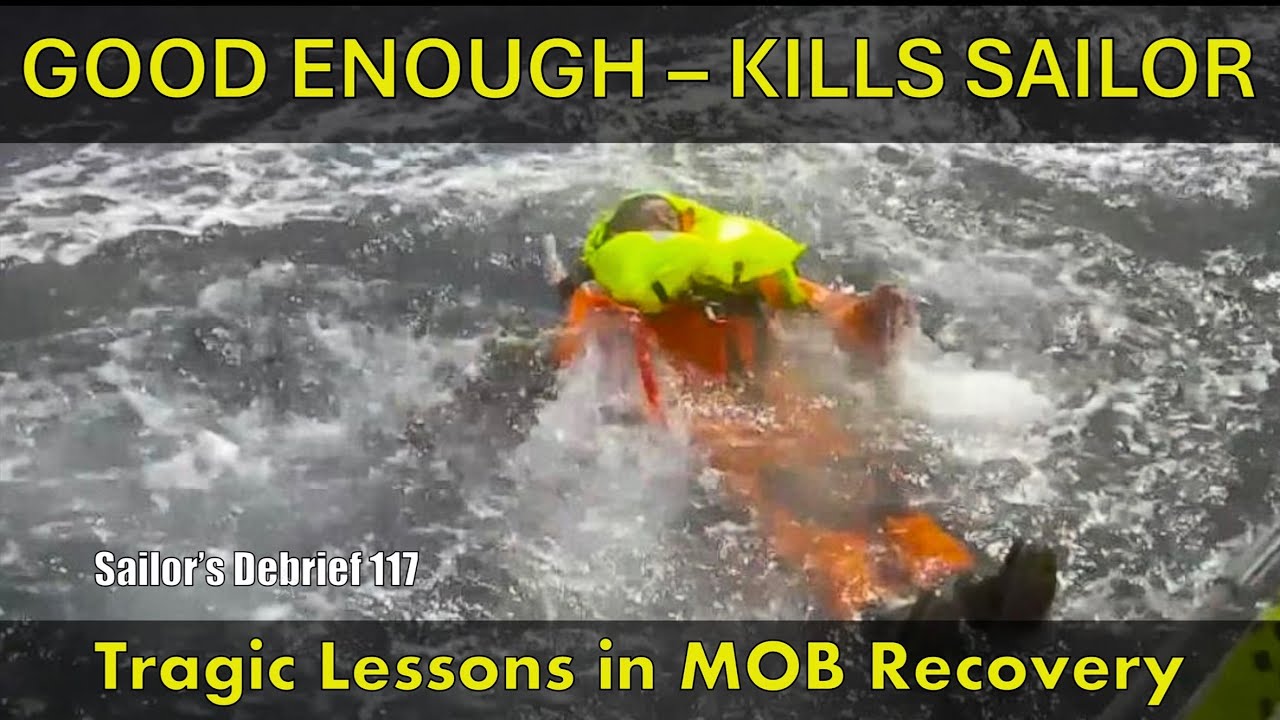
Episode 117 Sailors Debrief Episode 117: 'Good Enough' Isn't - A Tragic Lesson in Man Overboard Recovery Join us as we dive into the UK's Marine Accident Investigation Branch review of a heartbreaking man overboard incident that claimed the life of a sailor. The report's findings are a sobering reminder that 'good enough' safety protocols can have devastating consequences. In this episode, we'll break down the crucial lessons learned from this tragedy, including: The importance of thorough risk assessments tailored to specific sailors, The need for customized recovery techniques to match the unique conditions of each sailor and, The life-saving difference of properly worn life vests. Tune in for a thought-provoking discussion on the importance of safety at sea and what we can do to prevent such tragedies in the future. The Marine Accident Investigation Branch report for “Limbitless” can be found in the Global Incident Database on the Ministry of Sailing Database. https://ministryofsailing.com/incident-data-base Copyright Disclaimer under section 107 of the Copyright Act 1976, allowance is made for “fair use” for purposes such as criticism, comment, news reporting, teaching, scholarship, education and research. Fair use is a use permitted by copyright statute that might otherwise be infringing. Thanks to US Sailing https://www.ussailing.org Cruising Club of America https://sas.cruisingclub.org/ World Sailing Https://sailing.org/ #boat #boating #boatlife #offshorecitizen #offshoresailing #sailing #safetyatsea #offshoreracing #ocean #sailboat #oceanrace #rescueswimmer #vaikobisail #radixnutrition #barkarate #sailingpodcast #barkarateconversations #worldsailingofficial #sailing #boat #ocean #sport #voile #sail #sea #offshore #sailors #sailingworld #extremesailing #foils #yacht #yachts #saillife #instayacht #sailingblog #instasail #spinlock #worldsailing #megayacht #Americascup #ocean #sailing #barkarate #boat #boating #boatlife #explore #oceanrace #LifeJacketSafetyMatters #ProperFitSavesLives #SafetyAtSea #LifeJacketTips #BoatingSafetyTips #SailingSafety #MinistryOfSailingSafety #WearIt #LifeJacketAwareness #SafeSailingPractices #BoatingSafety #SailingLife #LifeJacketsSaveLives #MarineSafety #SafetyFirst

Exposing the "Flaws" of Life Vests (and the Real Dangers You're Missing) On this episode, we're diving deep into the so-called "flaws" of life vests. Our host, Capt. Schafer, has uncovered a shocking truth: these vests have one major, inexcusable flaw... they don't automatically put themselves on you before you fall overboard. We know, it's a travesty! But the sarcasm has a point. We're getting serious about safety and talking about the single most important piece of equipment on any boat: a strong skipper. Leadership is key to a safe voyage. Schafer explains why the skipper's role in safety is paramount and how delegating a "safety officer" can be a game-changer. Next, we expose an even bigger issue: the dangerous practice of cherry-picking safety recommendations. We're calling out organizations that treat US Sailing and World Sailing safety regulations like an à la carte menu, ignoring the full picture of what it takes to stay safe on the water. Schafer wraps up the episode with a powerful warning: if we, as sailors, don't take the initiative to police ourselves and prioritize safety, the government will inevitably step in with laws and fines. Don't miss this one—it might just save your life. Copyright Disclaimer under section 107 of the Copyright Act 1976, allowance is made for “fair use” for purposes such as criticism, comment, news reporting, teaching, scholarship, education and research. Fair use is a use permitted by copyright statute that might otherwise be infringing. Thanks to US Sailing https://www.ussailing.org Cruising Club of America https://sas.cruisingclub.org/ World Sailing Https://sailing.org/ #boat #boating #boatlife #offshorecitizen #offshoresailing #sailing #safetyatsea #offshoreracing #ocean #sailboat #oceanrace #rescueswimmer #vaikobisail #radixnutrition #barkarate #sailingpodcast #barkarateconversations #worldsailingofficial #sailing #boat #ocean #sport #voile #sail #sea #offshore #sailors #sailingworld #extremesailing #foils #yacht #yachts #saillife #instayacht #sailingblog #instasail #spinlock #worldsailing #megayacht #Americascup #ocean #sailing #barkarate #boat #boating #boatlife #extremesailing #foils

🛥️ Video Title: “Sailing Safely: The Hidden Dangers Every Sailor Should Know” This YouTube safety video opens with sweeping footage of tranquil seas, bright sails catching the wind, and sailors laughing as they maneuver their boats—setting the tone for the idyllic beauty and thrilling joy of sailing. But the calm quickly fades as a narrator warns: “Beneath the waves and wind, hidden hazards lurk that can turn your sailing adventure into a story of injury or worse.” 🚨 Top Sailing Injuries—And How They Happen The video’s main segment methodically walks viewers through the most common injuries on the water, supported by clips of reenactments and animated infographics: Head Injuries from the Boom: A dramatic slow-motion shot shows an unsuspecting sailor being struck by the swinging boom. It’s the classic culprit of sailing accidents—fast, heavy, and often underestimated. The video emphasizes staying alert and practicing safe tacking techniques. Slips and Falls: Wet decks and unsteady footing cause a significant number of mishaps. The narrator breaks down the types of falls: slipping on ropes, falling overboard, and stumbling during docking. Practical advice includes using non-slip footwear and remaining balanced during boat maneuvers. Line Burns and Rope Injuries: A tight close-up shows hands getting caught in lines during a high-stress moment. The video discusses how sudden tension in ropes can cause painful friction burns, deep cuts, or even finger fractures—underscoring the importance of gloves and slow, deliberate line handling. Back Strains and Overexertion: Through examples of sailors hauling heavy sails or working winches with poor posture, the video highlights how repetitive motion and improper lifting techniques contribute to long-term injuries. ☀️ The Surprise Ending—The #1 Killer Isn’t What You’d Expect Just as viewers brace for one final cautionary tale about drowning or head trauma, the narrator pivots to an unexpected truth: “The deadliest threat to sailors isn’t what knocks you into the water—it’s what’s slowly damaging you every moment under the sun.” That threat? Skin cancer. With haunting footage of weathered sailors undergoing skin checks, testimonials from survivors, and sobering statistics, the video reveals how constant exposure to UV radiation—especially reflected off water—puts sailors at extreme risk for melanoma and other skin cancers. The surprise twist hits hard because it's silent, gradual, and too often ignored. 🎓 Takeaways and Tips To wrap up, the narrator shares actionable steps: Always wear broad-spectrum sunscreen, even on cloudy days. Use UV-blocking clothing and wide-brim hats. Schedule annual dermatology screenings. Educate younger sailors on long-term risks. 📢 Closing Message The video closes with a call to action: “Sail smart. Sail safe. Protect yourself today, so you can enjoy the sea tomorrow.” https://www.ussailing.org/education/a... Copyright Disclaimer under section 107 of the Copyright Act 1976, allowance is made for “fair use” for purposes such as criticism, comment, news reporting, teaching, scholarship, education and research. Fair use is a use permitted by copyright statute that might otherwise be infringing. Thanks to US Sailing https://www.ussailing.org Cruising Club of America https://sas.cruisingclub.org/ World Sailing Https://sailing.org/ Offshore Special Regulations https://www.sailing.org/inside-world-... #boat #boating #boatlife #offshorecitizen #offshoresailing #sailing #safetyatsea #offshoreracing #ocean #sailboat #oceanrace #rescueswimmer #vaikobisail #radixnutrition #barkarate #sailingpodcast #barkarateconversations #worldsailingofficial #sailing #boat #ocean #sport #voile #sail #sea #offshore #sailors #sailingworld #extremesailing #foils #yacht #yachts #saillife #instayacht #sailingblog #instasail #spinlock #worldsailing #megayacht #Americascup #sydneyhobart #rolexsydneyhobart The British Journal of Sports Medicine - https://pubmed.ncbi.nlm.nih.gov/19203134/ Harry Perking Institute AU https://perkins.org.au/world-melanoma-expert-exposes-sailors-skin-cancer-risk/ Red Cross First Aid https://apps.apple.com/us/app/first-aid-american-red-cross/id529160691 0:00 - Intro to Sailing Injuries 1:00 - Sailing Movie Trivia - Do you know the quote? 1:38 - 1 out of 5 sailing trips = Injury 2:00 - Safety is Second in Sailing 2:30 - USCG Boating Accident Report 3:20 - What hurts you while sailing 4:00 - Bikini bitten by a winch 5:00 - sailing injuries 5:30 - Procedures provide safety 5:45 - Realities in sailing injuries 6:00 - Number one killer of sailors 7:00 - Free Application - American Red Cross First Aid

This is a delivery opportunity of a high-performance race boat, it is a dragon fly 32 performance. Enjoy

This is the Sailors Court Where You decide In sailing, the forward preventer and amidship preventer are both used to control the boom and prevent it from swinging wildly, but they serve slightly different purposes and have different advantages. # Forward Preventer A forward preventer is a line or tackle that runs from the boom to a point on the bow (front) of the boat. Its primary function is to: 1. *Prevent accidental jibes*: By holding the boom in place, the forward preventer prevents the boom from swinging across the boat, which can cause loss of control or damage. 2. *Stabilize the boom*: The forward preventer helps to keep the boom steady, reducing the loads by up to Nine times less than the Amidship. 3. *Allow for more control*: By limiting the boom's movement, the forward preventer gives the crew more control over the sail and the boat's direction. # Amidship Preventer An amidship preventer, on the other hand, runs from the boom to a point near the center of the boat. Its primary function is to: 1. *Prevent the boom from rising*: The amidship preventer helps to keep the boom down, which can be useful in light air or on small boats. # Why Forward Preventer Might be Better The forward preventer is often considered better than the amidship preventer for several reasons: 1. *More effective at preventing accidental jibes*: The forward preventer is more effective at preventing the boom from swinging across the boat, which can cause loss of control or damage. 2. *Reduced stress on the rigging*: While the amidship preventer can reduce stress on the rigging, the forward preventer can also help to reduce stress on the mast, boom, and rigging by stabilizing the boom. However, it's worth noting that both preventers have their own advantages and disadvantages, and the choice between them ultimately depends on the specific sailing conditions, the type of boat. More often than not, riggers will opt for the forward preventer. Sailing for Beginners, Sailing Experiences, Sailing Expedition 0:00 intro 0:40 the Sailors Court 0:50 Preventer v Preventer 1:05 the Amidship Preventer can kill 1:30 the Defense of the Amidship Preventer 2:30 The case for the Forward Preventer 4:30 why the preventer is a critical safety device. 5:00 the Platino Incident Background 5:49 Accident Investigation on the Platino 6:40 why the forward preventer is stronger. 7:10 evidence on why the Forward Preventer is stronger 7:50 preventer conspiracy 8:00 Jury Deliberations 9:00 conclusion- Sailing with Leon (the right way) https://youtu.be/FgZrKjnnLXY?si=59UZ_UrG00Sui8Ct Maryland School of Sailing (the Less Right way) https://youtu.be/qAhUWCa-KoQ?si=NBfPfuT53ODTr9sI Practical Sailor missed the primary reason as well https://youtu.be/gG1_Ft1iyls?si=a7xUKuOmbwnP_z-y

I will explain the difference between feeling safe and being safer. Short cuts for convenience, modifications and DIY projects need to meet the safety standards!! The Difference Between Feeling Safe and Being Safe Offshore Sailing Offshore sailing is often considered one of the most exhilarating and liberating forms of seafaring. The open ocean, vast and endless, offers an immense sense of freedom. However, with that freedom comes significant responsibility. The importance of safety at sea cannot be overstated, yet many sailors may confuse the feeling of safety with the actual state of being safe. This confusion can have dire consequences, especially when offshore sailing is involved, where help is often far away and conditions can change rapidly. Several factors, including cost-cutting measures, inexperience, and misinformation, can blur the lines between feeling safe and being truly safe. The Concept of Feeling Safe vs. Being Safe Being Safe: True safety at sea, however, involves actual preparedness, knowledge, and equipment that ensures survival under various challenging and potentially dangerous conditions. It’s about being capable of responding to emergencies and navigating unpredictable circumstances, regardless of how a sailor feels in the moment. When sailors confuse the two, they might believe they are prepared for offshore challenges when, in fact, they are not. Cost-Cutting: A False Sense of Security One of the most common pitfalls that lead to feeling safe but not being safe is cost-cutting. Sailing, particularly offshore, can be expensive. From buying the right boat and equipment to maintaining it and ensuring it’s ready for the open sea, there are significant financial implications. In an attempt to reduce expenses, some sailors might make compromises that diminish their actual safety. Inexperience: Overestimating One’s Abilities Another factor that contributes to the feeling of safety without actual preparedness is inexperience. Offshore sailing requires a variety of skills, from navigation to handling adverse weather conditions, dealing with mechanical issues, and knowing how to properly respond to emergencies. Inexperienced sailors may have an overestimation of their abilities, mistakenly believing that they can handle any situation just because they’ve read about it or watched videos online. Misinformation: The Dangers of Relying on Incorrect Assumptions Misinformation can be another factor that leads sailors to feel safer than they actually are. In an age of easily accessible online resources, sailors may rely on anecdotal advice or unverified sources when making safety decisions. Websites, forums, and social media often present overly simplistic or inaccurate information, leading to dangerous misconceptions about safety. The Importance of a Safety at Sea Offshore Certification Given the risks posed by cost-cutting, inexperience, and misinformation, a certification in offshore safety is essential for anyone serious about sailing beyond the reach of immediate help. The World Sailing Safety at Sea Offshore Certification is one such program that helps bridge the gap between feeling safe and being safe at sea. Hands-on training in essential safety techniques like deploying a life raft, man-overboard recovery, fire suppression, medical emergencies, and dealing with heavy weather conditions. Safety at Sea - https://www.ussailing.org/education/adult/safety-at-sea-courses-2022/ Copyright Disclaimer under section 107 of the Copyright Act 1976, allowance is made for “fair use” for purposes such as criticism, comment, news reporting, teaching, scholarship, education and research. Fair use is a use permitted by copyright statute that might otherwise be infringing. Thanks to US Sailing https://www.ussailing.org Cruising Club of America https://sas.cruisingclub.org/ World Sailing Https://sailing.org/ Offshore Special Regulations https://www.sailing.org/inside-world-sailing/rules-regulations/offshore-special-regulations/ Sailing Uma Episode https://youtu.be/eisYT3UD14E?si=6GGklqxTn6WzeX7L Carpe Diem Episode https://youtu.be/C7vqMNynIp0?si=6GYRGykbbQdzSsso SailingBritican Episode https://youtu.be/AdyLISXGUCE?si=E9xEJbTlUpXCLcbD #boat #boating #boatlife #offshorecitizen #offshoresailing #sailing #safetyatsea #offshoreracing #ocean #sailboat #oceanrace #rescueswimmer #vaikobisail #radixnutrition #barkarate #sailingpodcast #barkarateconversations #worldsailingofficial #sailing #boat #ocean #sport #voile #sail #sea #offshore #sailors #sailingworld #extremesailing #foils #yacht #yachts #saillife #instayacht #sailingblog #instasail #spinlock #worldsailing #megayacht #Americascup #sydneyhobart #rolexsydneyhobart 0:00 intro 0:54 Difference between feeling Safe and Being Safe 2:15 Tethers incorrect by CarpeDiem Sailing 5:00 Incorrect life raft Release - Manual release is wrong 7:10 Really bad custom tethers (Uma) 9:40 Conclusion