Welcome aboard to the our video site for sailors. We are being constantly blasted by scammers and pirates, so registration is invite only
contact@sailorsahoy.com with "Invite". No spam, no newsletters. Just a free account
شارٹس بنانا
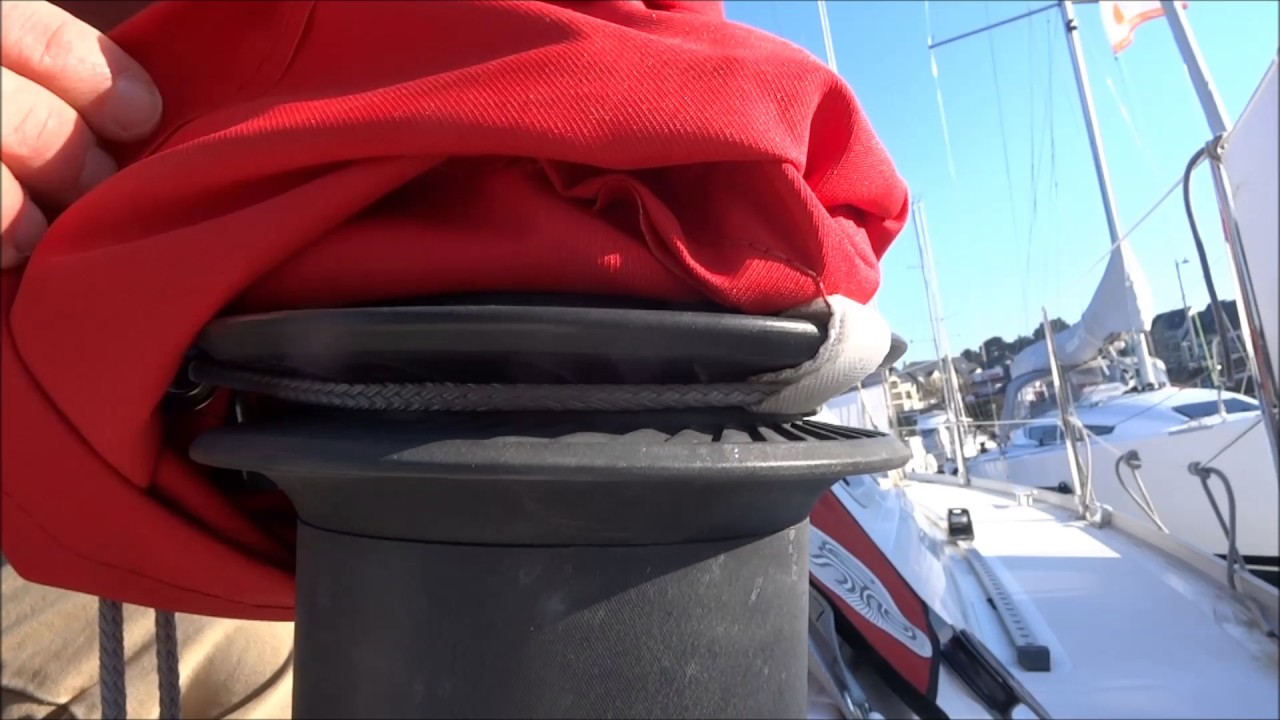
Grâce à notre tuto, vous constaterez qu'il ne faut pas simplement poser la housse sur le winch et serrer. En pratiquant ainsi, la housse s'envolera de votre bateau au moindre coup de vent. Au contraire, suivez la méthode décrite dans notre tuto, et la housse de winch ne s'envolera jamais, c'est garanti à 100%.

The Crazy Waters Bridge in Chalkis sits at the narrowest point between Evia and the mainland, where the strait is only about 38 meters wide. Because so much water is forced through this tiny opening, extremely strong currents are created — the reason sailors call it the “Crazy Waters.” The bridge is in the middle of the city and opens only once a day to avoid disrupting the constant road traffic. Boats may only pass at slack tide, the brief moment every six hours when the water is calmest. That’s why sailors often go through at strange times like 1:30 or 3:00 a.m. While waiting, boats are not allowed to tie up along the quay because the turbulence is so strong that it would be dangerous. Instead, everyone must anchor in the bay and wait for instructions from Port Control. We anchored there with about fifteen other boats and waited until slack tide at night. At midnight, Port Control suddenly called all boats in order — we were number three. Passing the bridge in the dark was surreal: strong currents below, quiet city lights above. The bridge didn’t lift; it actually slid sideways into the quay walls, disappearing completely. Once through, we moored safely just 100 meters further in the city. Experiencing this natural phenomenon at night, in such a narrow and powerful channel, was something I will not quickly forget!
http://features.boats.com/boat-content/2013/09/sonar-smack-down-traditional-fishfinder-vs-down-looking-scanner-imager-vs-chirp/ For more electronics tests, visit www.boats.com. To all fishermen in search of a new fishfinder: if your head is swimming with gigamajigs, LCD screams, and watt-evers, you're not alone. A frequency frenzy has struck the world of sonar, and while we used to be able to compare a few specs, functions, and prices before drawing a reasonable conclusion as to which unit to buy, today the process is enough to make your head really kilohertz. Now there are entirely different forms of fishfinder technologies on the market and even for the most educated buyer, choosing between them is no easy call. We decided to help ease the digital delirium by matching up comparable technologies including traditional, scanning/imaging, and CHIRP, head to head. To keep the playing field level we capped the price range of the units we included at $800. This represents a sweet-spot for fishfinder manufacturers since most boat owners can afford a unit at this price or below, regardless of whether they cast for largemouth from a bass boat, troll for stripers in the bay, or jig for cod off the coastline. Sure, there's a lot more—and more advanced—technology available at higher price-points, but some costs as much as a small car and the vast majority of us will be living with something a little more affordable. So we put our focus here, in this moderate price range. We also tried to spread the field among the major manufacturers, which wasn't difficult since different companies have taken different technological routes to help get you to the fish.
Feasting for climate protection: It might sound too good to be true, but it can actually work. In Germany, transportation accounts for almost as much carbon emission as the food industry. The question we now ask: Does “low in CO2” food taste as good? To find out, we equipped three brave (and hungry) colleagues with a bib and cutlery before sending them to our experimental kitchen where they were served sustainable dishes – or as we call it, Food from the Future. In our six-episode miniseries “Climate-friendly – but delicious?!” they tell us what tasted nice, and what they would actually cook at home. The LSG Group is the world’s leading provider of end-to-end onboard products and services for the travel industry. Its expert brands are: LSG Sky Chefs (airline catering and hospitality, lounges), Retail inMotion (onboard retail), SPIRIANT (onboard equipment) and Evertaste (convenience food).
En un Volvo Ocean Race, lo primero que se exige al material es que sea ligero. En este caso nuestro querido Johannes se ha pasado. Aquí tenéis nuestros prismáticos full carbono aligerados sin lentes. Johannes asegura que puedes enfocar los objetos mucho mejor. Piotr está ahí ahi con la idea. Yo no digo nada... Si te ha gustado el vídeo 𝐒𝐮𝐬𝐜𝐫í𝐛𝐞𝐭𝐞 𝐚𝐥 𝐜𝐚𝐧𝐚𝐥 👍 Así nos ayudas a generar más contenido para ti... los amantes de la navegación y del mar. Y si le das a la campanita 🔔 ya alucino... se nos caerán unas cuantas lagrimillas. También nos puedes seguir en otras plataformas: YouTube - https://www.youtube.com/channel/UCEj3jQf5L9r_LMk_oak6Tqw 𝐈𝐧𝐬𝐭𝐚𝐠𝐫𝐚𝐦 - https://www.instagram.com/sailingtxemacapitan_oficial 𝐓𝐢𝐤 𝐓𝐨𝐤 - https://www.tiktok.com/@sailingtxemacapitan 𝐅𝐚𝐜𝐞𝐛𝐨𝐨𝐤 - https://facebook.com/SailingTxemacapitan Linkedin - https://www.linkedin.com/in/txema-iglesias/